
“Ivory-tipped sparrow tongues baked gently over pine-charcoal mist in Anhui granite peaks.”
Huangshan Maofeng
Also known as: Yellow Mountain Fur Peak · Maofeng Green Tea · Fuxi Maofeng
Born in the cloud-shrouded granite valleys of Mount Huangshan, Maofeng is China's quintessential baked green tea (Hong Qing). Unlike flat pan-fired Longjing, Maofeng is gently basket-baked over glowing hardwood charcoal, preserving an ethereal alpine magnolia orchid perfume and prized pale golden 'fish-leaf' accents known as Jin Pian (golden flakes).
- Alpine Terroir
- Fuxi Grand Canyon & Taohua Peak · Mount Huangshan
- Elevation & Soil
- 700–1,000m granite cloud-forest slopes
- Cultivar
- Huangshan Qunti Broad-Leaf Heirloom
- Harvest Window
- Qingming – Mid April
Dry Leaf · Infused Liquor · Spent Wet Leaf
State I · Dry Leaf
Morphology & Luster
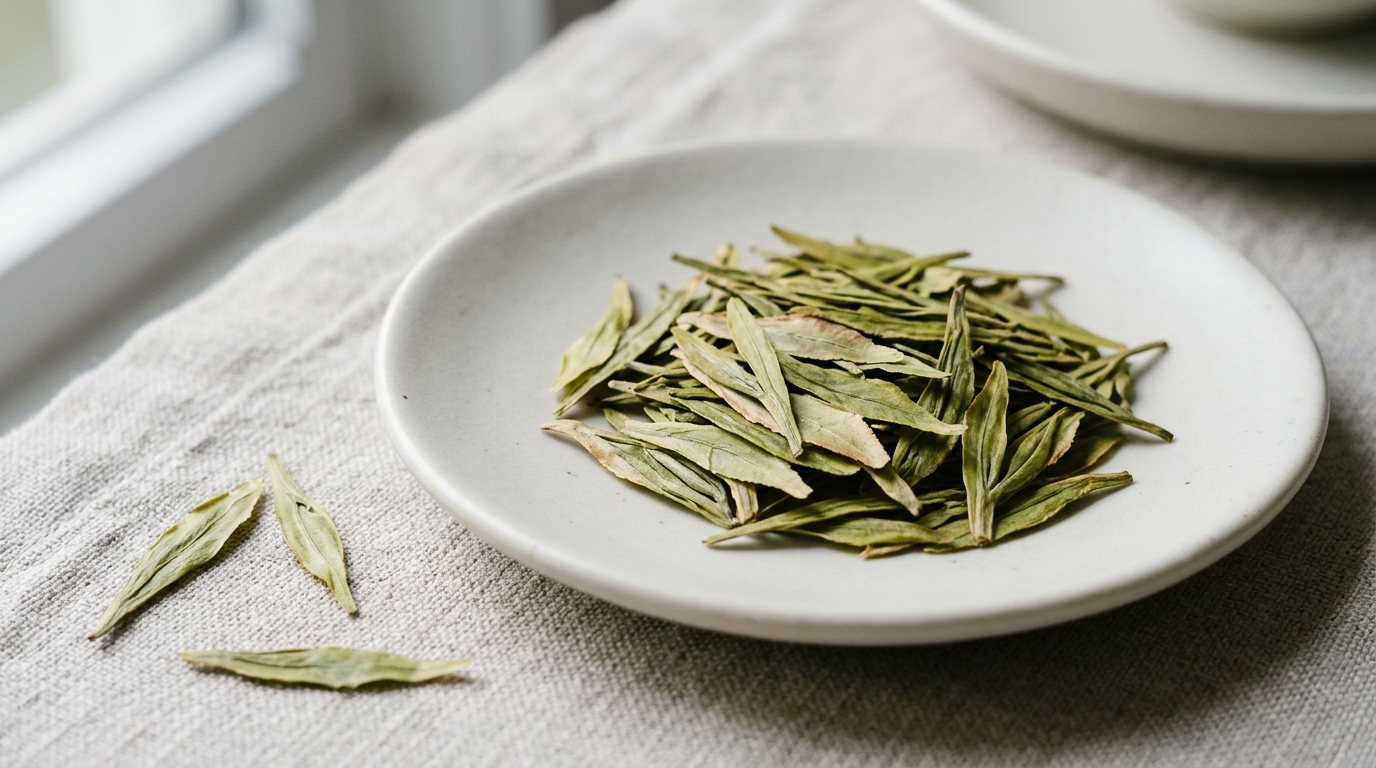
Slightly curved sparrow-tongue shoots veiled in silvery down with rare ivory-gold tips.
Form: Plump 1-bud-1-leaf shoots resembling upright mountain peaks
Luster: Tender ivory-green ('Xiangya Se') with luminous trichomes
State II · Tea Liquor
Pale Apricot Crystal
Crystalline pale apricot-clear liquor with ethereal spring clarity.
Clarity: Mirror-clear, bright and radiant
State III · Wet Leaf
Unfurled Foliage
Plump, upright emerald buds and fleshy young leaves holding vibrant spring snap.
Hue: Luminous yellow-green
Elasticity: Thick, elastic, and unbruised
How Huangshan Maofeng Is Crafted
Shoots are gathered from high granite ravines where diffuse cloud light keeps leaves plump.
- 1. Misty Valley PluckingMorning · 1 Bud 1-2 Leaves
Shoots are gathered from high granite ravines where diffuse cloud light keeps leaves plump.
- 2. Light Wilting2–4 Hours · Bamboo Trays
Brief aeration releases raw grassy volatiles while keeping buds turgid.
- 3. Pan Fixation (Sha Qing)140–160°C · 4–5 min
Quick, high-toss wok firing deactivates oxidation enzymes cleanly.
- 4. Light Hand Shaping2–3 min · Gentle Roll
Subtle curving forms the characteristic sparrow-tongue silhouette without crushing cells.
- 5. Multi-Stage Charcoal Baking90°C → 75°C → 60°C
Three gentle bamboo-basket bakes over ash-covered charcoal lock in high-mountain magnolia sweetness.
Precision Brewing Parameters
Rinse Protocol: No rinse
Steep Timing: Steep 1: 45s → Steep 2: 60s → Steep 3: 90s → Steep 4: 120s
Sommelier Note: Use soft low-mineral spring water at 85°C to unlock the delicate alpine magnolia fragrance.
Harvest Grade Benchmark Matrix
Objective sensory indicators distinguishing authentic high-mountain core reserves from standard and commercial-grade harvests.
Special Grade Fuxi Core
★★★★★ Reserve- Dry Shape
- Plump curved sparrow-tongues coated in dense white down, golden flakes visible
- Leaf Color
- Refined ivory yellow-green
- Liquor
- Crystal-clear pale apricot-jade
- Aroma
- High-mountain magnolia blossom and sweet spring dew
- Palate
- Thick, sweet, utterly smooth with rapid cooling huigan
- Wet Leaf
- Intact fleshy buds, glowing bright yellow-green
First Grade (Early April)
★★★★☆ Classic- Dry Shape
- Slender uniform 1-bud-1-leaf tips with soft fuzz
- Leaf Color
- Fresh bright yellow-green
- Liquor
- Clear pale green-gold
- Aroma
- Clean alpine orchid and sweet pea
- Palate
- Brisk, crisp, clean sweet finish
- Wet Leaf
- Uniform tender shoots
Commercial Foot-Hill Lot
★★☆☆☆ Everyday- Dry Shape
- Larger open leaves, minimal down, uneven curls
- Leaf Color
- Dark forest green
- Liquor
- Pale yellow, slightly hazy
- Aroma
- Light grassy tone
- Palate
- Mild body, mild bitterness on longer steeps
- Wet Leaf
- Coarser thin leaves
Storage Climate & Aging Horizon
Aging Potential: Drink fresh within 12 months for peak orchid lift. (GB/T 19460 (Geographical Indication — Huangshan Maofeng))
- Store sealed packs in a clean refrigerator below 5°C.
- Warm unopened pouches to ambient temperature before opening to avoid moisture condensation.
Oxidation, Tea Nature & Occasion Fit
- Best enjoyed after breakfast or lunch for drinkers sensitive to unoxidized green tea.
Editorial & traditional culinary notes for contemplative tea appreciation only — not a medical claim or therapeutic cure.
Authentic Market Price Benchmarks (USD / 50g)
High-altitude Mount Huangshan core valleys
Core Fuxi Special Grade First Flush
$40 – $85
Authenticity Check: Genuine core Maofeng exhibits ivory-green hues and golden fish-leaf tips ('Jin Pian'), never uniform dark green.
Mid-April mountain slopes
Huangshan First Grade
$22 – $40
Authenticity Check: Clean orchid aroma with sweet pea sweetness and clear broth.
Lower hills late spring
Regional Anhui Baked Green
$8 – $18
Authenticity Check: Full-bodied everyday green tea with less high-mountain floral nuance.
Common Questions on Huangshan Maofeng
What are the 'golden flakes' (Jin Pian) in authentic Huangshan Maofeng?
Jin Pian are tiny, pale ivory-gold embryonic fish-leaves naturally attached at the base of early Huangshan heirloom shoots. Rather than a flaw, their presence confirms genuine high-mountain early spring picking.
How does Huangshan Maofeng taste compared to West Lake Longjing?
Longjing is flat pan-fired in iron woks, emphasizing savory toasted chestnut and brisk structure. Huangshan Maofeng is gently charcoal-basket dried, highlighting ethereal orchid-magnolia fragrance and silky sweet broth.
What water temperature is best for Huangshan Maofeng?
82–85°C (180–185°F) with soft spring water preserves its high-mountain floral aromatics while preventing astringency.
Experience Authentic Alpine Provenance
Taste Huangshan Maofeng Inside Chamber I · Uncorrected
SpiritDew sources small-batch single-origin whole leaves directly from China's alpine wilderness sanctuaries. Reserve this chamber individually or experience all nine sovereign categories in our numbered Tasting Flight.
Related Compendium Dossiers
View All 37 Teas →
The only historic Chinese green tea crafted exclusively from mature single leaf blades — zero buds, zero stems.

Monumental 6 cm flat orchid-scented blades pressed onto hand-woven wire mesh in Mount Huangshan's northern ravines.
Flat-pressed emerald blades forged by bare hands in seasoned iron woks.

Downy silver-green spirals grown beneath blooming peach, plum, and loquat canopies.