
“A rare temperature-sensitive albino green tea cultivar with double the L-theanine umami of ordinary green tea.”
Anji Baicha
Also known as: Anji White Tea · Bai Ye #1 Albino Green Tea · Anji Jade Phoenix Feather
Despite its name ('Anji White Tea'), Anji Baicha is botanically and technically a Green Tea — not a withered Fujian white tea. Its prized Bai Ye #1 cultivar temporarily halts chlorophyll production during cool spring temperatures below 20°C, turning young leaves translucent ivory-jade while packing them with 6–9% amino acids (more than twice standard green teas) for an astonishingly brothy, zero-bitterness cup.
- Alpine Terroir
- Tianmu Northern Bamboo Highlands · Anji County
- Elevation & Soil
- 300–800m misty bamboo mountain terraces
- Cultivar
- Bai Ye #1 (Chlorophyll-Deficient Albino Cultivar)
- Harvest Window
- Late March – Mid April (Brief 25-day albino window)
Dry Leaf · Infused Liquor · Spent Wet Leaf
State I · Dry Leaf
Morphology & Luster
Slender phoenix-feather blades in pale jade-gold with distinct emerald central veins.
Form: Neat straight delicate shoots resembling tiny feathers
Luster: Translucent pale ivory-jade with golden highlights
State II · Tea Liquor
Translucent Apricot-Jade
Shimmering pale apricot-white crystal liquor with silky high-amino thickness.
Clarity: Crystalline and radiant
State III · Wet Leaf
Unfurled Foliage
Signature translucent white-jade blades crisscrossed by vivid emerald veins ('Yu Shuang').
Hue: Ivory-white leaf with bright green veins
Elasticity: Supple, luminous, and intact
How Anji Baicha Is Crafted
Picked strictly during the brief albino phase before warm spring sunshine turns leaves dark green.
- 1. Cool-Window PluckingLate March · <20°C Ambient
Picked strictly during the brief albino phase before warm spring sunshine turns leaves dark green.
- 2. Thin Spreading6–8 Hours · Cool Air
Preserves high L-theanine while allowing gentle moisture drop.
- 3. Precision Drum Fixation120–130°C · 2–3 min
Halts oxidation swiftly while keeping blades bright pale-jade.
- 4. Straight Feather ShapingGentle Mechanical Align
Forms clean, elongated phoenix-feather strands without bruising.
- 5. Two-Stage Low Drying80°C → 65°C
Seals savory chicken-broth umami and delicate orchid fragrance.
Precision Brewing Parameters
Rinse Protocol: No rinse
Steep Timing: Steep 1: 45s → Steep 2: 60s → Steep 3: 90s
Sommelier Note: 80°C water highlights the extraordinary savory sweetness while showcasing translucent white-jade leaves.
Harvest Grade Benchmark Matrix
Objective sensory indicators distinguishing authentic high-mountain core reserves from standard and commercial-grade harvests.
Boutique Xilong Core (Pure Albino)
★★★★★ Reserve- Dry Shape
- Slender uniform phoenix-feather buds (~2 cm)
- Leaf Color
- Luminous pale jade-gold
- Liquor
- Crystal apricot-clear, silky thick
- Aroma
- Pure sweet bamboo shoot and alpine orchid
- Palate
- Explosive L-theanine savory umami, zero bitterness
- Wet Leaf
- Translucent ivory blades with vivid emerald veins
First Grade Anji
★★★★☆ Classic- Dry Shape
- Neat straight 1-bud-1-leaf shoots
- Leaf Color
- Pale yellow-green
- Liquor
- Bright clear pale green
- Aroma
- Fresh sweet pea and tender grass
- Palate
- Smooth, sweet, ultra-clean finish
- Wet Leaf
- Pale jade blades with visible green veins
Late-Season Re-Greened Lot
★★☆☆☆ Everyday- Dry Shape
- Longer flatter leaves
- Leaf Color
- Standard medium green
- Liquor
- Pale yellow-green
- Aroma
- Standard light green aroma
- Palate
- Milder umami, closer to regular green tea
- Wet Leaf
- Fully re-greened leaves
Storage Climate & Aging Horizon
Aging Potential: Drink fresh within 12 months; high amino acids degrade quickly in warm air. (GB/T 20354 / DB33/T (Geographical Indication — Anji Baicha))
- Keep strictly refrigerated at 0–4°C when unopened.
- Allow cold pouches to reach room temperature before opening.
Oxidation, Tea Nature & Occasion Fit
- One of the gentlest green teas due to low polyphenols and ultra-high L-theanine; still best enjoyed alongside light food if sensitive.
Editorial & traditional culinary notes for contemplative tea appreciation only — not a medical claim or therapeutic cure.
Authentic Market Price Benchmarks (USD / 50g)
Late March peak albino window
Core Xilong Early Albino Reserve
$45 – $95
Authenticity Check: Wet leaves MUST show translucent ivory-white tissue with distinct emerald veins ('Yu Shuang').
Early April harvest
Anji First Grade
$24 – $42
Authenticity Check: Silky, sweet, nearly zero astringency even on longer steeps.
Sichuan / Guizhou / Hunan
Transplanted Out-of-County Bai Ye #1
$10 – $20
Authenticity Check: Pleasant and sweet, though slightly lighter in mineral finish than Anji bamboo hills.
Common Questions on Anji Baicha
Is Anji Baicha a white tea or a green tea?
Anji Baicha is a Green Tea made from a rare albino cultivar (Bai Ye #1). Its leaves are heat-fixed immediately like green tea rather than sun-withered like Fujian Silver Needle white tea.
Why does Anji Baicha taste so sweet and brothy with almost no bitterness?
During cool early spring (<20°C), its chlorophyll pauses while L-theanine amino acids surge to 6–9% (over double ordinary green tea) and bitter polyphenols stay remarkably low.
How do I verify authentic Anji Baicha?
Inspect the wet leaves after brewing: genuine early-window Anji Baicha turns translucent milky jade-white crossed by bright green veins.
Experience Authentic Alpine Provenance
Taste Anji Baicha Inside Chamber I · Uncorrected
SpiritDew sources small-batch single-origin whole leaves directly from China's alpine wilderness sanctuaries. Reserve this chamber individually or experience all nine sovereign categories in our numbered Tasting Flight.
Related Compendium Dossiers
View All 37 Teas →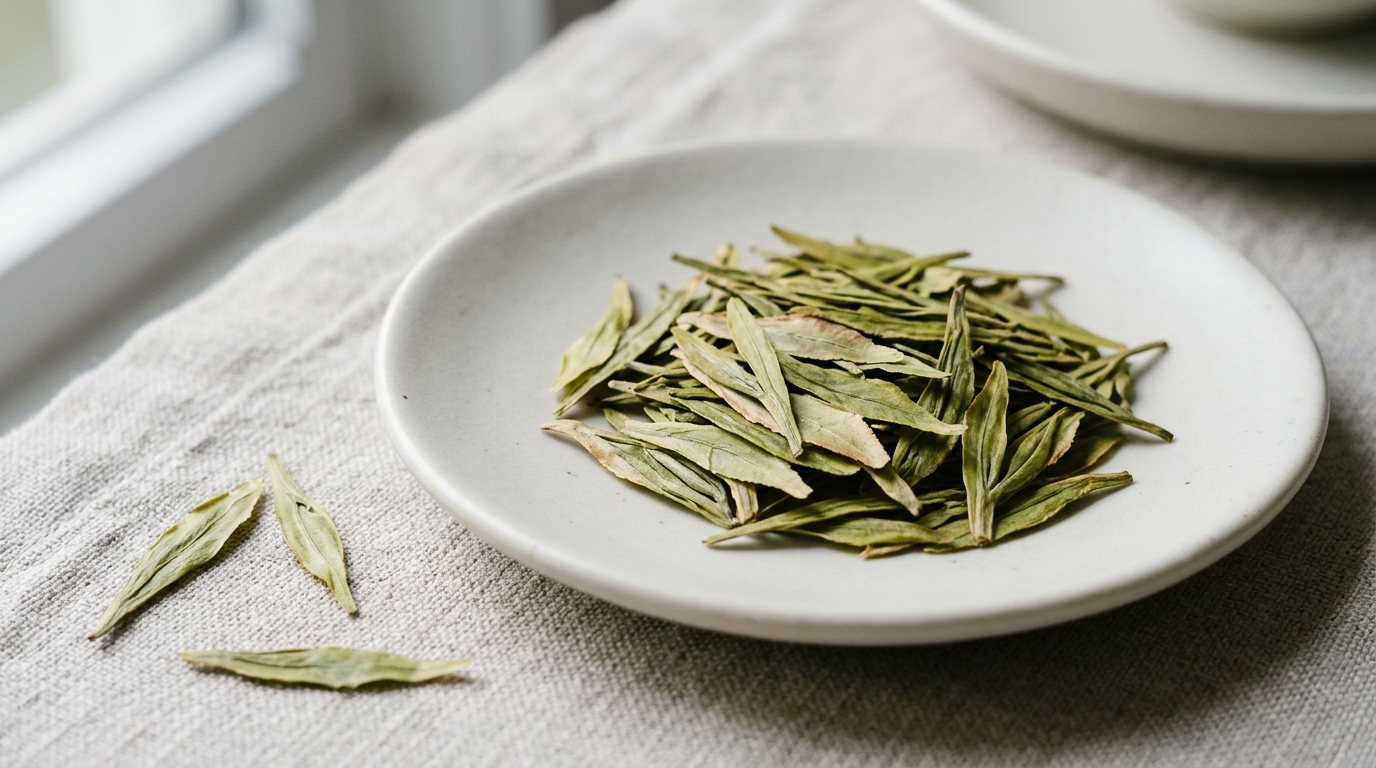
Flat-pressed emerald blades forged by bare hands in seasoned iron woks.

Downy silver-green spirals grown beneath blooming peach, plum, and loquat canopies.

Ivory-tipped sparrow tongues baked gently over pine-charcoal mist in Anhui granite peaks.

The only historic Chinese green tea crafted exclusively from mature single leaf blades — zero buds, zero stems.