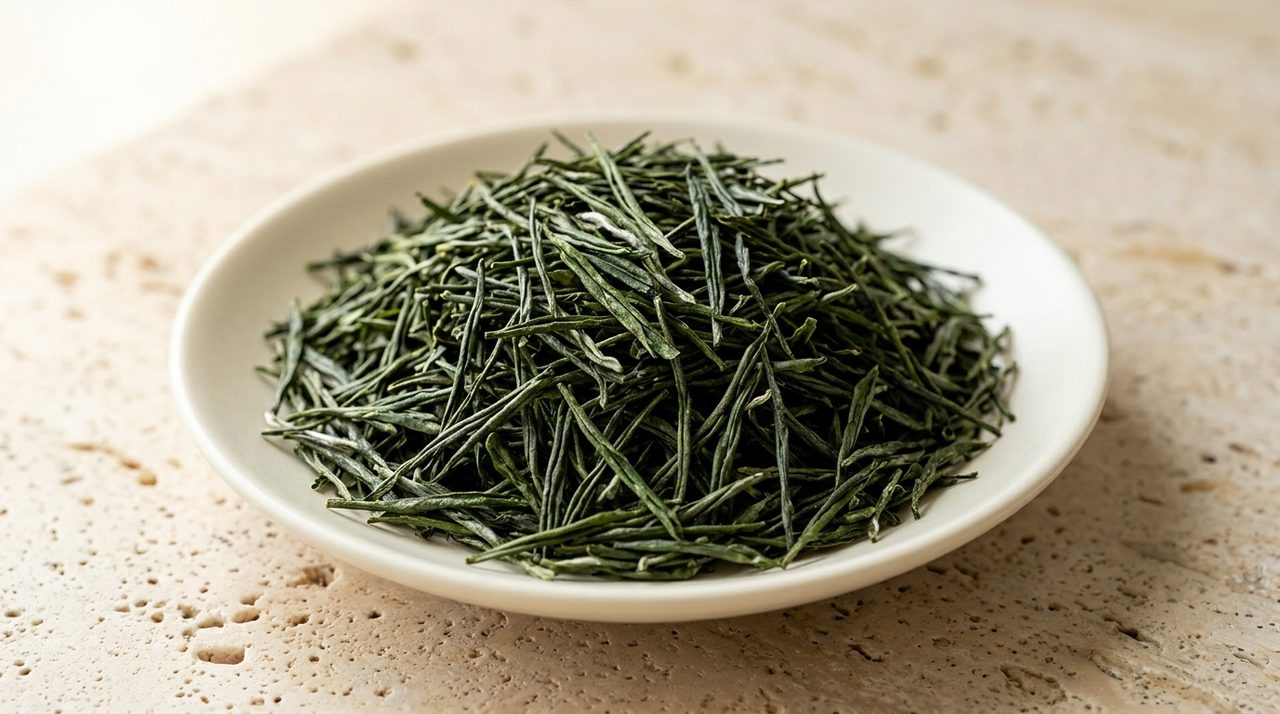
“China's sole surviving Tang Dynasty steamed needle green tea from selenium-rich Wuling karst.”
Enshi Yulu
Also known as: Enshi Jade Dew · Chinese Steamed Green Tea · Selenium Pine-Needle Green
Enshi Yulu preserves the exact steam-fixation technique pioneered in Tang Dynasty China over a millennium ago — the historical ancestor of Japanese Sencha and Gyokuro. Grown in the world's rarest natural selenium-mineral karst soils in western Hubei, it exhibits 'Three Greens' (emerald dry needles, luminous jade liquor, and vivid green wet leaves) with savory sea-breeze umami and pure spring sweetness.
- Alpine Terroir
- Tunpu Karst Highlands · Wuling Mountains, Enshi
- Elevation & Soil
- 800–1,200m selenium-rich limestone karst
- Cultivar
- Echa #1 & Enshi Local Heirloom
- Harvest Window
- Late March – Mid April
Dry Leaf · Infused Liquor · Spent Wet Leaf
State I · Dry Leaf
Morphology & Luster
Tight, straight, lustrous pine-needle blades glowing deep emerald green.
Form: Slender round straight needles with fine pointed tips
Luster: Deep vivid emerald-jade, glossy and tight
State II · Tea Liquor
Translucent Pine-Needle Jade
Radiant translucent spring-emerald liquor reminiscent of sunlit mountain stream water.
Clarity: Crystal clear and gleaming
State III · Wet Leaf
Unfurled Foliage
Brilliant vivid green intact needles unfolding cleanly with succulent tenderness.
Hue: Luminous fresh spring emerald
Elasticity: Crisp, glossy, and tender
How Enshi Yulu Is Crafted
Strict uniform harvest ensures even steam penetration across every shoot.
- 1. Tender Needle PluckingEarly Spring · 1 Bud 1 Leaf
Strict uniform harvest ensures even steam penetration across every shoot.
- 2. Steam Fixation (Zheng Qing)100–105°C Steam · 35–45 sec
Scalding vapor halts oxidation within seconds, preserving maximum emerald chlorophyll and fresh amino umami.
- 3. Rapid Air CoolingInstant Fan Cooling
Surface steam dissipates immediately so leaves retain vivid jade brilliance.
- 4. Rolling & Shaping (Lou Tiao)Hand / Precision Roll
Leaves are guided into straight, tight pine-needle cylinders.
- 5. Multi-Pass Low Drying65–75°C · Slow Crisp
Gentle dry heat sets the needle geometry without introducing any pan-roast notes.
Precision Brewing Parameters
Rinse Protocol: No rinse
Steep Timing: Steep 1: 35s → Steep 2: 45s → Steep 3: 60s → Steep 4: 90s
Sommelier Note: Treat Enshi Yulu like fine Gyokuro: cool water (75–80°C) unlocks astonishing savory edamame umami and zero harshness.
Harvest Grade Benchmark Matrix
Objective sensory indicators distinguishing authentic high-mountain core reserves from standard and commercial-grade harvests.
Special Grade (Selenium Karst Core)
★★★★★ Reserve- Dry Shape
- Slender, tight, straight uniform pine needles
- Leaf Color
- Lustrous deep jade emerald
- Liquor
- Clear bright emerald-green
- Aroma
- Fresh steamed sweet pea, delicate nori breeze, spring dew
- Palate
- Silky oceanic umami, sweet mineral clarity, zero bitterness
- Wet Leaf
- Uniform bright emerald single buds and young leaves
First Grade
★★★★☆ Classic- Dry Shape
- Neat straight needles, slight natural length variation
- Leaf Color
- Rich vibrant green
- Liquor
- Clear bright yellow-green
- Aroma
- Fresh steamed greens and tender grass
- Palate
- Crisp, savory, clean lingering sweetness
- Wet Leaf
- Mostly intact bright green shoots
Standard Commercial
★★☆☆☆ Everyday- Dry Shape
- Looser slightly bent needles with broken tips
- Leaf Color
- Duller dark olive-green
- Liquor
- Pale yellow-green
- Aroma
- Plain vegetal scent
- Palate
- Lighter umami, mild dry edge
- Wet Leaf
- Uneven darker green leaves
Storage Climate & Aging Horizon
Aging Potential: Strictly fresh-consumption green tea. (DB42/T 322 (Geographical Indication — Enshi Yulu))
- Steamed green teas oxidize faster under light than pan-fired teas — never store in transparent glass jars.
- Keep unopened foil packets chilled at 0–4°C and bring to room temperature before breaking the seal.
Oxidation, Tea Nature & Occasion Fit
- High-chlorophyll steamed green tea is brisk and cooling; enjoy after food if prone to stomach sensitivity.
Editorial & traditional culinary notes for contemplative tea appreciation only — not a medical claim or therapeutic cure.
Authentic Market Price Benchmarks (USD / 50g)
Hand-finished selenium karst spring needles
Bajiao / Tunpu Core Special Grade
$42 – $78
Authenticity Check: Authentic Enshi Yulu displays straight glossy needles and bright green liquor — never yellowish-brown.
April mountain harvest
Enshi First Grade
$22 – $38
Authenticity Check: Vibrant savory sweetness and clean steamed marine freshness.
Late spring bulk lot
Everyday Steamed Green
$9 – $18
Authenticity Check: Softer aroma and shorter infusion endurance.
Common Questions on Enshi Yulu
How does Enshi Yulu compare to Japanese Sencha and Gyokuro?
Enshi Yulu is China's surviving Tang Dynasty steamed green tea that inspired Japan's steaming tradition. Compared to Sencha, Enshi Yulu is typically sweeter, less marine-astringent, and crafted into intact whole pine-like needles with gentle selenium-karst minerality.
Why is Enshi Yulu called a 'Three Greens' tea?
Steam fixation preserves nearly all leaf chlorophyll without scorching, producing vivid emerald dry needles, luminous jade tea liquor, and bright green wet leaves.
Can Enshi Yulu be cold-brewed?
Yes — it is one of China's finest cold-brew green teas. Steep 4g in 500 ml cold filtered water in the fridge for 6–8 hours for velvety, sweet, umami-rich liquor.
Experience Authentic Alpine Provenance
Taste Enshi Yulu Inside Chamber IX · Unnumbed
SpiritDew sources small-batch single-origin whole leaves directly from China's alpine wilderness sanctuaries. Reserve this chamber individually or experience all nine sovereign categories in our numbered Tasting Flight.
Related Compendium Dossiers
View All 37 Teas →
Celebrated by Tang Dynasty poet Lu Tong — crystal-clear bamboo-shoot green from Yixing's clay-rich karst hills.
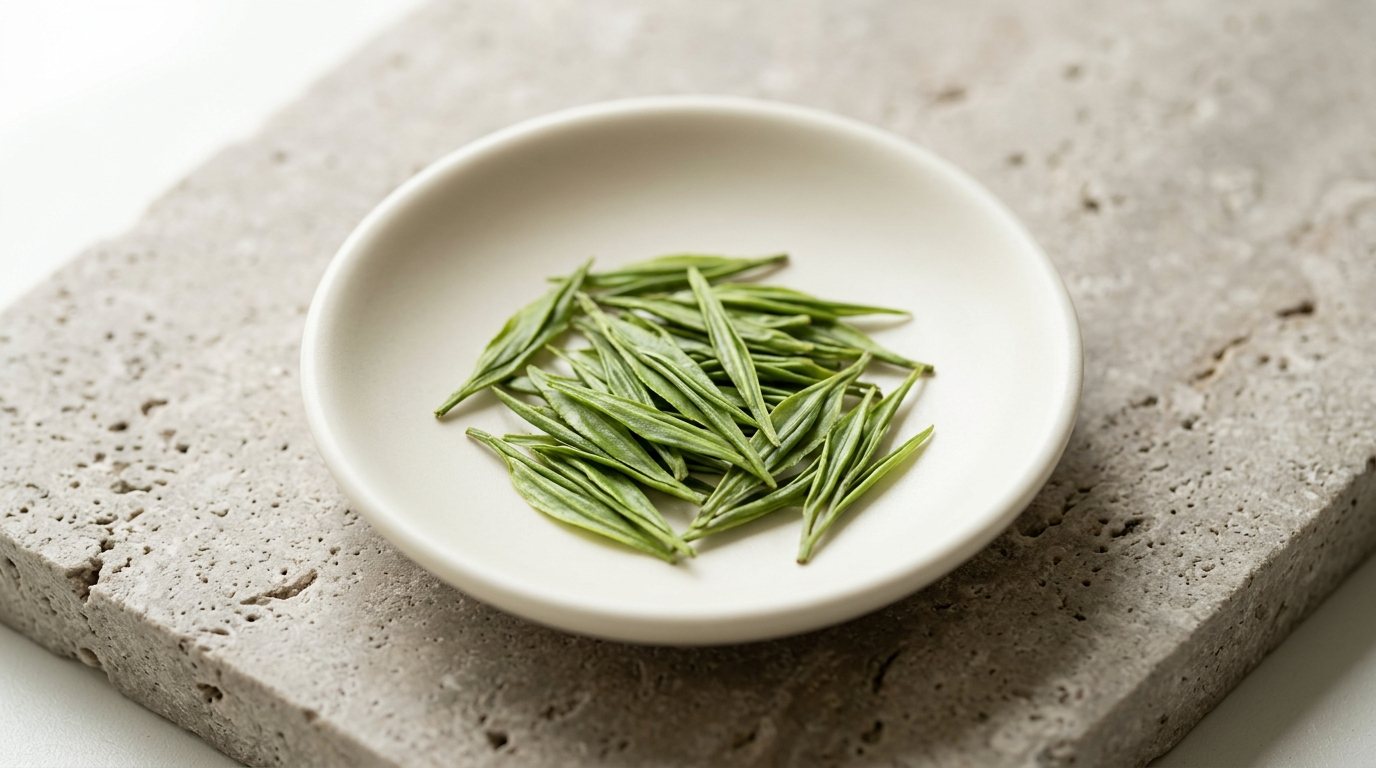
Slender upright bamboo-leaf buds dancing vertically in crystal glass from Mount Emei's cloud monasteries.
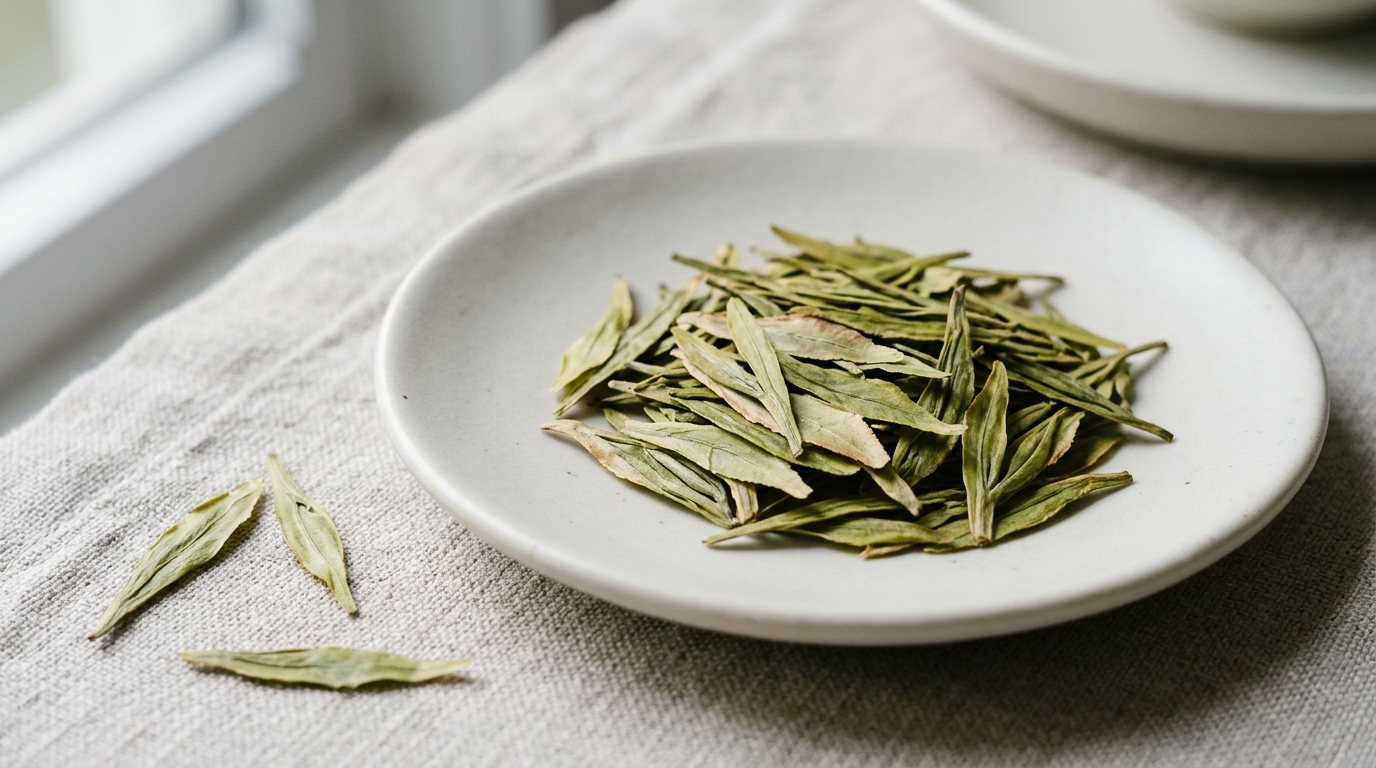
Flat-pressed emerald blades forged by bare hands in seasoned iron woks.

Downy silver-green spirals grown beneath blooming peach, plum, and loquat canopies.