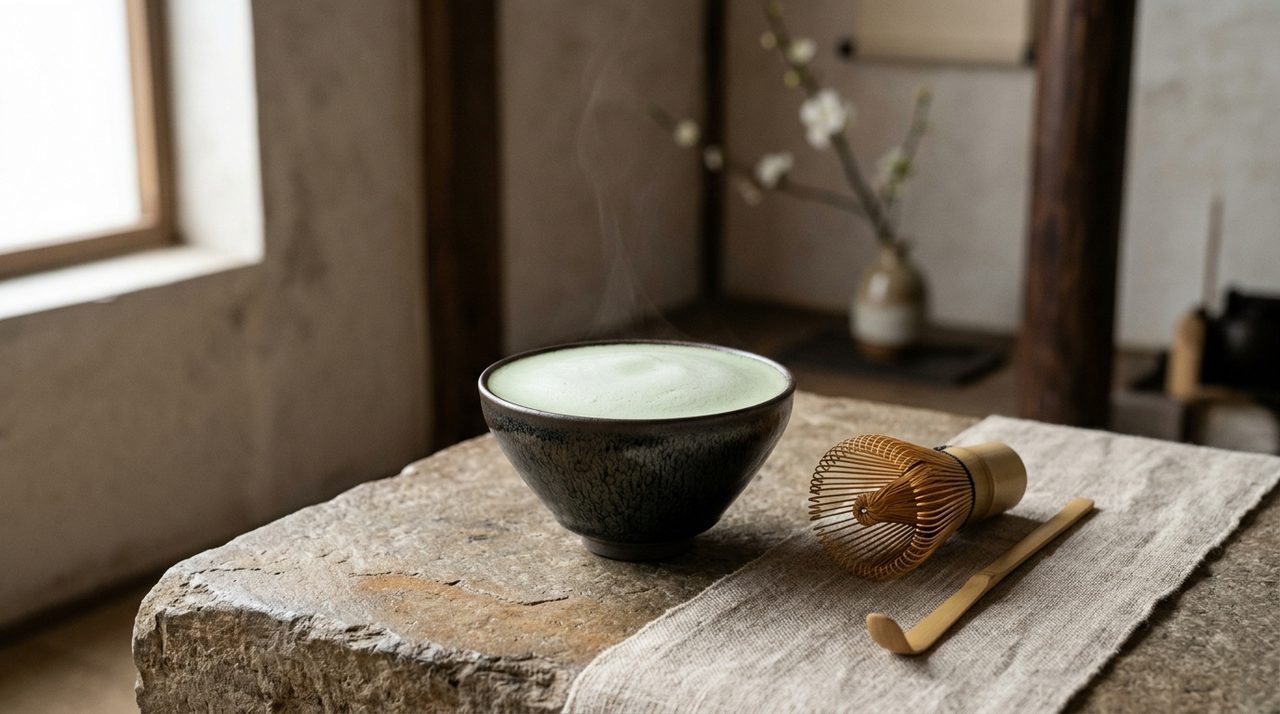
“The historic Chinese ancestor of whisked powdered tea — stone-milled on Jingshan Peak for dense snow-jade froth.”
Jingshan Song Dian Cha
Also known as: Song Dynasty Whipped Tea · Mo Cha (Powdered Tea) · Jingshan Temple Tea
Over 1,000 years ago at Jingshan Monastery near Hangzhou, monks perfected Dian Cha ('pointing tea') — steaming shaded leaves, stone-grinding them into sub-micron powder, and whisking hot water in dark Jian ware bowls into luminous, snow-like foam dense enough to hold calligraphy ('Cha Bai Xi'). This exact Jingshan lineage traveled to Japan in the 12th century to birth Chanoyu matcha culture.
- Alpine Terroir
- Jingshan Cloud Monastery Summit (768m) · Tianmu Range
- Elevation & Soil
- 600–768m misty monastic mountain slopes
- Cultivar
- Jingshan Shaded Heirloom & High-Amino Cultivars
- Harvest Window
- Late April (Following 21-Day Canopy Shading)
Dry Leaf · Infused Liquor · Spent Wet Leaf
State I · Dry Leaf
Morphology & Luster
Ultra-fine, electrostatic sub-micron jade powder with silky flour-like talc cohesion.
Form: 1000+ mesh granite-milled pure leaf powder, zero grit
Luster: Deep vivid imperial emerald jade
State II · Tea Liquor
Imperial Jade Crema
Dense, creamy pale-jade micro-foam crowning a luminous velvet emerald emulsion.
Clarity: Opaque velvety micro-foam emulsion
State III · Wet Leaf
Unfurled Foliage
Whole leaf is consumed completely in suspension — zero spent residue left behind.
Hue: Uniform vibrant emerald suspension
Elasticity: Micro-fine, smooth on the palate
How Jingshan Song Dian Cha Is Crafted
Blocks direct sunlight so tea bushes surge chlorophyll and sweet L-theanine while suppressing bitter catechins.
- 1. 21-Day Canopy Shading21 Days · 85–90% Shade
Blocks direct sunlight so tea bushes surge chlorophyll and sweet L-theanine while suppressing bitter catechins.
- 2. Steam Fixation100°C Steam · 20–30 sec
Locks in deep jewel-jade color and vivid sweet umami.
- 3. De-Stemming & De-VeiningAir Separation → Pure Tencha
Removes every stem and central vein, leaving only pure tender leaf parenchyma.
- 4. Slow Granite Stone Milling30–40g per Hour · Dark Room
Low-RPM natural stone wheels prevent friction heat from scorching volatile jade aromatics.
Precision Brewing Parameters
Rinse Protocol: Pre-warm bowl and soak bamboo whisk tines in warm water for 30s
Steep Timing: Pour 15 ml to whisk smooth paste ('Tiao Gao'), then add remaining 55 ml and whisk rapidly in 'M' strokes for 30s
Sommelier Note: Always sift powder through a fine mesh strainer first for velvety, clump-free micro-foam.
Harvest Grade Benchmark Matrix
Objective sensory indicators distinguishing authentic high-mountain core reserves from standard and commercial-grade harvests.
Ceremonial Jingshan Stone-Milled
★★★★★ Reserve- Dry Shape
- Ultra-fine talc-like powder (>1000 mesh), smooth smear test
- Leaf Color
- Vibrant deep imperial jade green
- Liquor
- Dense snowy micro-foam holding peaks >10 min
- Aroma
- Pecan cream, fresh bamboo vapor, sweet nori
- Palate
- Silky rich umami, zero chalkiness, zero bitterness
- Wet Leaf
- Complete suspension, zero grit
Classic Ceremonial Grade
★★★★☆ Classic- Dry Shape
- Fine smooth powder (~800 mesh)
- Leaf Color
- Bright lively spring green
- Liquor
- Smooth light crema froth
- Aroma
- Fresh sweet green leaf and gentle cream
- Palate
- Balanced sweet umami with crisp bright finish
- Wet Leaf
- Clean emulsion
Culinary / Ball-Milled Bulk
★★☆☆☆ Everyday- Dry Shape
- Slightly coarse powder, clumpy or sandy
- Leaf Color
- Dull yellowish olive-green
- Liquor
- Large short-lived bubbles, settles quickly
- Aroma
- Flat grassy or hay-like
- Palate
- Astringent, bitter, intended for milk/baking
- Wet Leaf
- Noticeable sediment at cup bottom
Storage Climate & Aging Horizon
Aging Potential: Never age — ultra-high surface area oxidizes rapidly in air and light.
- Store unopened tins in the refrigerator at 0–4°C.
- Always let cold tins reach room temperature before opening so moisture never clumps the powder.
Oxidation, Tea Nature & Occasion Fit
- Because you consume the entire suspended leaf, caffeine is substantial — enjoy in the morning or early afternoon and avoid late-night bowls.
Editorial & traditional culinary notes for contemplative tea appreciation only — not a medical claim or therapeutic cure.
Authentic Market Price Benchmarks (USD / 50g)
21-day shaded spring Tencha, granite-milled
Jingshan Ceremonial Stone-Milled (30g)
$75 – $115 (equiv. per 50g / $45–$68 per 30g)
Authenticity Check: Rub a pinch on white paper: genuine stone-milled ceremonial powder draws a long, silky, unbroken deep-emerald line.
Shaded first flush
Daily Ceremonial Whisking Grade
$42 – $70
Authenticity Check: Vibrant green with smooth froth and clean sweet finish.
Later harvest unshaded or lightly shaded
Culinary / Latte Grade
$14 – $28
Authenticity Check: Yellowish-olive hue and bitter finish; suited only for milk or pastry.
Common Questions on Jingshan Song Dian Cha
How does Chinese Song Dian Cha differ from Japanese Matcha?
Song Dian Cha is the direct 10th-century Chinese ancestor of Japanese Matcha, originating at Jingshan Monastery. Song rituals emphasize building thick, snowy micro-foam ('Jiao Mo') in dark Jian ware bowls via staged 'Tiao Gao' paste whisking.
Why must powdered tea be whisked at 75–80°C instead of boiling water?
Boiling water scalds the finely milled leaf particles instantly, collapsing foam stability, dulling the jade color, and unlocking harsh bitterness.
Why do I need to sift Dian Cha powder before whisking?
Sub-micron stone-milled powder builds static electricity and forms tiny dry clumps. Sifting guarantees silky foam and effortless whisking.
Experience Authentic Alpine Provenance
Taste Jingshan Song Dian Cha Inside Chamber III · Unperformed
SpiritDew sources small-batch single-origin whole leaves directly from China's alpine wilderness sanctuaries. Reserve this chamber individually or experience all nine sovereign categories in our numbered Tasting Flight.
Related Compendium Dossiers
View All 37 Teas →
21-day shaded first-flush jade powder milled cold for oceanic umami and radiant pistachio sweetness.
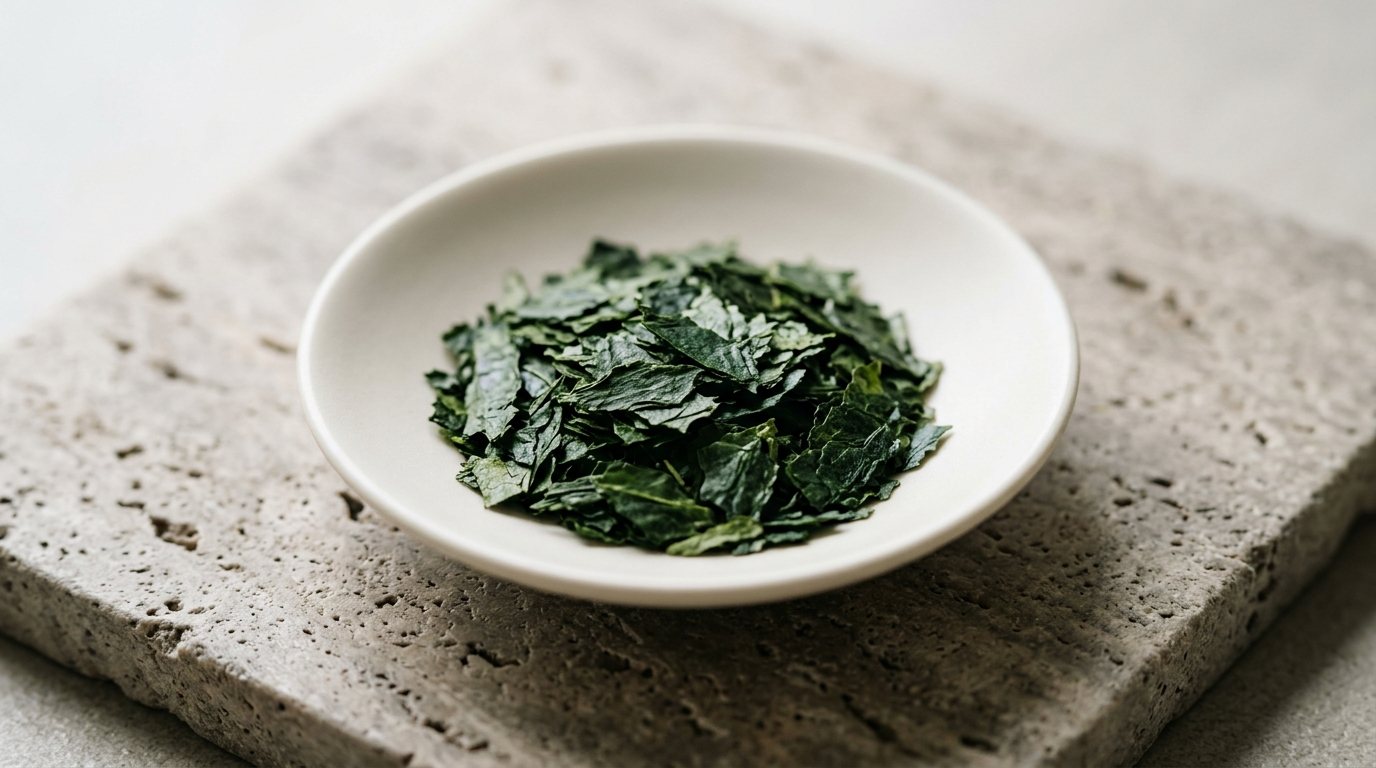
Pure shade-grown, de-stemmed emerald leaf flakes — the intact botanical precursor before the granite stone mill.
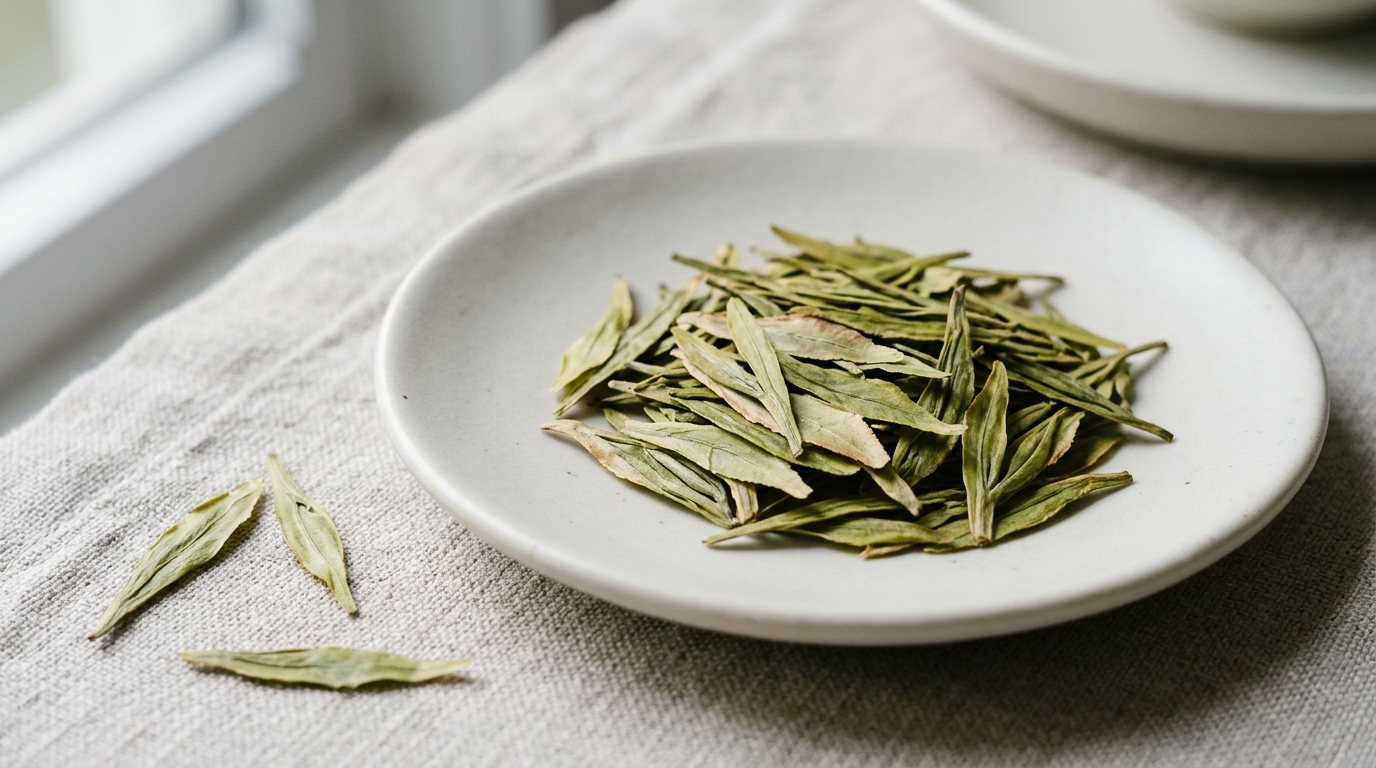
Flat-pressed emerald blades forged by bare hands in seasoned iron woks.

A rare temperature-sensitive albino green tea cultivar with double the L-theanine umami of ordinary green tea.