Whispering Jade in the Stone Mortar: The Song Dynasty Art of Whipped Dian Cha
Stone mills, pale jade foam, and the contemplative ceremony that predated modern Japanese matcha.
Terroir & Geographical Origin
Mount Jingshan Zen Buddhist Monastery, Yuhang · Zhejiang Province, China
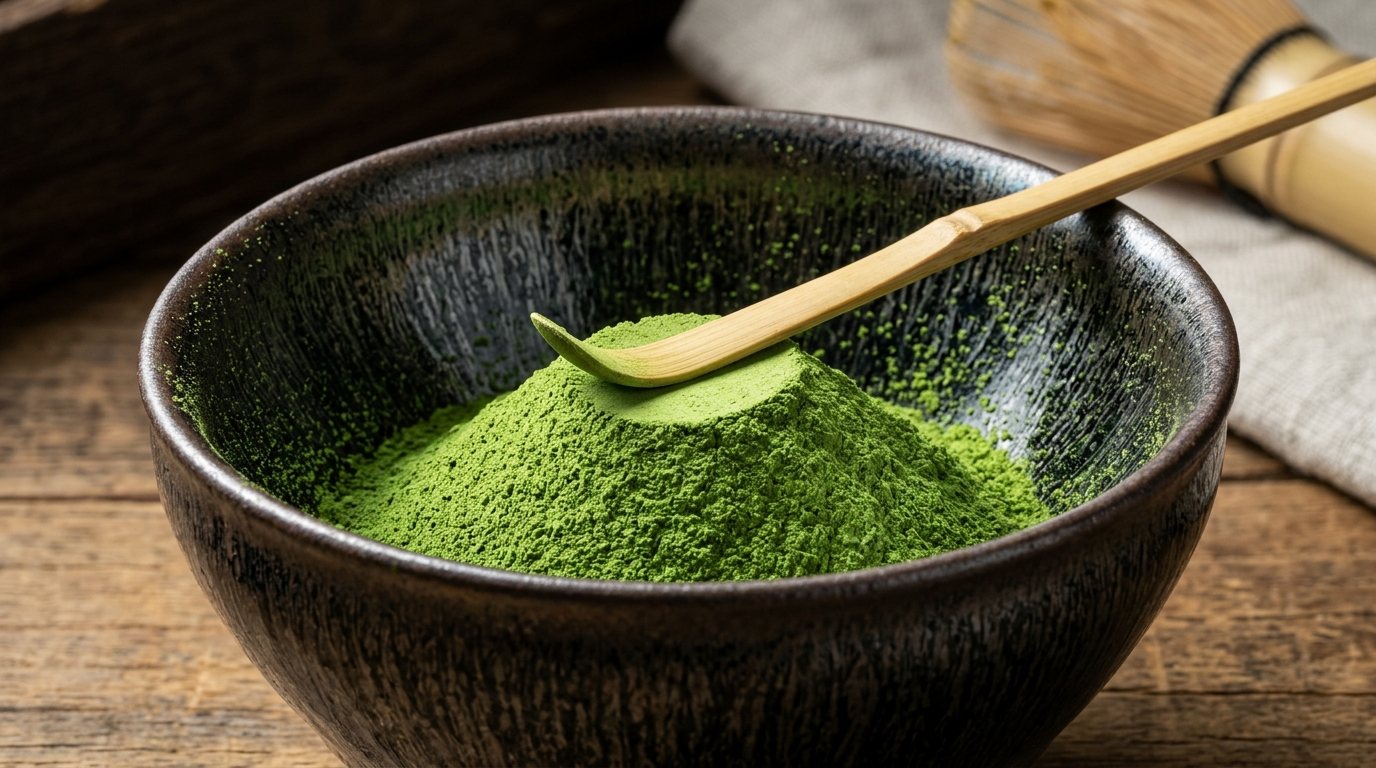
Song Dynasty Dian Cha is the classical Chinese whipped tea ritual developed in the Song Dynasty (960-1279 CE). Steamed, compressed green tea cakes are ground in stone mills into an ultra-fine celadon-jade powder, blended with boiling water in a dark ceramic bowl (Jian Zhan), and rhythmically whisked with a bamboo whisk (Cha Xian) into a dense, creamy white foam that clings to the rim without collapsing.
The Vanished White Sea
When modern tea drinkers envision classical Chinese tea, they picture loose whole leaves swirling inside a transparent glass or a reddish clay pot. But for the literati and Buddhist monks of the Song Dynasty (960–1279 CE), drinking whole leaves would have seemed rustic and unrefined.
The pinnacle of imperial refinement was Dian Cha: the art of the whipped froth. Plump spring tea buds were steamed over aromatic bamboo, pressed into imperial dragon-and-phoenix cakes, and slowly dried over low charcoal fires.
When prepared, a portion of the cake was ground in a stone mortar into a fine, silky powder the color of misty spring celadon. Placed into a dark, oil-spot glazed stoneware bowl, hot water was dripped from a long-spouted ewer while a finely split bamboo whisk worked in rapid, circular strokes until a rich, snowy foam covered the surface.
“The pinnacle of imperial refinement was Dian Cha: working a bamboo whisk until a rich, snowy foam covered the dark bowl.”
The Aesthetic of the Fleeting Foam
Song scholars gathered for 'Dou Cha'—tea competitions. In these silent duels, the victory went not to the loudest rhetoric, but to the whisk that created the most enduring foam.
If the powder was unevenly ground or the water temperature was off, the foam broke quickly, revealing the dark tea liquor beneath ('receding watermark' or Shui Hen). A true master whipped a micro-foam so velvety and uniform that it stood proud against the dark ceramic walls like fresh snow on a winter pond.
Yet the foam was entirely ephemeral. Within ten minutes, it subsided back into stillness. It was art created explicitly to disappear.
Chamber III: Disarming the Performer
In SpiritDew's Nine Chambers, Song Dian Cha belongs to Chamber III: Unperformed. The third passion is that of the performer—compulsive image management, measuring personal worth by trophies, applause, and polished public facades.
Whipped tea looks like the ultimate performance, but its actual craft destroys ego. You cannot force the foam to stand through vanity. If your wrist is tense or your mind is calculating the impression you are making, the foam collapses.
The whisking demands that you dissolve yourself entirely into the rhythmic dialogue between bamboo and water. When the pale jade cream forms, you drink it in silence. No audience is needed; the perfection was real, and it has already vanished.
“You cannot force the foam to stand through vanity. If your wrist is tense, the foam collapses.”
Inquiries & Curatorial Clarifications
How is Song Dynasty Dian Cha related to Japanese Matcha?
Japanese monks, notably Eisai and Dogen, studied at Mount Jingshan in Zhejiang during the Song Dynasty and brought the steamed tea seeds, stone-milling practices, and bamboo whisking rituals back to Japan, forming the basis of the Japanese tea ceremony (Chanoyu).
Why did Song Dynasty tea masters use dark black bowls (Jian Zhan)?
Song Dian Cha whipped foam was prized for its pure white froth ('white foam and green sea'). The dark iron-glazed Jian Zhan hare's fur bowls provided dramatic visual contrast, allowing judges to observe whose foam held the rim the longest.
Sensory Spectrum & Extraction Curve
Deep emerald meditation: intense shade-grown umami crowned with vibrant jade crema.
Tasting Signature: Melted Cream
Noble bitterness dissolving into rich, lingering sweetness.
Experience Jingshan Temple Song Dian Cha Powder
This artisanal whole-leaf harvest is preserved in Chamber III · The Inner Chamber. Available as a dedicated single harvest or as part of The Nine Chambers Tasting Flight.
Further Inquiries in the 2026 Archive
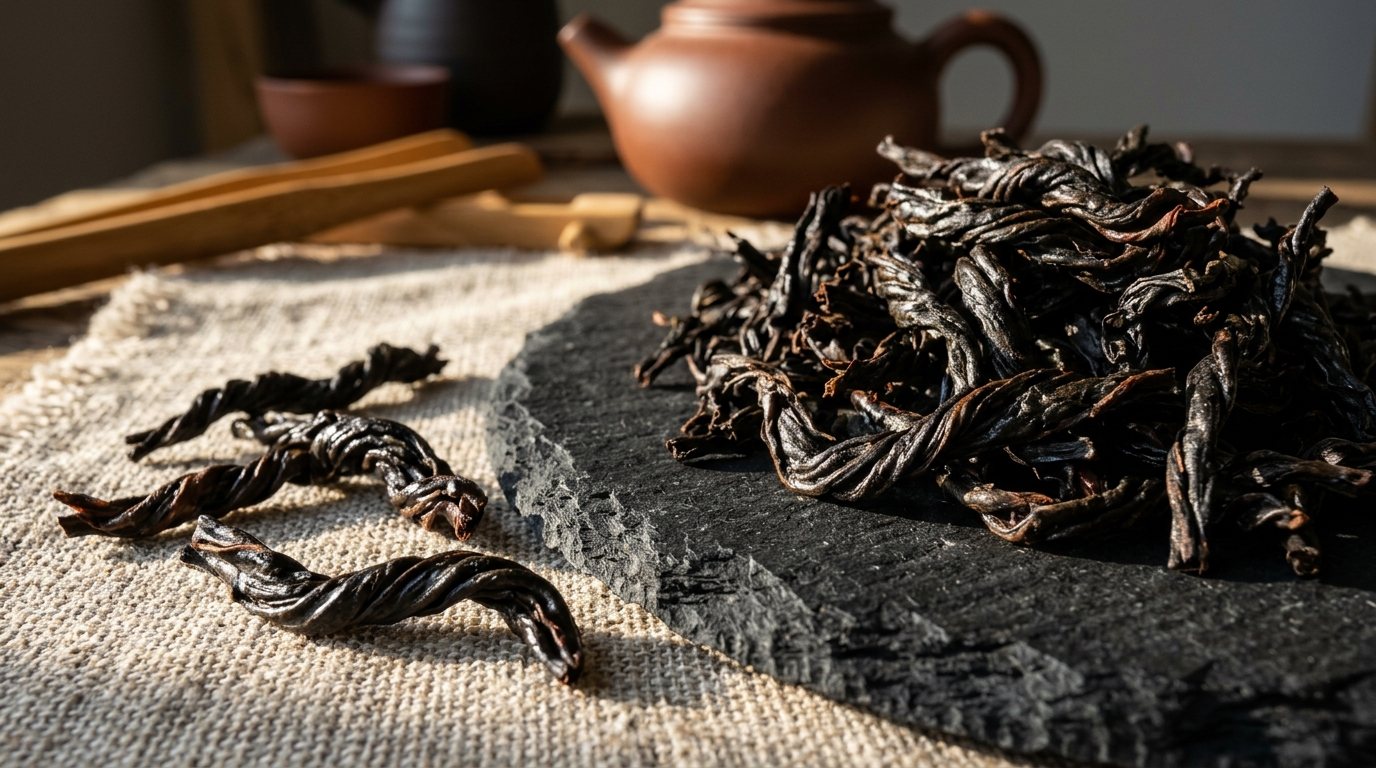
The Architecture of Stillness: Why the Leaf Needs Fire to Rest
A meditation on Wuyi cliff oolong, the ancient discipline of slow fruitwood charcoal roasting, ...
The Craft of Leaf & Mind · 6 min read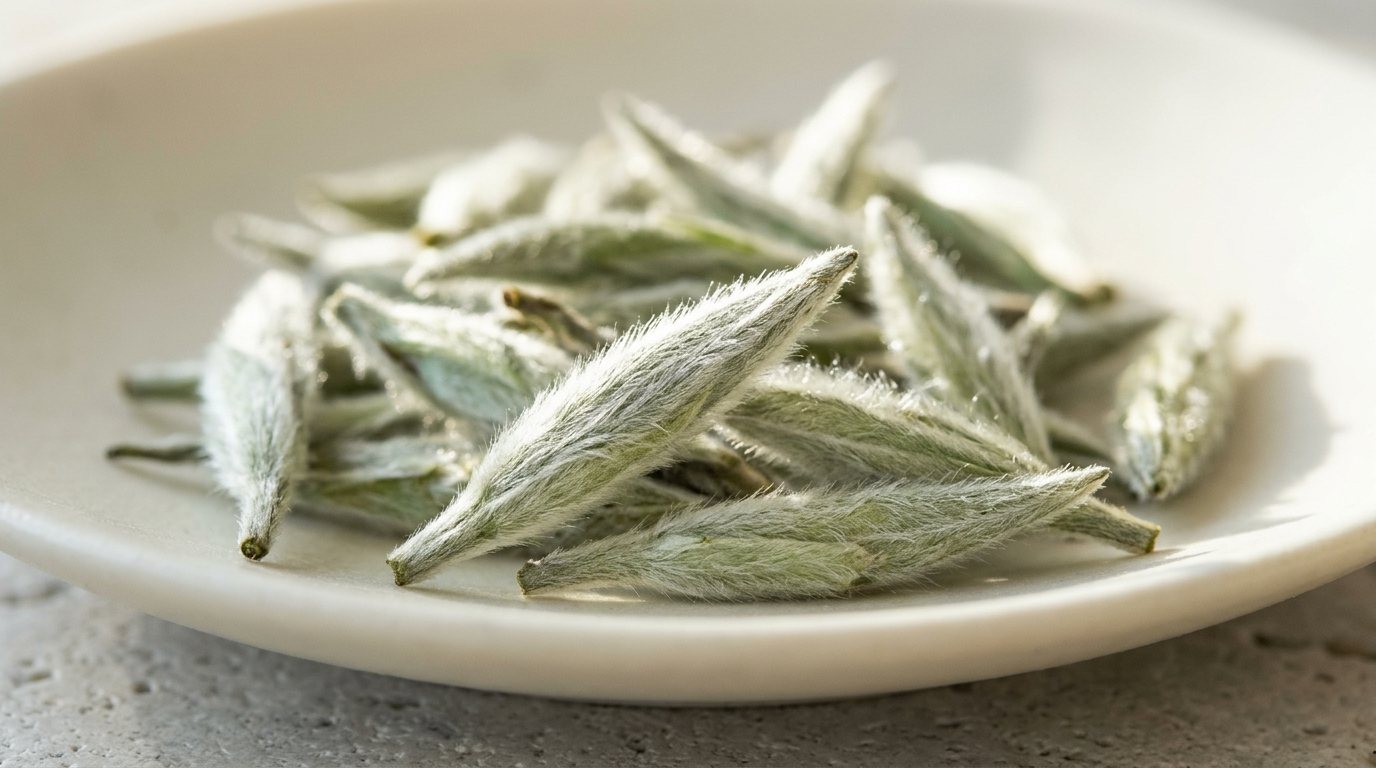
The Art of Non-Intervention: What Silver Needle Teaches Us About Doing Less
White tea undergoes no rolling, no panning, and no shaping. An inquiry into Fuding Baihao Yinzh...
Brewing & Ritual · 8 min read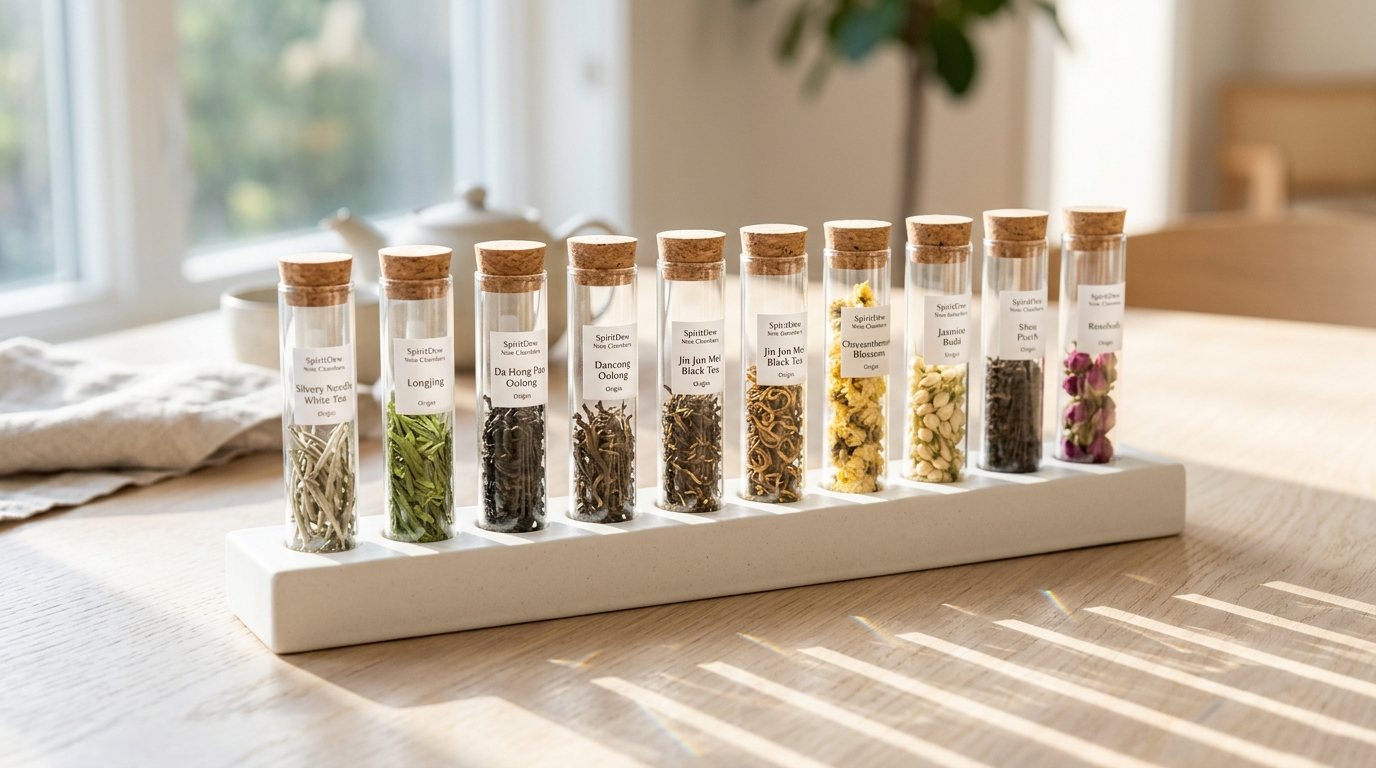
A Beginner's Guide to Gongfu Cha: How Five Grams of Whole Leaf Can Slow Down Time
A demystified, practical guide to Gongfu tea brewing. Why porcelain vessels matter, why boiling...