The Architecture of Stillness: Why the Leaf Needs Fire to Rest
On Wuyi rock oolong, the relentless patience of charcoal roasting, and what happens when we stop trying to quiet the mind.
Terroir & Geographical Origin
Wuyi Mountain National Park Core Gorge · Fujian Province, China
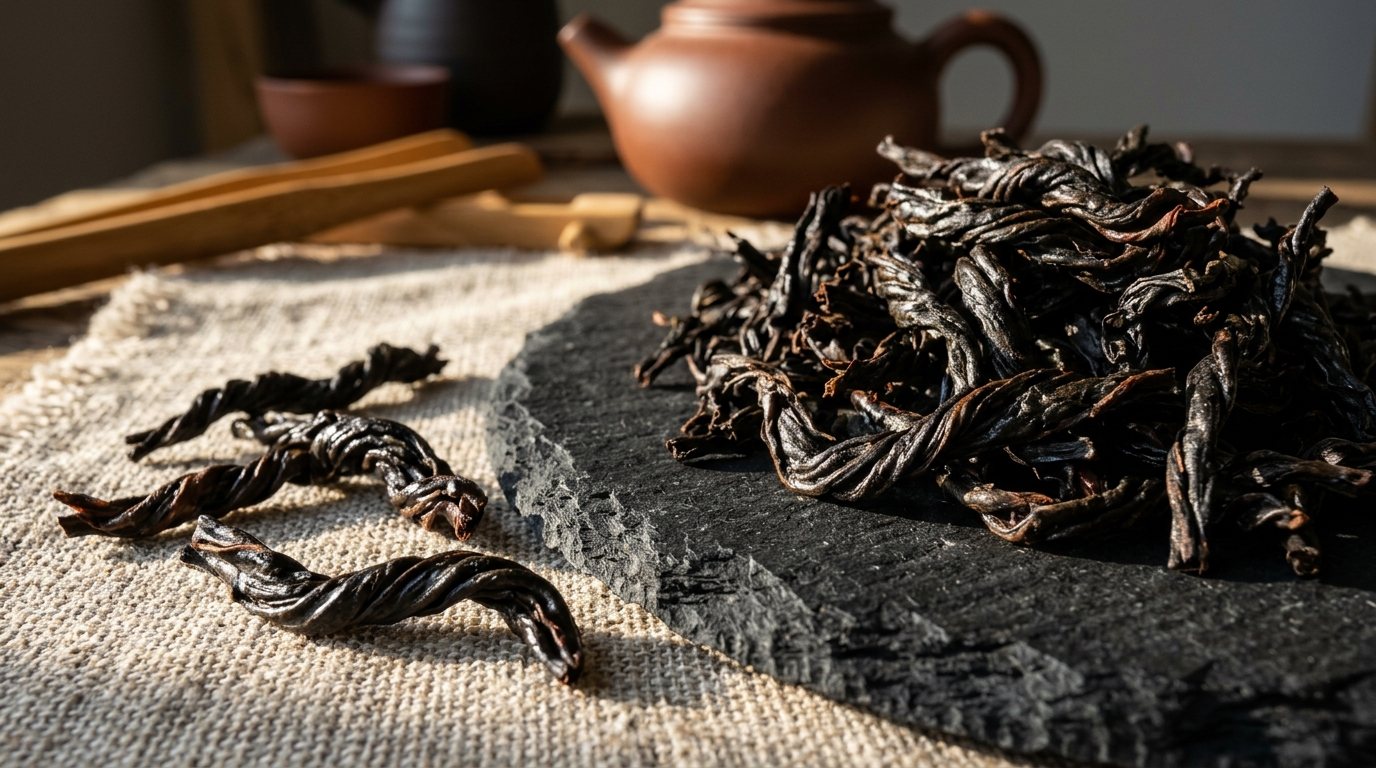
Wuyi Da Hong Pao is a heavily oxidized (65-70%) and multi-stage charcoal-roasted cliff oolong native to northern Fujian's Wuyi gorges. Famous for 'Yan Yun' (rock bone mineral resonance), it balances intense roasted cacao, sandalwood, and sweet orchid undertones with zero vegetal astringency.
The Myth of the Quiet Mind
Most contemporary tea narratives begin with an unspoken demand: arrive peaceful, breathe deeply, leave your turbulent world at the threshold. It is a seductive promise, but one that misunderstands both the human condition and the nature of the leaf.
When you sit down before a warm porcelain gaiwan with an agitated chest or a crowded mind, attempting to force tranquility only doubles the strain. You become someone fighting their own breath. But authentic Chinese tea was never conceived as an anesthetic.
The wild camellia bush grows not in serene sanctuaries, but upon jagged cliff ledges, battered by mountain storms and rooted into fractured granite scree. The leaf understands resistance. It does not ask you to disown your restlessness; it offers an anchor sturdy enough to withstand it.
“The leaf does not ask you to disown your restlessness; it offers an anchor sturdy enough to withstand it.”
The Crucible of Wuyi: Rock Bone and Ash
Nowhere is this dialogue between tension and surrender clearer than in the misty gorges of the Wuyi Mountains in northern Fujian. Here, rock oolongs—Yan Cha—are born between narrow ravines where sunlight enters for only three or four hours each day.
The flagship cultivar, Da Hong Pao (Big Red Robe), is neither delicate nor accommodating. After harvest, its leaves undergo an intense, protracted transformation: wilting, vigorous tossing to bruise the leaf margins, and hard firing. But its defining ordeal is Pei Huo—traditional slow charcoal roasting.
Over beds of white-hot fruitwood embers smothered under blankets of sifted rice straw ash, the twisted dark leaves rest in bamboo baskets for eight, ten, twelve hours at a stretch. This roasting is repeated two or three times across several months, allowing moisture and surface pungency to evaporate while driving the mineral sweetness deep into the leaf veins.
This is what Chinese connoisseurs call 'Yan Yun'—the mineral rock bone. It is an astringent, deep, caramelized resonance that coats the throat and refuses to disappear.
“Yan Yun is not the absence of bitterness. It is bitterness that has traveled through fire until it yields pure mineral sweetness.”
Chamber VIII: Meeting Fire with Fire
In SpiritDew's Cabinet of Nine, this roasted cliff oolong belongs to Chamber VIII: Unclenched. In the language of the Enneagram, the eighth passion is that of the challenger—excessive force, armor against vulnerability, the urge to dominate reality before reality can wound.
If you hand a fragile, grassy green tea to an individual wrestling with immense internal pressure, the tea vanishes or tastes watery and insubstantial. It fails to meet the gravity of their state.
Da Hong Pao does not back down. Brewed with 100°C rolling boiling water in a clay pot or thick white porcelain vessel, it strikes the palate with smoke, cacao, baked plum, and damp river shale. It meets force with equal presence. And then, astonishingly, after the third swallow, the chest loosens. A long, cooling throat sweetness surges upward from the base of the palate.
You did not have to calm down. The tea absorbed the friction, ground it into the stone, and left you sitting in the clear air that follows a thunderstorm.
The Ritual of Non-Correction
How, then, should one sit with such a leaf at home? We suggest a practice of complete non-correction:
1. Use boiling water without apology. Roasted oolongs demand thermal courage. If your water is merely hot, the mineral core remains trapped inside the leaf structure.
2. Keep the steep brief. Ten to fifteen seconds is sufficient for whole twisted leaves. Watch the liquor pour forth in an amber stream the color of aged cognac.
3. Notice the empty cup. Before drinking, lift the warm, empty vessel to your nose. The fragrance that clings to the glazed porcelain—roasted wild honey, orchids, and warm timber—is often more lucid than the liquid itself.
Above all, abandon the expectation of achieving a spiritual state. The cup is not a mirror of your virtue. It is five grams of oxidized botanical matter interacting with warm water and human perception.
“The cup is not a mirror of your virtue. It is five grams of oxidized leaf meeting boiling water.”
Inquiries & Curatorial Clarifications
What creates Yan Yun (Rock Bone) in Da Hong Pao?
Yan Yun is the tactile mineral depth produced by tea bushes rooted into weathered volcanic sandstone scree, combined with traditional low-temperature fruitwood charcoal roasting that caramelizes leaf sugars while preserving mineral elasticity.
Why does Da Hong Pao require rolling boiling water?
Due to heavy charcoal roasting and thick mature leaf cuticles, water below 98°C fails to extract the deep polymerized thearubigins and heavier mineral aromatics, leaving the cup thin and muted.
Sensory Spectrum & Extraction Curve
Iron bones and floral breath: forged in volcanic chasms, tempered by threefold fire.
Tasting Signature: Caramelized Rock Sugar
Deep throat warmth with lingering sweet resonance.
Experience Traditional Charcoal Da Hong Pao
This artisanal whole-leaf harvest is preserved in Chamber VIII · The Cliffside Fire. Available as a dedicated single harvest or as part of The Nine Chambers Tasting Flight.
Further Inquiries in the 2026 Archive
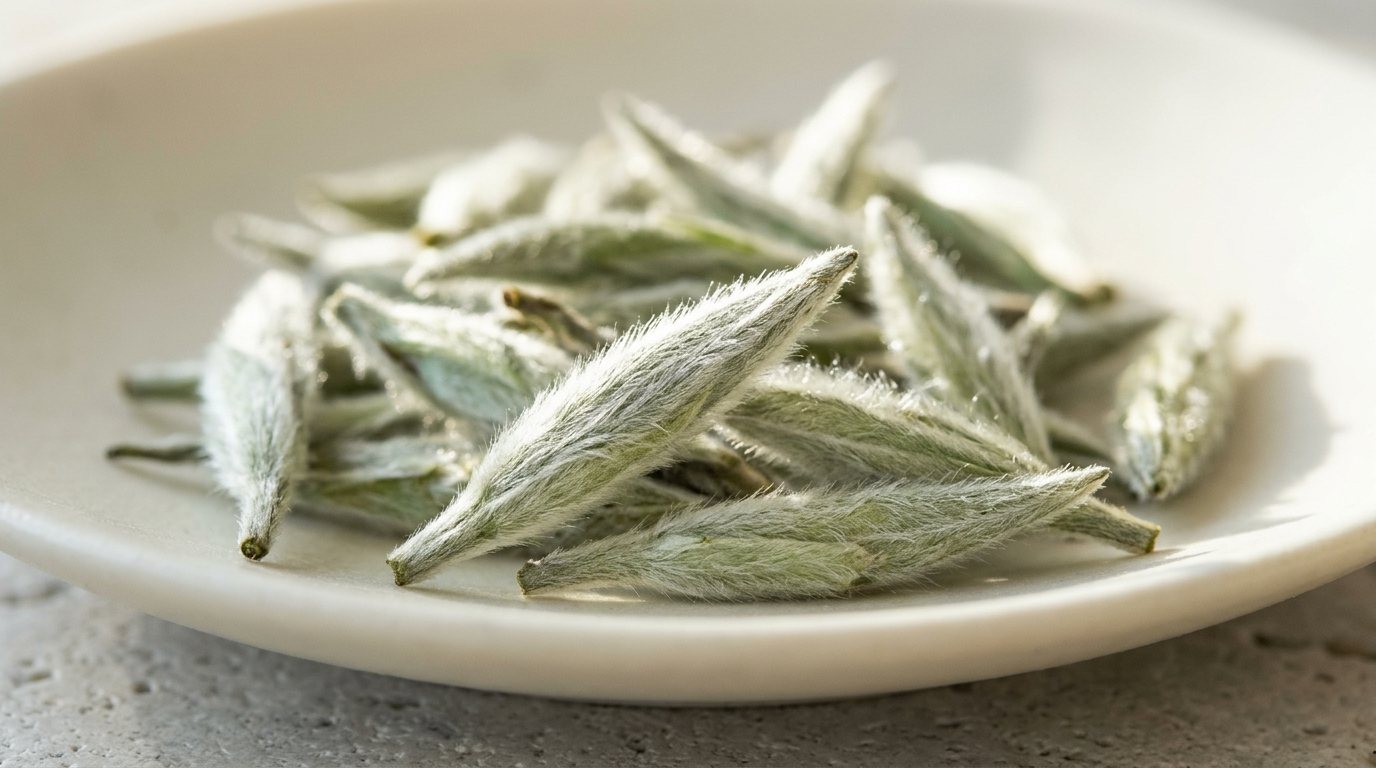
The Art of Non-Intervention: What Silver Needle Teaches Us About Doing Less
White tea undergoes no rolling, no panning, and no shaping. An inquiry into Fuding Baihao Yinzh...
Brewing & Ritual · 8 min read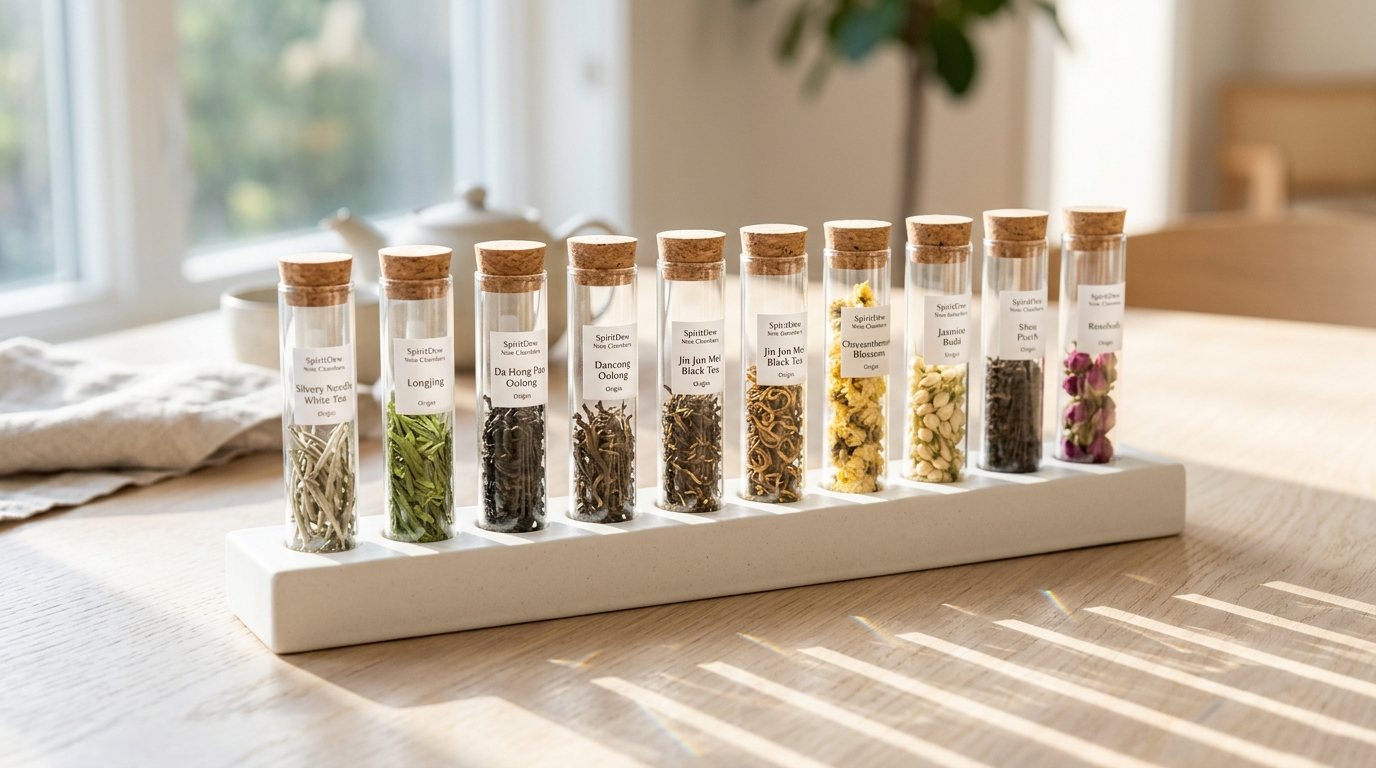
A Beginner's Guide to Gongfu Cha: How Five Grams of Whole Leaf Can Slow Down Time
A demystified, practical guide to Gongfu tea brewing. Why porcelain vessels matter, why boiling...
Terroir & Antiquity · 7 min read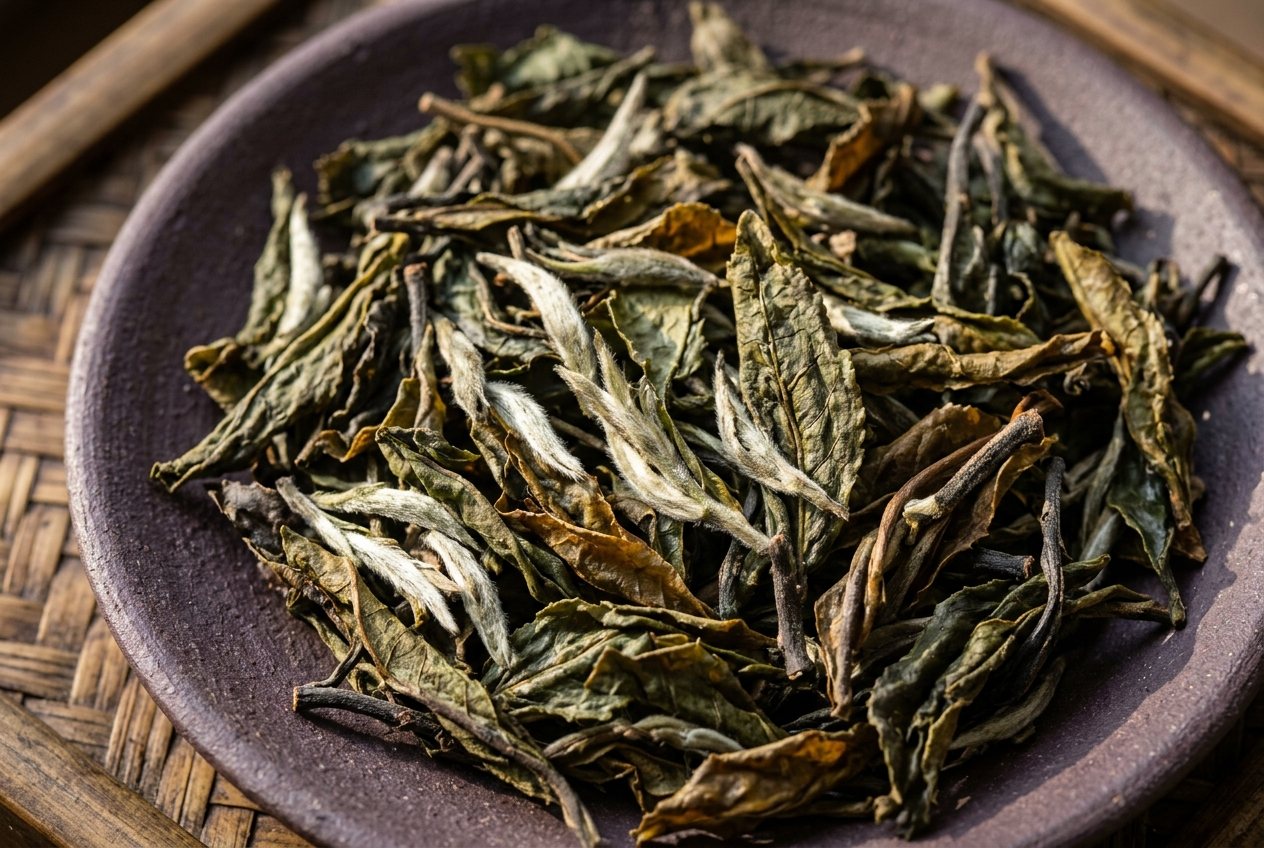
The Living Ferment: Ancient Trees, Slow Microbes, and Deep Time
In the mist-drenched primeval forests of Yunnan, ancient tea trees have watched dynasties rise ...