The Living Ferment: Ancient Trees, Slow Microbes, and Deep Time
Drinking Sheng Puerh from 300-year-old mountain arbors: how slow aging recalibrates our sense of urgency.
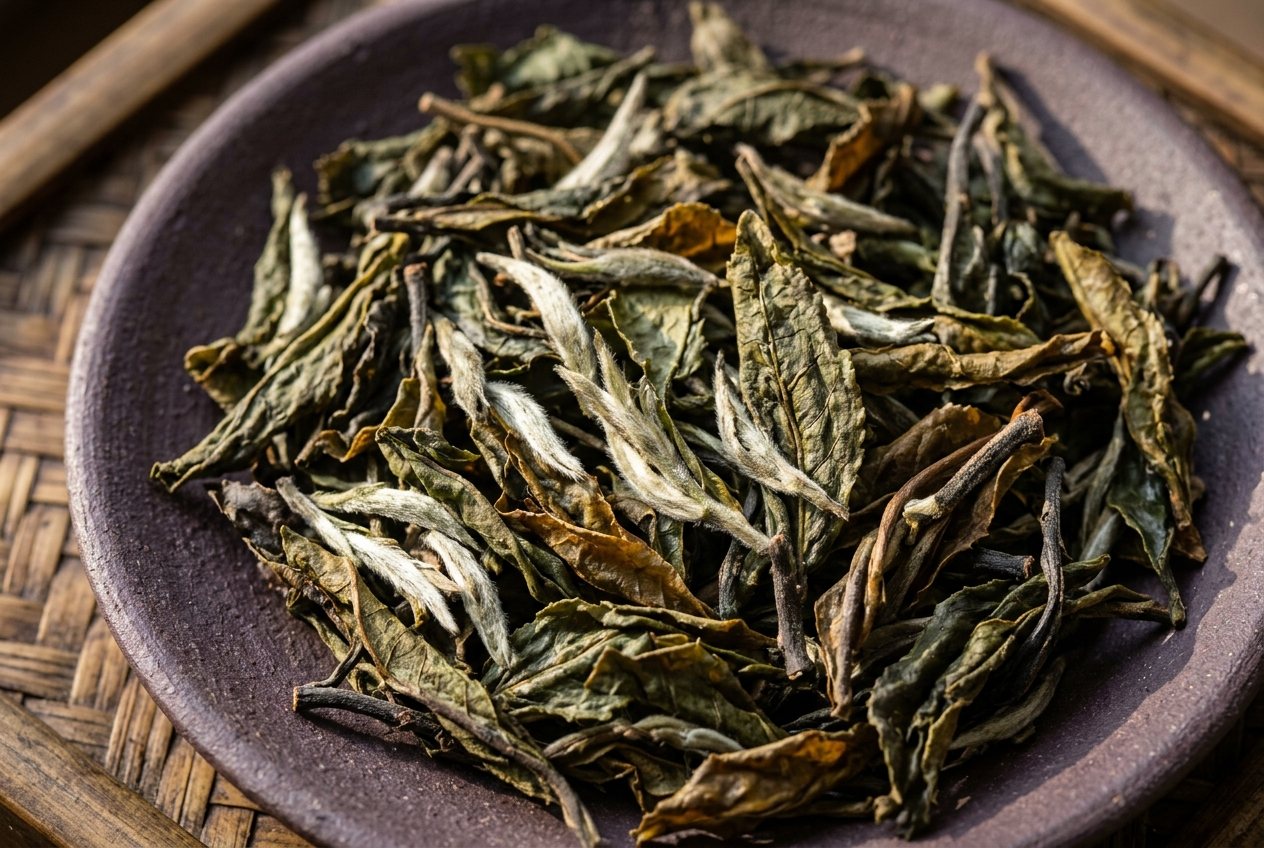
Terroir & Geographical Origin
Yiwu Ancient Tea Mountain, Xishuangbanna · Yunnan Province, China
Yiwu Sheng Puerh is crafted from centuries-old Camellia sinensis var. assamica arbors in southern Yunnan. Sun-dried at low temperature, the unheated enzymes and indigenous microbes facilitate slow secondary post-fermentation over decades, shifting flavor from wild honey and camphor to deep amber resin.
Trees That Outlive Dynasties
In the high-altitude rainforests of Xishuangbanna and Lincang in southwestern Yunnan, the tea plant is not a manicured waist-high hedge. It is an ancient, sprawling arbor with trunks as thick as temple columns and roots that dig ten meters into ancient subsoil.
Some of these wild arbor trees sprouted when the Ming and Qing dynasties were still young. They have survived forest fires, monsoon cycles, and centuries of seasonal picking without chemical fertilizers or irrigation. Their deep taproots draw complex trace minerals from decomposed granite and fallen jungle humus.
When you harvest leaves from a 300-year-old tree, you are not merely picking agriculture. You are harvesting accumulated geological memory.
“When you brew leaves from a 300-year-old arbor, you are tasting accumulated geological memory.”
The Living Ferment
Unlike green tea, which is deliberately fired to halt all enzymatic activity, Yunnan Sheng Puerh (Raw Puerh) is sun-dried at low temperature, preserving living microbial flora and dormant enzymes inside the leaf tissue.
Pressed into traditional stone-molded discs or kept as whole loose leaves, the tea continues to respire across decades. Aspergillus, yeasts, and natural enzymes slowly oxidize bitter catechins into complex, soothing polysaccharides and thearubigins.
A young Sheng Puerh is fierce, wild, and packed with mountain electricity. Ten years later, it softens into dried apricots and forest honey. Thirty years later, it enters an unhurried twilight of damp stone, Chinese medicine wood, and deep amber tranquility.
Chamber V: Withholding Nothing
In SpiritDew's Cabinet of Nine, Ancient Arbor Puerh presides over Chamber V: Unwithheld. The fifth passion is that of the observer who retreats—holding back emotional energy, hoarding time, living in the head out of fear that the world will demand too much.
Sheng Puerh demands complete somatic presence. As the deep broth descends through the throat, it triggers what Chinese connoisseurs describe as 'Cha Qi' (tea energy)—a visceral warming sensation behind the ribs, an opening of the chest, and an involuntary deepening of breath.
The ancient leaf asks for nothing in return. It has spent three centuries preparing for this thirty-minute encounter in your cup. Drink it, let the warmth flood through your arms, and realize that you are allowed to be present in this hour without defending yourself.
“The ancient tree spent three centuries preparing for this cup. You are allowed to be here without defending yourself.”
Inquiries & Curatorial Clarifications
How is Sheng Puerh different from Shu Puerh?
Sheng (Raw) Puerh ages naturally over decades through living microbial action, while Shu (Ripe) Puerh undergoes an accelerated 45-day controlled wet-pile microbial fermentation (Wo Dui) invented in the 1970s.
What is Cha Qi in Yunnan Ancient Arbor tea?
Cha Qi refers to the physiological resonance of deeply rooted ancient trees: an expansive warming sensation in the chest, deepened respiration, and a lucid, centered nervous system state.
Sensory Spectrum & Extraction Curve
Deep ancient tree roots whispering through cedar smoke, dried date, and petrichor.
Tasting Signature: Dark Jujube Honey
Rich, resonant throat sweetness that persists for hours.
Experience Yiwu Old Arbor Raw Puerh
This artisanal whole-leaf harvest is preserved in Chamber V · The Present Hour. Available as a dedicated single harvest or as part of The Nine Chambers Tasting Flight.
Further Inquiries in the 2026 Archive
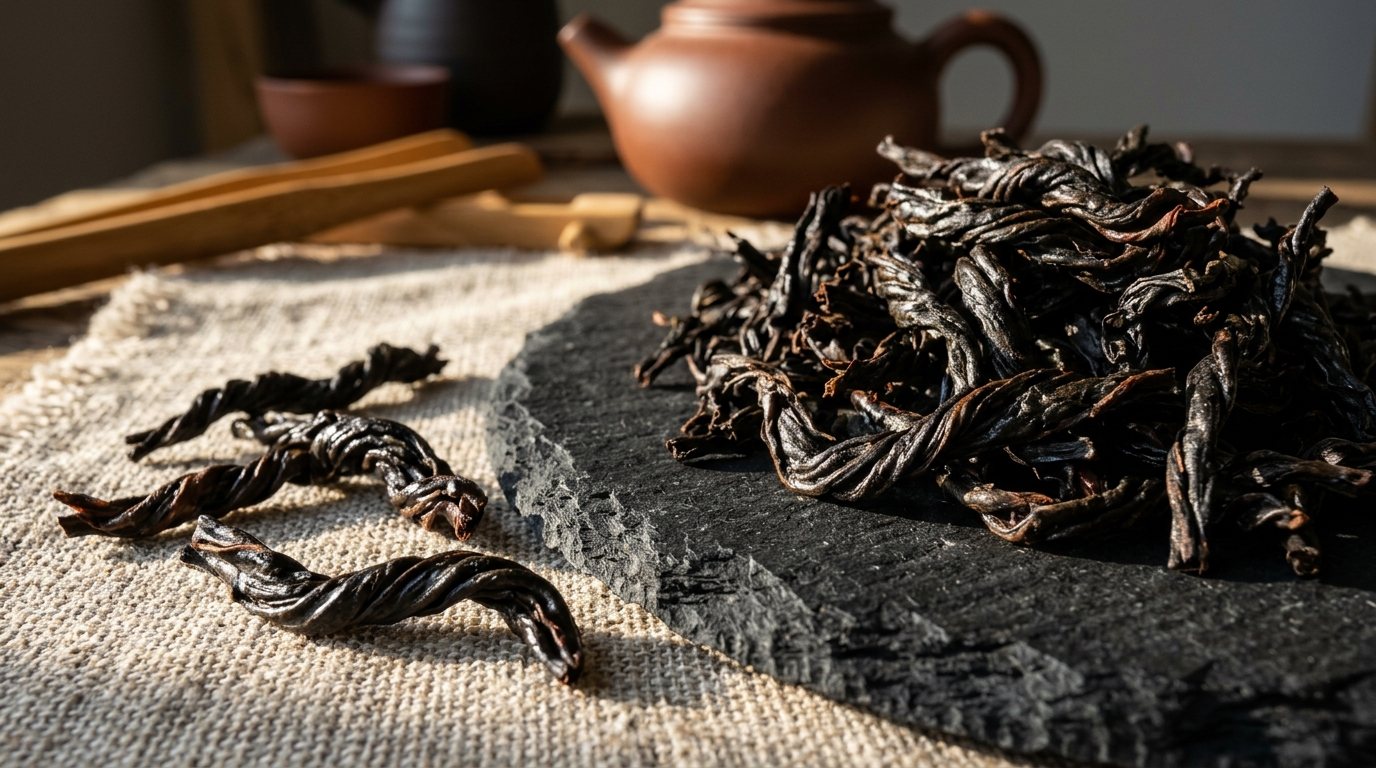
The Architecture of Stillness: Why the Leaf Needs Fire to Rest
A meditation on Wuyi cliff oolong, the ancient discipline of slow fruitwood charcoal roasting, ...
The Craft of Leaf & Mind · 6 min read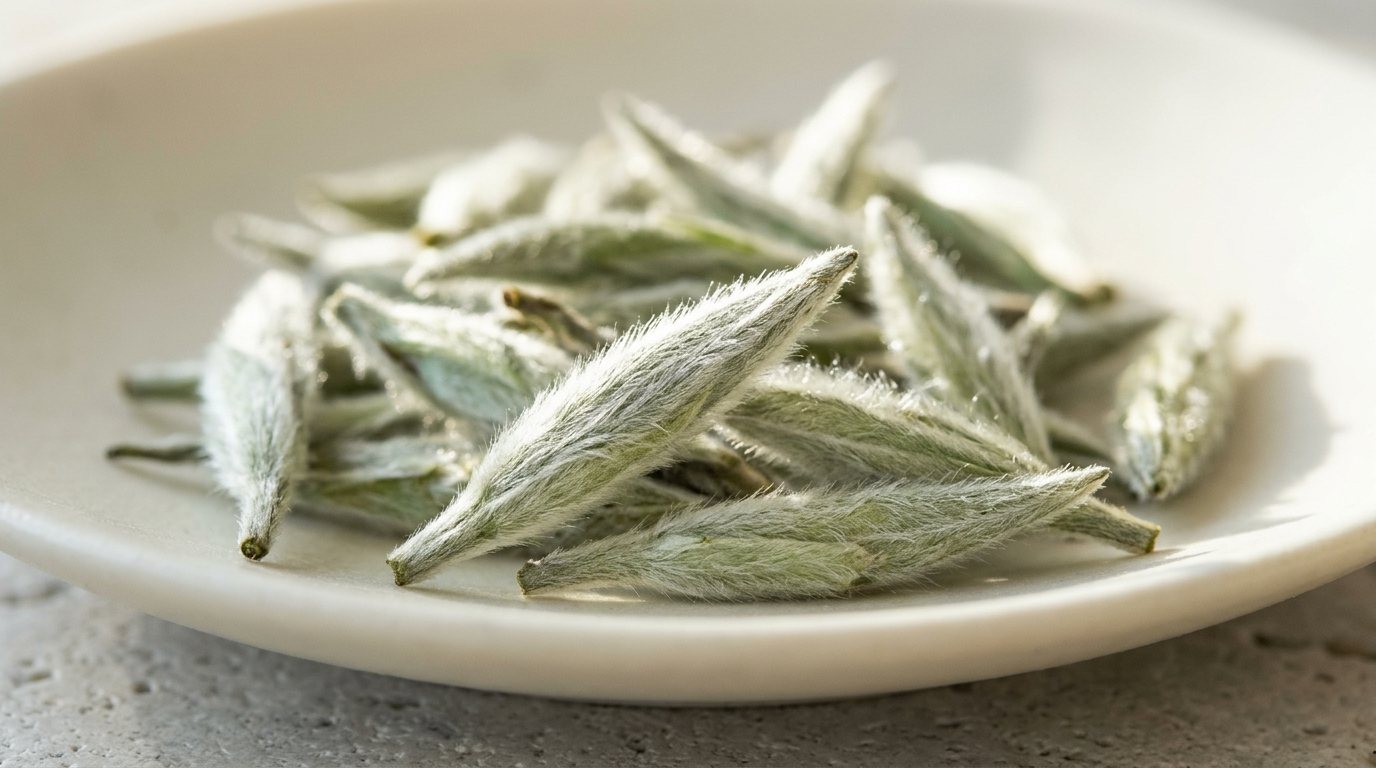
The Art of Non-Intervention: What Silver Needle Teaches Us About Doing Less
White tea undergoes no rolling, no panning, and no shaping. An inquiry into Fuding Baihao Yinzh...
Brewing & Ritual · 8 min read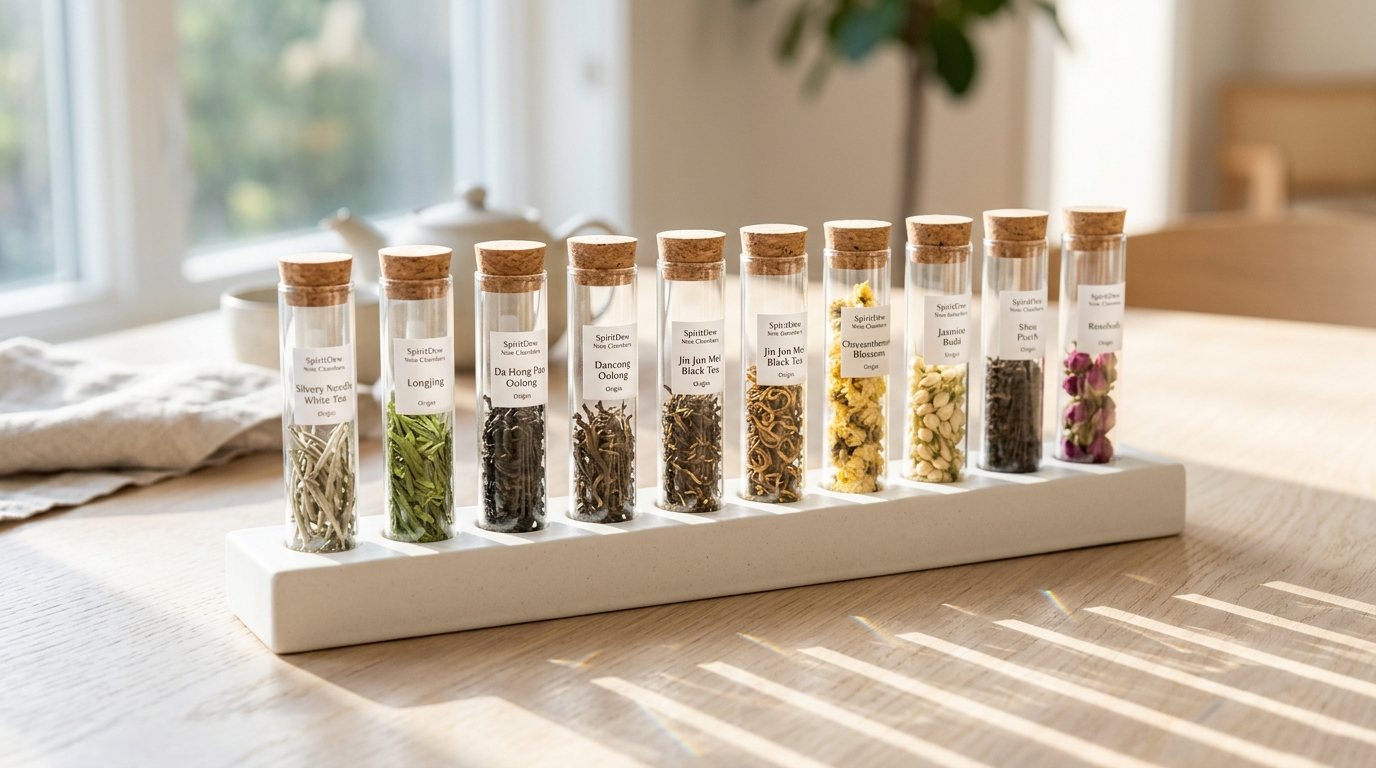
A Beginner's Guide to Gongfu Cha: How Five Grams of Whole Leaf Can Slow Down Time
A demystified, practical guide to Gongfu tea brewing. Why porcelain vessels matter, why boiling...