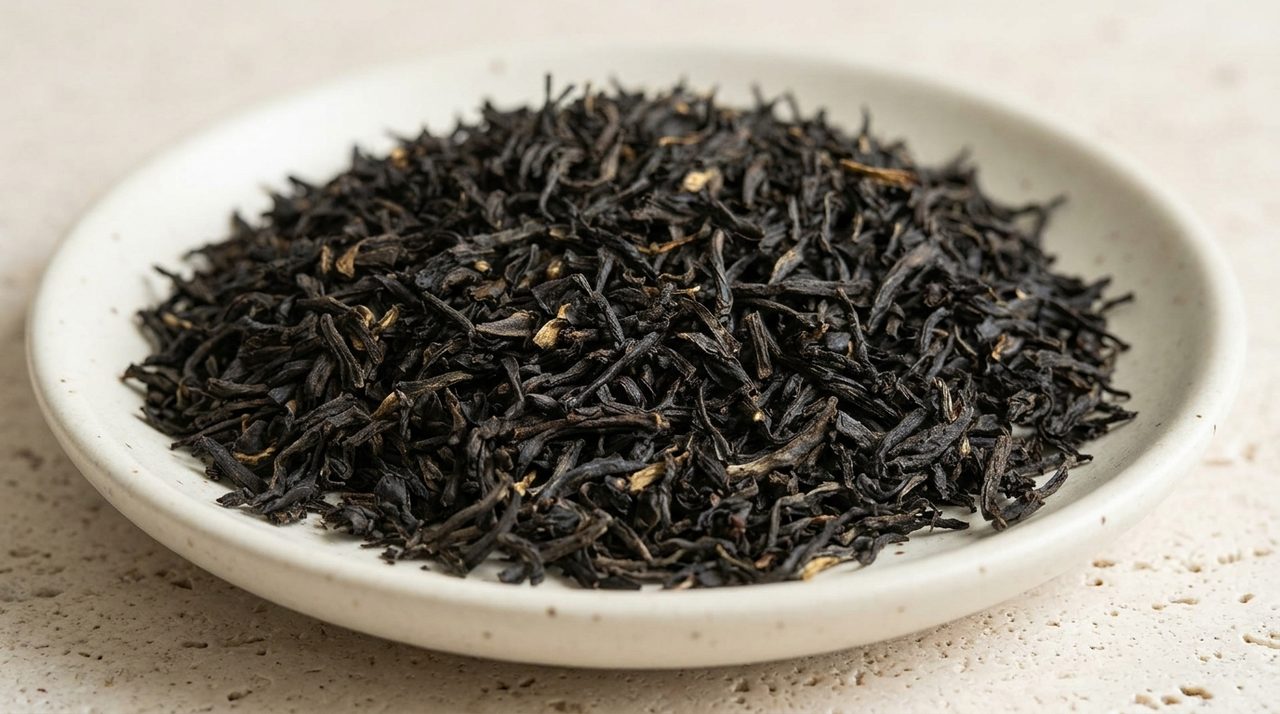
“The historic benchmark of Chinese Gongfu black tea — slender burgundy needles steeped in Damascus rose, dried plum, and 'Keemun Aroma'.”
Keemun Imperial Haoya
Also known as: Qimen Gongfu Black Tea · Keemun Mao Feng · Queen of Black Teas
Alongside Darjeeling and Uva, Anhui's Qimen (Keemun) is celebrated as one of the world's Three Great High-Aroma Black Teas. Crafted from the indigenous Qimen Zhuye cultivar in cool misty valleys south of Mount Huangshan, Imperial Haoya unleashes the famed 'Qimen Xiang' — a haunting bouquet of Damascus rose, wild orchid, sweet damson plum, and gentle cedar honey.
- Alpine Terroir
- Lichun Ancient Alpine Ravine · Huangshan South Foothills, Qimen
- Elevation & Soil
- 400–700m forested red-sandstone valleys
- Cultivar
- Qimen Zhuye (Bamboo-Leaf Heirloom)
- Harvest Window
- Mid – Late April (Early Spring Tender Shoots)
Dry Leaf · Infused Liquor · Spent Wet Leaf
State I · Dry Leaf
Morphology & Luster
Slender, tidy, jet-black glossy needles lightly speckled with fine golden-amber bud tips.
Form: Fine straight slender strands (1.5–2 cm), neat and uniform
Luster: Oily jet-black polish ('Wu Run') with subtle golden hairs
State II · Tea Liquor
Burgundy Rose Amber
Brilliant translucent burgundy-amber liquor framed by a glowing golden cup rim.
Clarity: Crystal clear jewel-ruby brilliance
State III · Wet Leaf
Unfurled Foliage
Uniform tender copper-crimson shoots glowing brightly with sweet floral rose steam.
Hue: Vibrant bright copper-red
Elasticity: Soft, plump, and unbroken
How Keemun Imperial Haoya Is Crafted
Plucks tender Qimen Zhuye shoots naturally rich in geraniol (rose-scent precursor).
- 1. Early Spring PluckingApril · 1 Bud 1–2 Leaves
Plucks tender Qimen Zhuye shoots naturally rich in geraniol (rose-scent precursor).
- 2. Cool Valley Withering12–16 Hours
Develops sweet stone-fruit and rose aromatic precursors.
- 3. Precision RollingTight Slender Strand Roll
Breaks cell walls evenly for full deep oxidation.
- 4. Full Enzymatic Oxidation4–6 Hours · Warm Humid Room
Turns leaf copper-red and unlocks signature 'Keemun Aroma'.
- 5. Gentle Drying & Sieving (Jing Zhi)80–95°C · Fine Sorting
Traditionally sorted by hand-sieves into sleek, uniform Imperial Haoya strands.
Precision Brewing Parameters
Rinse Protocol: Brief 3s warm rinse
Steep Timing: Steep 1: 8s → Steep 2: 10s → Steep 3: 15s → Steep 4–8: +10s
Sommelier Note: 90–94°C water lifts Damascus rose perfume dramatically higher than scalding 100°C.
Harvest Grade Benchmark Matrix
Objective sensory indicators distinguishing authentic high-mountain core reserves from standard and commercial-grade harvests.
Lichun Core Imperial Haoya / Xiang Luo
★★★★★ Reserve- Dry Shape
- Fine, sleek, glossy jet-black needles with golden down tips
- Leaf Color
- Oily lustrous obsidian with subtle gold tips
- Liquor
- Clear jewel ruby-amber with bright golden rim
- Aroma
- Unmistakable Damascus rose, sweet orchid, damson plum, cedar honey ('Qimen Xiang')
- Palate
- Silky, mellow, deeply aromatic sweetness enduring 8+ Gongfu steeps
- Wet Leaf
- Uniform tender copper-red shoots
Keemun Maofeng / First Grade Gongfu
★★★★☆ Classic- Dry Shape
- Whole intact slightly curved dark strands
- Leaf Color
- Glossy dark brown-black
- Liquor
- Bright clear orange-red
- Aroma
- Warm honey, sweet dried fruit, gentle rose
- Palate
- Smooth, rounded, zero bitterness
- Wet Leaf
- Plump intact copper leaves
Broken Export / Tea-Bag Keemun
★★☆☆☆ Everyday- Dry Shape
- Cut short fragments and fannings
- Leaf Color
- Dull matte black
- Liquor
- Dark cloudy brown-red
- Aroma
- Simple malty-woody black tea scent
- Palate
- Brisk and astringent; meant for milk
- Wet Leaf
- Broken dark dust
Storage Climate & Aging Horizon
Aging Potential: Peak floral bloom between 2–18 months; stays smooth and honeyed through year 3. (GB/T 13738.1 (Gongfu Black Tea — Qimen))
- Store dry and sealed at ambient temperature away from kitchen spices.
Oxidation, Tea Nature & Occasion Fit
- Warming and smooth; avoid very strong late-evening pots if caffeine-sensitive.
Editorial & traditional culinary notes for contemplative tea appreciation only — not a medical claim or therapeutic cure.
Authentic Market Price Benchmarks (USD / 50g)
Protected Qimen core valleys
Lichun Core Imperial Haoya (Zhuye Cultivar)
$42 – $95
Authenticity Check: Look for unmistakable natural rose-plum-honey perfume ('Qimen Xiang') and glossy bright copper wet leaves.
Anhui mountain slopes
Qimen Maofeng / First Grade
$20 – $38
Authenticity Check: Whole-leaf sweetness and lovely rose aroma for daily drinking.
Cut blended leaf
Standard Export Keemun
$8 – $16
Authenticity Check: Hearty breakfast style best paired with milk.
Common Questions on Keemun Imperial Haoya
What creates Keemun black tea's famous rose and orchid aroma?
The native Qimen Zhuye cultivar naturally contains exceptionally high levels of geraniol — the exact aromatic terpene found in fresh Damascus rose petals — unlocked during cool valley oxidation.
Why is Imperial Haoya superior to cut export Keemun?
Imperial Haoya preserves intact tender spring buds and shoots, yielding silky, complex floral sweetness with zero bitterness, whereas export cut grades prioritize strong dark color for milk.
Does Keemun contain pine smoke like Lapsang Souchong?
Authentic Imperial Keemun is NOT pine-smoked; any whisper of warm cedar/pine nuance arises subtly from traditional charcoal drying and its natural valley terroir.
Experience Authentic Alpine Provenance
Taste Keemun Imperial Haoya Inside Chamber VI · Unassured
SpiritDew sources small-batch single-origin whole leaves directly from China's alpine wilderness sanctuaries. Reserve this chamber individually or experience all nine sovereign categories in our numbered Tasting Flight.
Related Compendium Dossiers
View All 37 Teas →
Ten thousand wild alpine spring buds plucked at 1,230m inside Wuyi Nature Reserve — three-tone 'seahorse' strands of liquid floral nectar.

The 400-year-old progenitor of all black tea — cured in wooden Qinglou smoke-houses over aged Horsetail pine embers into longan and sweet smoke.
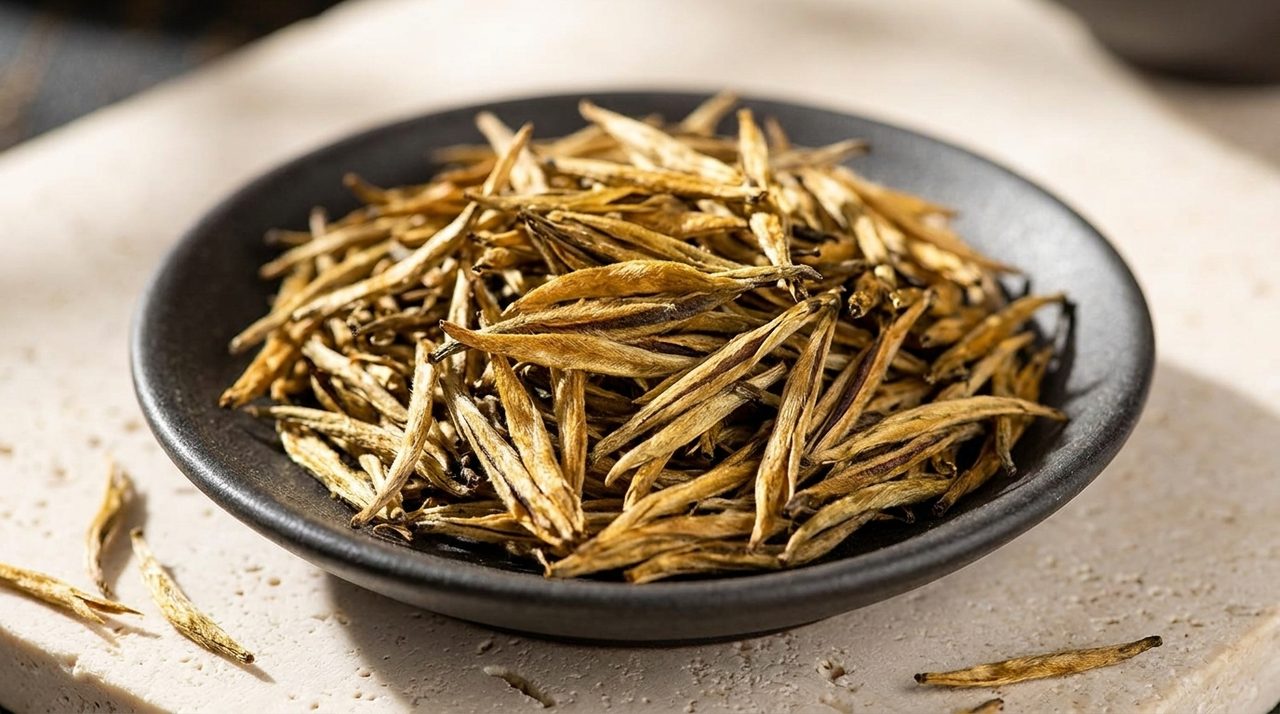
Plump velvet golden spikes from Yunnan's ancient big-leaf trees — caramelized sweet yam, cocoa malt, and sunlit amber silk.
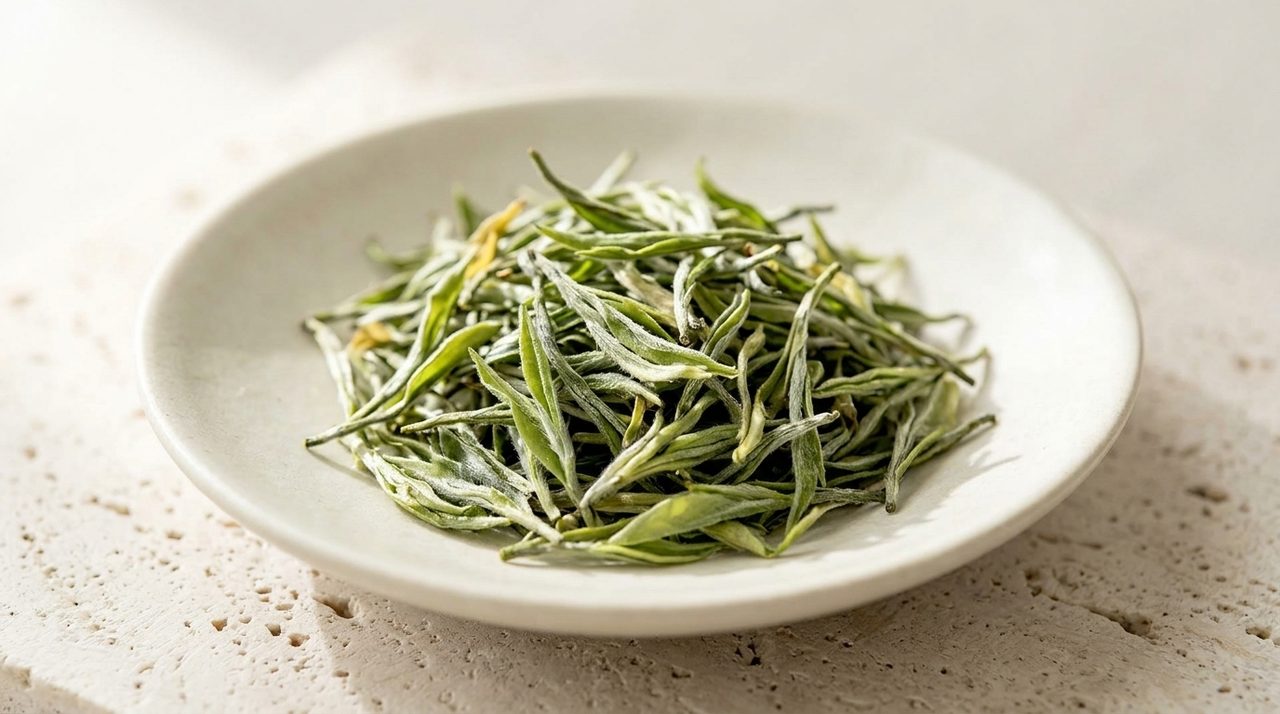
Ivory-tipped sparrow tongues baked gently over pine-charcoal mist in Anhui granite peaks.