
“The 400-year-old progenitor of all black tea — cured in wooden Qinglou smoke-houses over aged Horsetail pine embers into longan and sweet smoke.”
Tongmu Lapsang Souchong
Also known as: Zhengshan Xiaozhong · Pine-Smoked Black Tea · World's First Black Tea
Born in Tongmu Village around the late Ming Dynasty (c. 1600), Zhengshan Xiaozhong ('Authentic Mountain Small Cultivar' — rendered in Europe as Lapsang Souchong) is the historical ancestor of every black tea on earth. Inside centuries-old multi-story timber drying houses ('Qinglou'), oxidized leaves gently absorb wispy resin smoke from aged Horsetail pine below — achieving a sublime harmony of sweet dried longan fruit broth ('Gui Yuan Tang') and refined campfire cedar, never harsh tar.
- Alpine Terroir
- Huanggang Mountain Reserve (2,160m) · Tongmu Virgin Pine Core
- Elevation & Soil
- 1,000–1,800m Wuyi alpine pine forest reserve
- Cultivar
- Tongmu Wild Qunti Heirloom
- Harvest Window
- Late April – May
Dry Leaf · Infused Liquor · Spent Wet Leaf
State I · Dry Leaf
Morphology & Luster
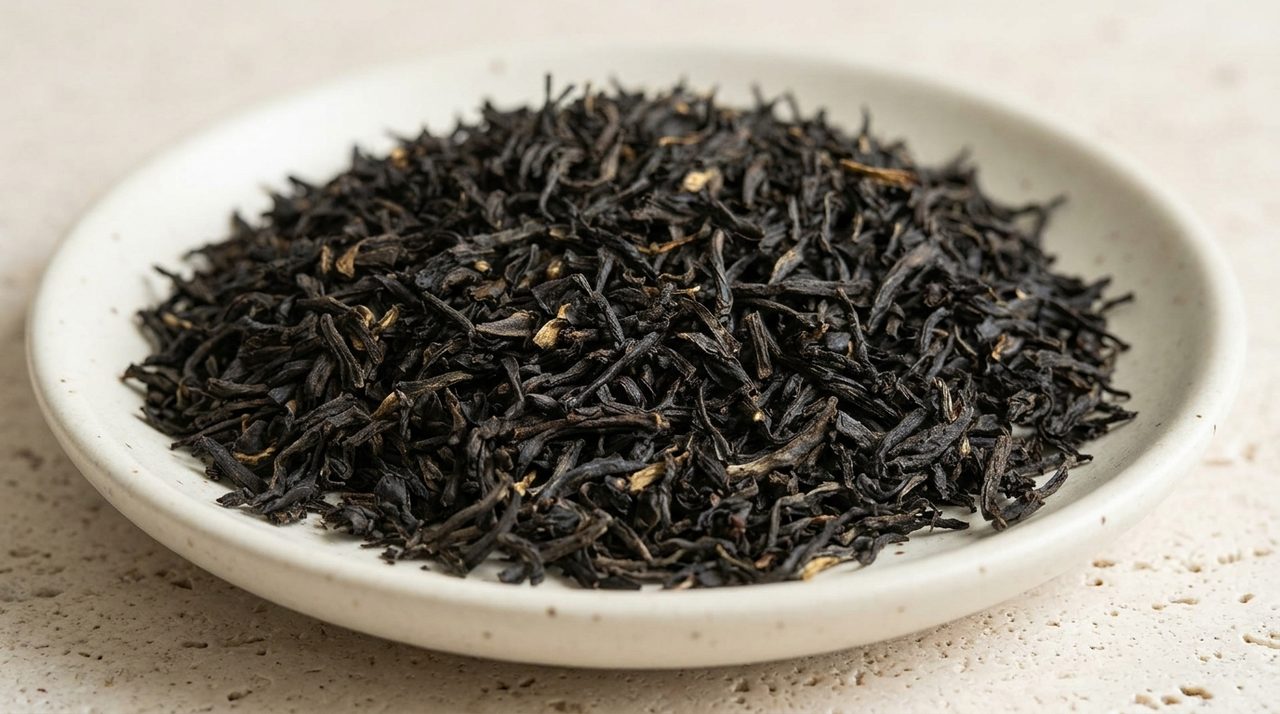
Sturdy, glossy jet-black twisted whole strips radiating warm pine-resin and sweet longan aroma.
Form: Tight weighty medium strips, intact whole leaves
Luster: Oily dark obsidian sheen
State II · Tea Liquor
Ruby Longan Amber
Radiant ruby-amber mahogany broth glowing with a luminous golden cup rim.
Clarity: Crystal bright ruby glow
State III · Wet Leaf
Unfurled Foliage
Plump, elastic bright bronze-copper whole leaves smelling cleanly of sweet dried longan.
Hue: Glossy antique copper-bronze
Elasticity: Thick, supple, and leathery
How Tongmu Lapsang Souchong Is Crafted
Mature wild Tongmu leaves hold deep natural sweetness capable of balancing pine smoke.
- 1. Alpine Reserve PluckingLate April · 1 Bud 2–3 Leaves
Mature wild Tongmu leaves hold deep natural sweetness capable of balancing pine smoke.
- 2. Qinglou Warm Pine WitheringTop Floor of Timber House
Gentle rising pine warmth wilts leaves softly while infusing delicate resinous whisper.
- 3. Rolling & Full Oxidation6–8 Hours · Complete Reddening
Develops deep crimson thearubigins and syrupy dried-longan sweetness.
- 4. Guo Hong (Wok-Searing)High-Heat Pan Flash
Traditional sealing step locks in intense dark longan-molasses nectar.
- 5. Horsetail Pine-Ember Smoking (Xun Bei)12–16 Hours · Aged Pine Roots
Slow ember smoke integrates INTO the liquor rather than sitting acridly on top.
Precision Brewing Parameters
Rinse Protocol: Quick 3s hot rinse softens surface smoke
Steep Timing: Steep 1: 8s → Steep 2: 10s → Steep 3: 15s → Steep 4–10: +10s
Sommelier Note: Authentic Tongmu smoke recedes by Steep #3, revealing pure silky dried-longan nectar.
Harvest Grade Benchmark Matrix
Objective sensory indicators distinguishing authentic high-mountain core reserves from standard and commercial-grade harvests.
Tongmu Reserve Traditional Pine-Smoked
★★★★★ Reserve- Dry Shape
- Heavy tight glossy jet-black whole strips
- Leaf Color
- Lustrous oily obsidian
- Liquor
- Glowing ruby-orange with golden rim
- Aroma
- Refined aged pine cedar woven seamlessly with sweet dried longan & dark molasses
- Palate
- Silky, sweet dried-longan broth ('Gui Yuan Tang'), gentle warming smoke across 10+ steeps
- Wet Leaf
- Thick glossy bronze-copper whole leaves
Tongmu Unsmoked Floral Xiaozhong
★★★★☆ Classic- Dry Shape
- Slender dark chestnut-gold strips
- Leaf Color
- Glossy dark brown with golden tips
- Liquor
- Bright golden-amber
- Aroma
- Wild alpine honey, sweet orchid, ripe longan (zero smoke)
- Palate
- Pure silky nectar sweetness across 8–10 steeps
- Wet Leaf
- Uniform bright bronze leaves
Commercial Liquid-Smoke / Harsh Tar Bulk
★★☆☆☆ Caution- Dry Shape
- Dry dull broken black shards
- Leaf Color
- Flat soot-black
- Liquor
- Murky dark brown
- Aroma
- Overpowering acrid bacon/tar smoke that overwhelms the nose
- Palate
- Harsh bitter ash with zero sweet longan core
- Wet Leaf
- Thin dark broken leaves
Storage Climate & Aging Horizon
Aging Potential: Very good — 2–5 years of sealed rest melds smoke and longan into velvety harmony. (GB/T 13738.3 (Black Tea — Zhengshan Xiaozhong))
- ALWAYS store pine-smoked Lapsang Souchong in its own airtight tin away from delicate unsmoked teas.
Oxidation, Tea Nature & Occasion Fit
- Deeply warming and smooth; avoid very late-night pots if sensitive to black-tea caffeine.
Editorial & traditional culinary notes for contemplative tea appreciation only — not a medical claim or therapeutic cure.
Authentic Market Price Benchmarks (USD / 50g)
Authentic Wuyi Reserve heirloom, aged Horsetail pine
Tongmu Core Qinglou Pine-Smoked Reserve
$45 – $95
Authenticity Check: Genuine Tongmu smoke smells sweet and resinous like aged cedar + longan, NEVER acrid burnt rubber or liquid-smoke flavoring.
Modern unsmoked Reserve style
Tongmu Unsmoked Wild Xiaozhong
$30 – $60
Authenticity Check: Pure sweet nectar, honeyed flower, and mountain pine-forest clarity.
Heavy commercial smoking
Outer Export Blended Lapsang
$10 – $20
Authenticity Check: Very aggressive campfire smoke; typically used with milk or culinary recipes.
Common Questions on Tongmu Lapsang Souchong
Why does real Tongmu Lapsang Souchong taste far less harsh than supermarket Lapsang?
Mass-market export Lapsang often heavily smokes cheap lowland leaves (or sprays artificial smoke) to create an aggressive tar taste. Authentic Tongmu Reserve Lapsang uses slow, refined Horsetail pine embers over wild alpine leaf so smoke stays delicate and sweet dried-longan nectar dominates.
What is the difference between Smoked and Unsmoked Zhengshan Xiaozhong?
Both come from Tongmu Village. Traditional smoked Xiaozhong is dried in timber Qinglou houses over pine smoke; modern unsmoked Xiaozhong skips the smoke to showcase pure floral honey and alpine fruit.
Does Lapsang Souchong improve with 1–2 years of rest?
Yes! Many connoisseurs prefer Tongmu pine-smoked Lapsang after 12–24 months of sealed storage, when pine resin melts seamlessly into syrupy longan sweetness.
Experience Authentic Alpine Provenance
Taste Tongmu Lapsang Souchong Inside Chamber VI · Unassured
SpiritDew sources small-batch single-origin whole leaves directly from China's alpine wilderness sanctuaries. Reserve this chamber individually or experience all nine sovereign categories in our numbered Tasting Flight.
Related Compendium Dossiers
View All 37 Teas →
Ten thousand wild alpine spring buds plucked at 1,230m inside Wuyi Nature Reserve — three-tone 'seahorse' strands of liquid floral nectar.
The historic benchmark of Chinese Gongfu black tea — slender burgundy needles steeped in Damascus rose, dried plum, and 'Keemun Aroma'.

Plump velvet golden spikes from Yunnan's ancient big-leaf trees — caramelized sweet yam, cocoa malt, and sunlit amber silk.

Eight unhurried years of dry cellaring dissolve youthful briskness into jujube compote, herbal incense, and steamed cedar.