The Smoke of Pine Needles: Authentic Lapsang Souchong and the Qingling Kiln
Inside the multi-story smoking house of Tongmu: resin, wild longan, and the true origin of world black tea.
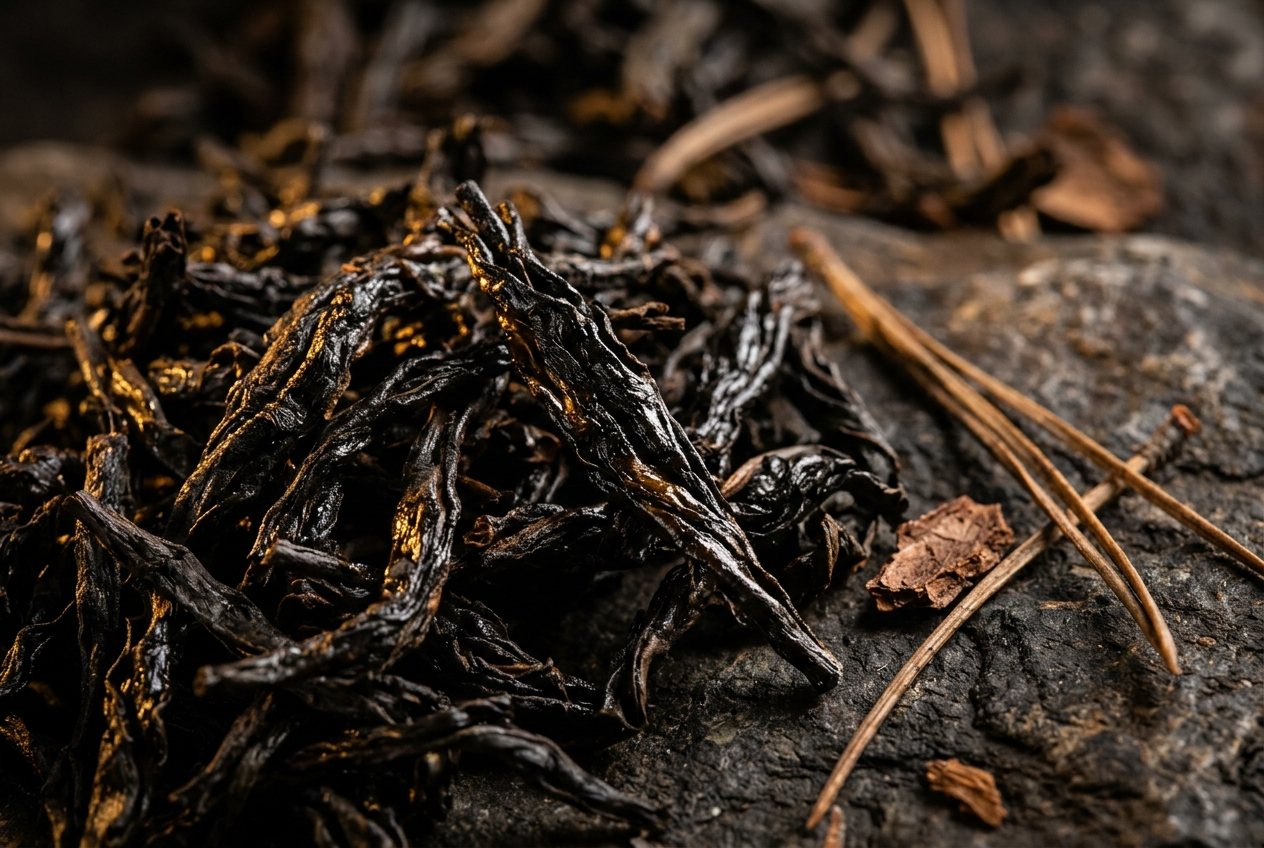
Terroir & Geographical Origin
Guadun Village, Tongmu Nature Reserve, Wuyi · Fujian Province, China
Traditional Pine-Smoked Lapsang Souchong (Zhengshan Xiaozhong) is the world's oldest black tea, created in late Ming Dynasty Fujian inside multi-story wooden smoking lofts called Qinglou. Smoked continuously over smoldering native Masson pine (Pinus massoniana) embers, it delivers a rustic aroma of pine resin, peat fire, and dried longan fruit, finishing with a silken, naturally sweet liquor completely free of bitter acridity.
The Accident of War
In the closing decades of the Ming Dynasty, an army regiment marched through the secluded mountain pass of Tongmu. Requisitioning the local tea workshops for their barracks, the soldiers slept on piles of freshly harvested green leaves.
By the time the troops departed, the leaves had turned red and soft, ruined by unexpected warmth and bruising. Desperate to salvage the harvest before it rotted, the local villagers lit fires of native Masson pine (Pinus massoniana) wood and dried the leaves rapidly over the smoke.
They carried the pitch-black, smoke-drenched tea to the foreign trading ports of Xiamen, expecting mockery. Instead, Dutch and English merchants fell madly in love with the exotic smoky liquor, sparking the global black tea empire.
“Desperate to salvage the bruised leaves, villagers dried them over fires of native Masson pine.”
Inside the Qinglou
To this day in Tongmu Village, true Lapsang Souchong is cured inside the 'Qinglou'—a three-story wooden chimney-house. On the ground floor, pine logs and knotty roots smolder in brick hearths, sending thick aromatic smoke rising through slatted pine floorboards.
On the upper levels, freshly plucked leaves are spread on bamboo mats. As the smoke filters upward, the leaves absorb pine resin and pinene aromatics while losing their moisture. The final drying occurs directly over the hearth flues.
The result is pitch-black, glossy whole-leaf strips that smell of a mountain cabin in winter. When brewed, there is zero chemical sharpness—only the sweet, comforting resin of pine timber and the rich, syrupy fruitiness of dried longan.
Chamber VI: The Fireside Haven
In SpiritDew's Nine Chambers, Pine-Smoked Lapsang Souchong is the comforting fire of Chamber VI: Unassured. When anxiety and cold rain batter your window, this tea is an unshakeable shelter.
It feels like returning to a hearth fire after hours of walking through a freezing winter forest. It warms the core, calms overactive nervous vigilance, and reassures you that no matter how wild the mountain storm may be, the hearth remains warm.
“It feels like returning to a hearth fire after hours in a freezing winter forest.”
Inquiries & Curatorial Clarifications
How is authentic smoked Lapsang different from western grocery store Lapsang?
Cheap supermarket Lapsang is typically low-grade black tea sprayed with artificial liquid smoke flavor, yielding an acrid, tire-like bitterness. Authentic Tongmu Lapsang is gently smoked for hours over real pine timber inside historic Qinglou buildings, harmonizing resin with the natural longan sweetness of alpine leaves.
Can smoked Lapsang Souchong be paired with food?
Yes. Its rich pine smoke and dried fruit notes make it one of the few teas that pair magnificently with savory dishes, smoked cheeses, dark chocolate, and roasted meats.
Sensory Spectrum & Extraction Curve
The legendary Keemun aroma: dried rose petals, baked plum, and dark cacao silk.
Tasting Signature: Longan & Candied Plum
Deep rich fruit nectar with crystalline clean finish.
Experience Pine-Smoked Lapsang Souchong
This artisanal whole-leaf harvest is preserved in Chamber VI · The Watchtower Hearth. Available as a dedicated single harvest or as part of The Nine Chambers Tasting Flight.
Further Inquiries in the 2026 Archive
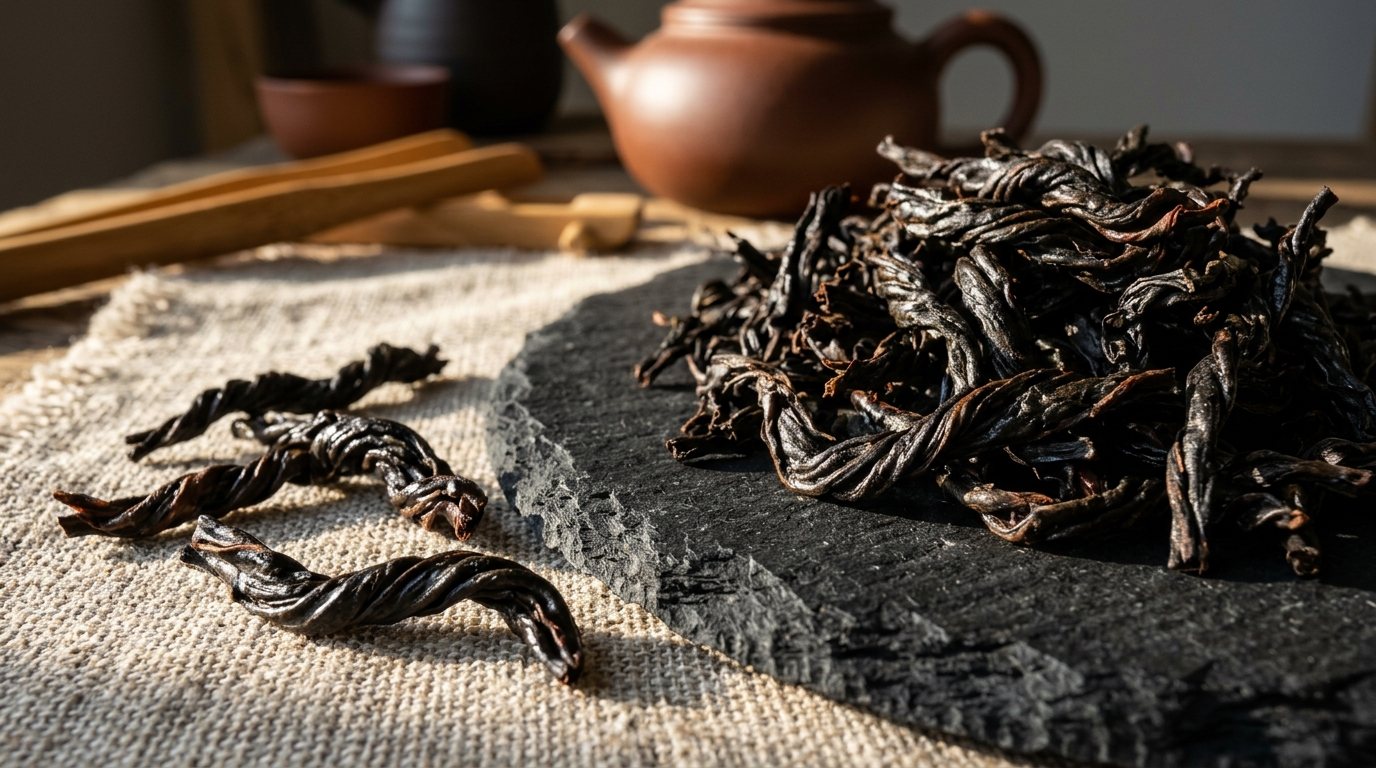
The Architecture of Stillness: Why the Leaf Needs Fire to Rest
A meditation on Wuyi cliff oolong, the ancient discipline of slow fruitwood charcoal roasting, ...
The Craft of Leaf & Mind · 6 min read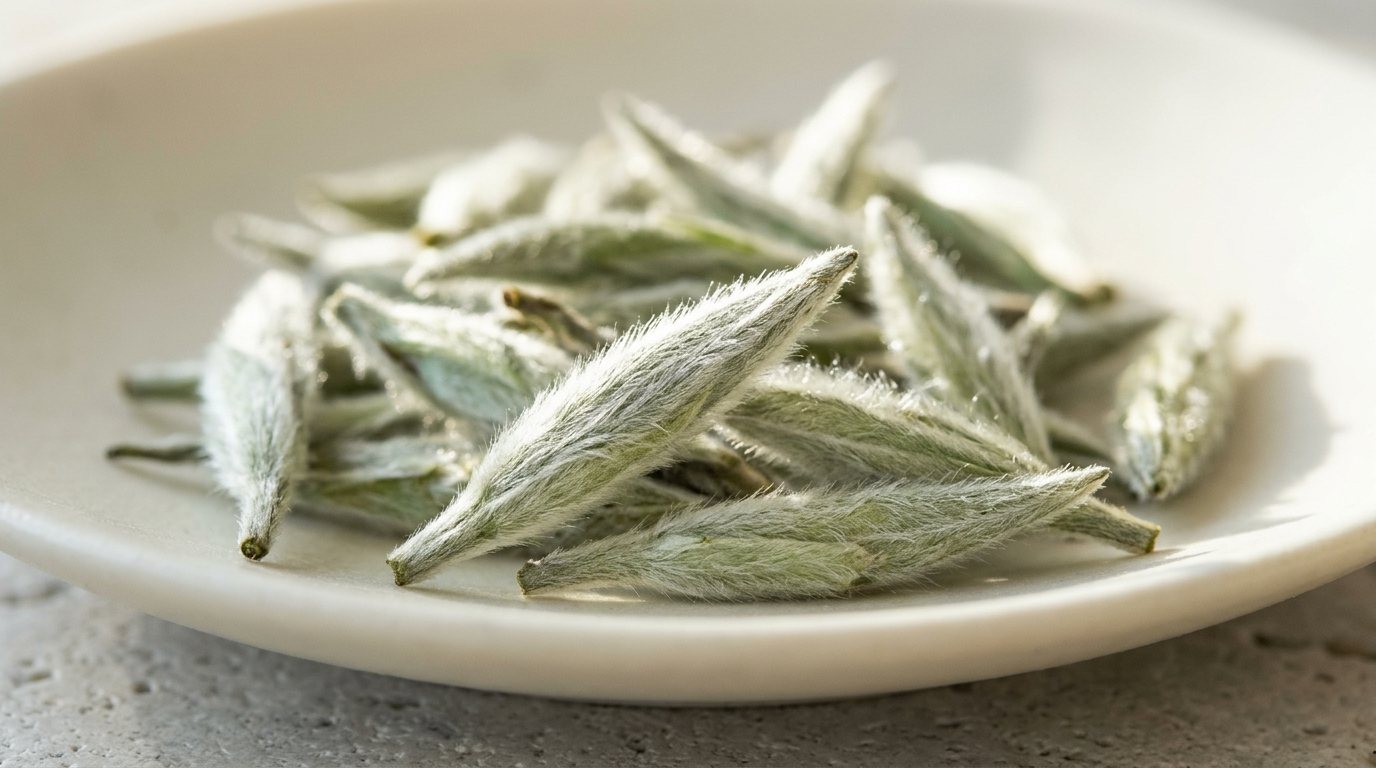
The Art of Non-Intervention: What Silver Needle Teaches Us About Doing Less
White tea undergoes no rolling, no panning, and no shaping. An inquiry into Fuding Baihao Yinzh...
Brewing & Ritual · 8 min read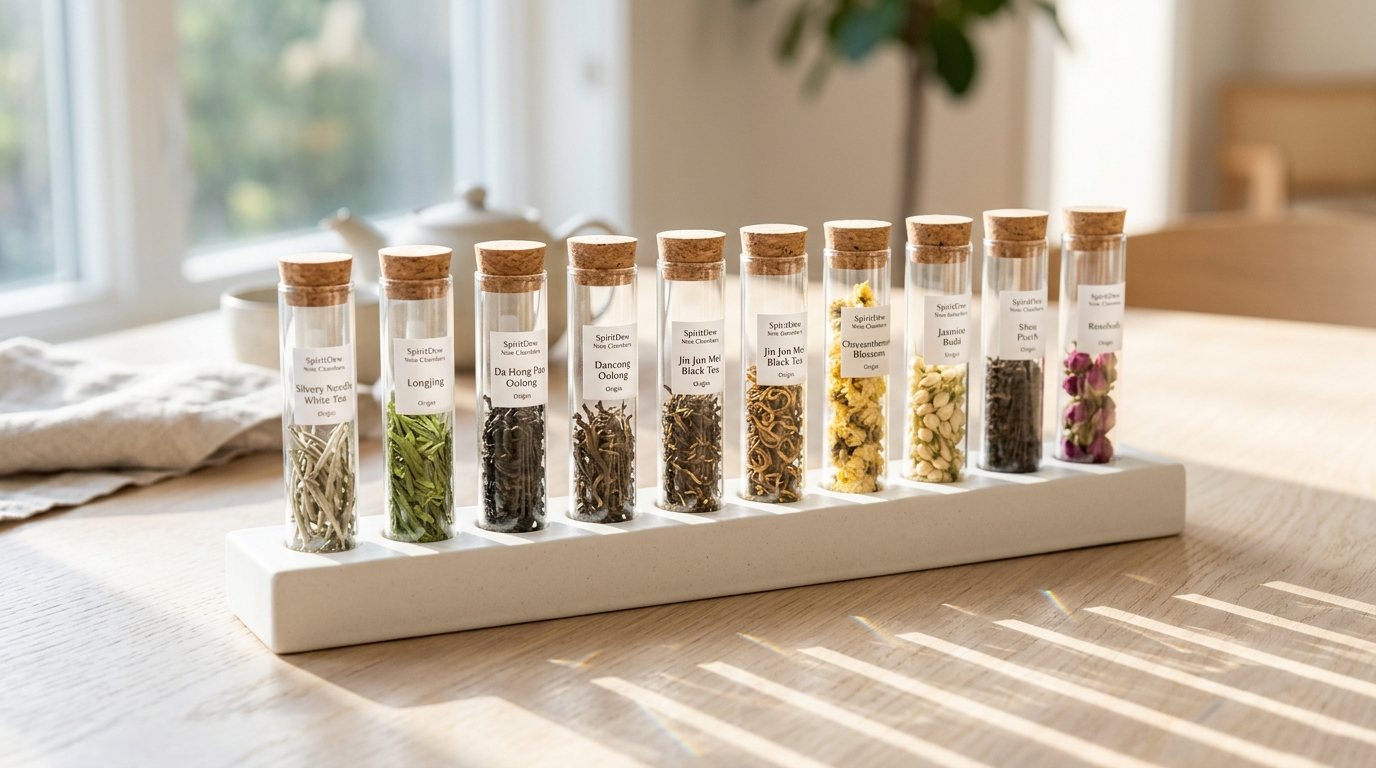
A Beginner's Guide to Gongfu Cha: How Five Grams of Whole Leaf Can Slow Down Time
A demystified, practical guide to Gongfu tea brewing. Why porcelain vessels matter, why boiling...