Caramelized Obsidian: Multi-Cycle Fruitwood Charcoal Roasting of Tieguanyin
Forty-eight hours over white-hot embers: how southern Fujian masters tame oolong's greener instincts.
Terroir & Geographical Origin
Gande Summit Windward Terraces & Inner Escarpments (1,050m) · Fujian Province, China
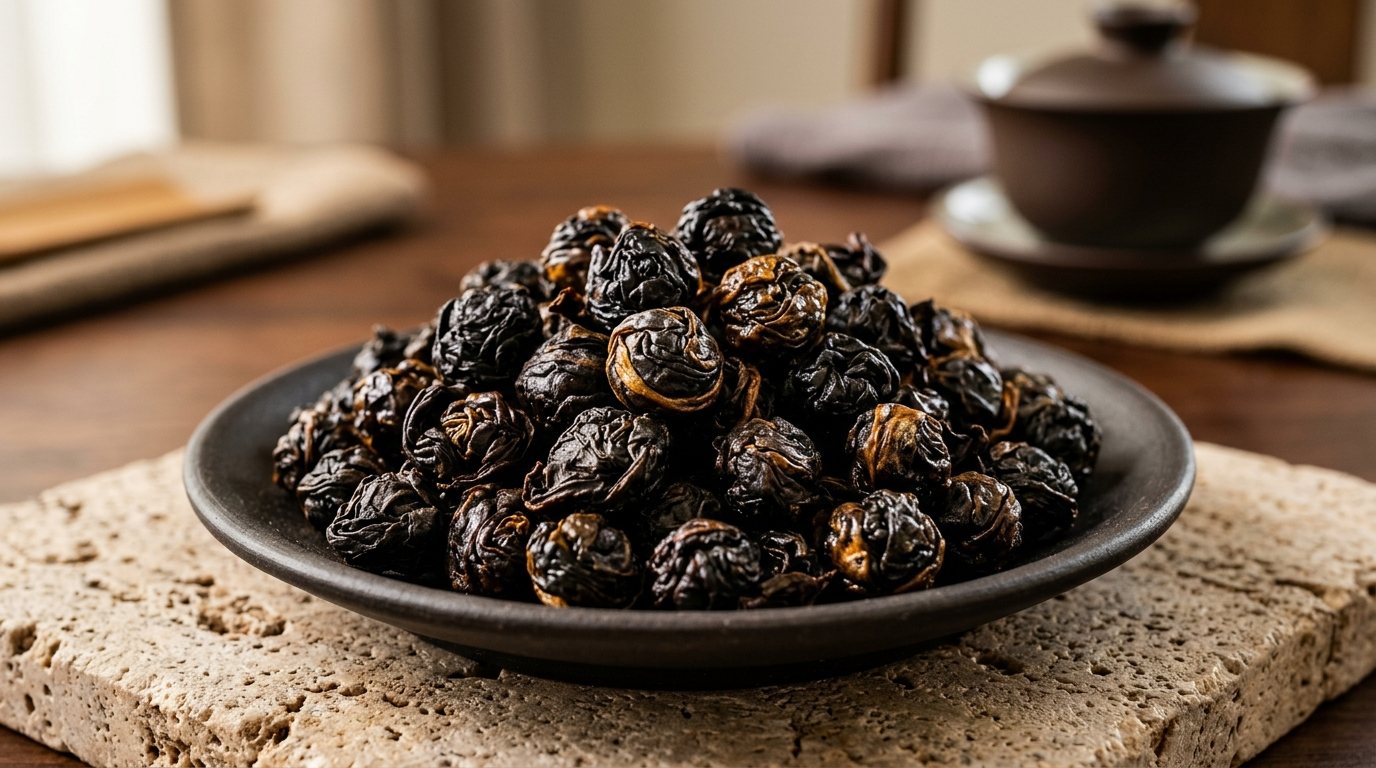
Traditional Heavy-Roast Tieguanyin (Nongxiang) is a classically crafted Anxi oolong subjected to multiple rounds of slow baking over smothered fruitwood charcoal pits. In contrast to modern green-style Tieguanyin, its leaves are roasted to a glossy obsidian-brown, producing a rich cognac-hued liquor bursting with roasted hazelnuts, caramelized plum, and deep mineral throat resonance (Yin Yun).
The Trend That Erased History
In the late 1990s, a craze swept Chinese tea markets: 'Qingxiang'—ultra-green, air-conditioned, unroasted Tieguanyin. It was pale, electric, and perfumed like lilacs. But to old masters in Anxi, this was not Iron Goddess; it was raw grass dressed in a marketing cloak.
For three hundred years prior to modern refrigeration, Tieguanyin was always a roasted tea. The cultivar's name itself—'Iron Goddess'—referred not only to the temple where it was discovered, but to the heavy, dark, metallic clatter of the roasted pearls as they hit the bottom of a porcelain pot.
Real Tieguanyin was born in the smoke of longan fruitwood charcoal.
“Tieguanyin referred not only to the temple, but to the heavy metallic clatter of roasted pearls.”
Forty-Eight Hours in the Ash
To bake authentic heavy-roast Tieguanyin is an exercise in ascetic endurance. Charcoal from wild longan trees is packed into subterranean pits and ignited until white-hot, then smothered under a thick layer of sifted rice husk ash.
In woven bamboo baskets (Pei Long), the tightly rolled spheres are roasted at eighty to one hundred degrees Celsius for eight hours, rested for weeks, and roasted again. This cycle is repeated three or four times across several months.
Under the heat, volatile grassy aldehydes evaporate. The surface turns from dull green to lustrous obsidian-black, coated in a fine caramelized sheen. Inside the tightly rolled core, sugars, amino acids, and minerals fuse into deep, unshakeable stability.
Chamber VIII: The Fire That Centers
In SpiritDew's Nine Chambers, Roasted Tieguanyin shares Chamber VIII: Unclenched with Da Hong Pao. It is the tea of grounded sovereignty.
When you pour 100°C water over these dark pearls, the liquor glows like twenty-year-old Armagnac. Notes of toasted hazelnuts, dark wildflower honey, baked damson plums, and iron ore wash over the tongue.
It leaves no acidic aftermath, no flutter of anxiety in the stomach. It settles into the core like an anchor dropped into deep water. You realize that true strength does not shout; it has simply been baked long enough to know who it is.
“True strength does not shout; it has simply been baked long enough to know who it is.”
Inquiries & Curatorial Clarifications
How does traditional roasted Tieguanyin differ from modern Tieguanyin?
Modern Tieguanyin is lightly oxidized and unroasted, emphasizing electric green florals that can be harsh on sensitive stomachs. Traditional roasted Tieguanyin undergoes extensive charcoal firing that converts sharp polyphenols into soothing, stomach-friendly thearubigins and maltose sugars.
What is Yin Yun in Tieguanyin?
Yin Yun ('Iron Melody') is the signature textural finish of authentic red-sprout Tieguanyin: a heavy, oily mouthfeel that leaves a persistent cooling sweetness and metallic mineral clarity across the palate.
Sensory Spectrum & Extraction Curve
Iron bones and floral breath: forged in volcanic chasms, tempered by threefold fire.
Tasting Signature: Caramelized Rock Sugar
Deep throat warmth with lingering sweet resonance.
Experience Traditional Heavy-Roast Tieguanyin
This artisanal whole-leaf harvest is preserved in Chamber VIII · The Cliffside Fire. Available as a dedicated single harvest or as part of The Nine Chambers Tasting Flight.
Further Inquiries in the 2026 Archive
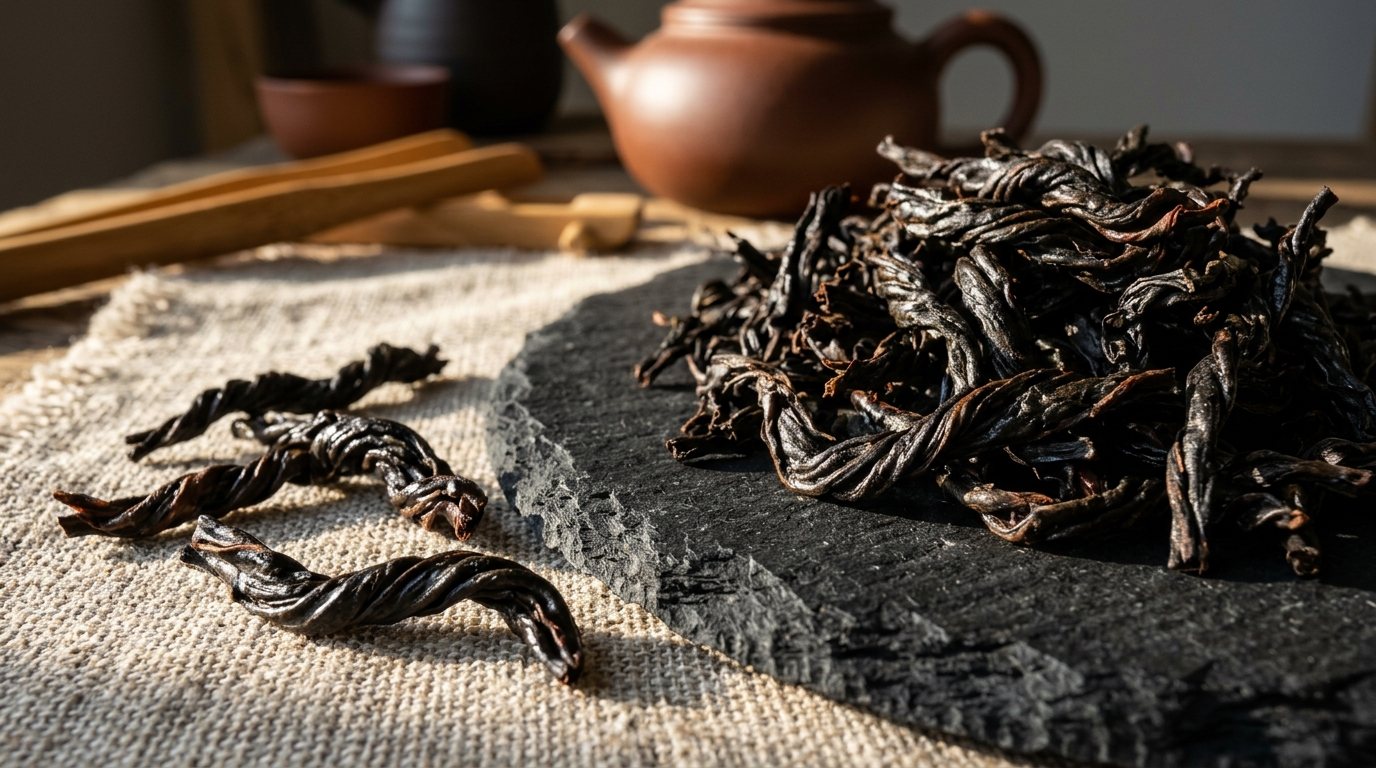
The Architecture of Stillness: Why the Leaf Needs Fire to Rest
A meditation on Wuyi cliff oolong, the ancient discipline of slow fruitwood charcoal roasting, ...
The Craft of Leaf & Mind · 6 min read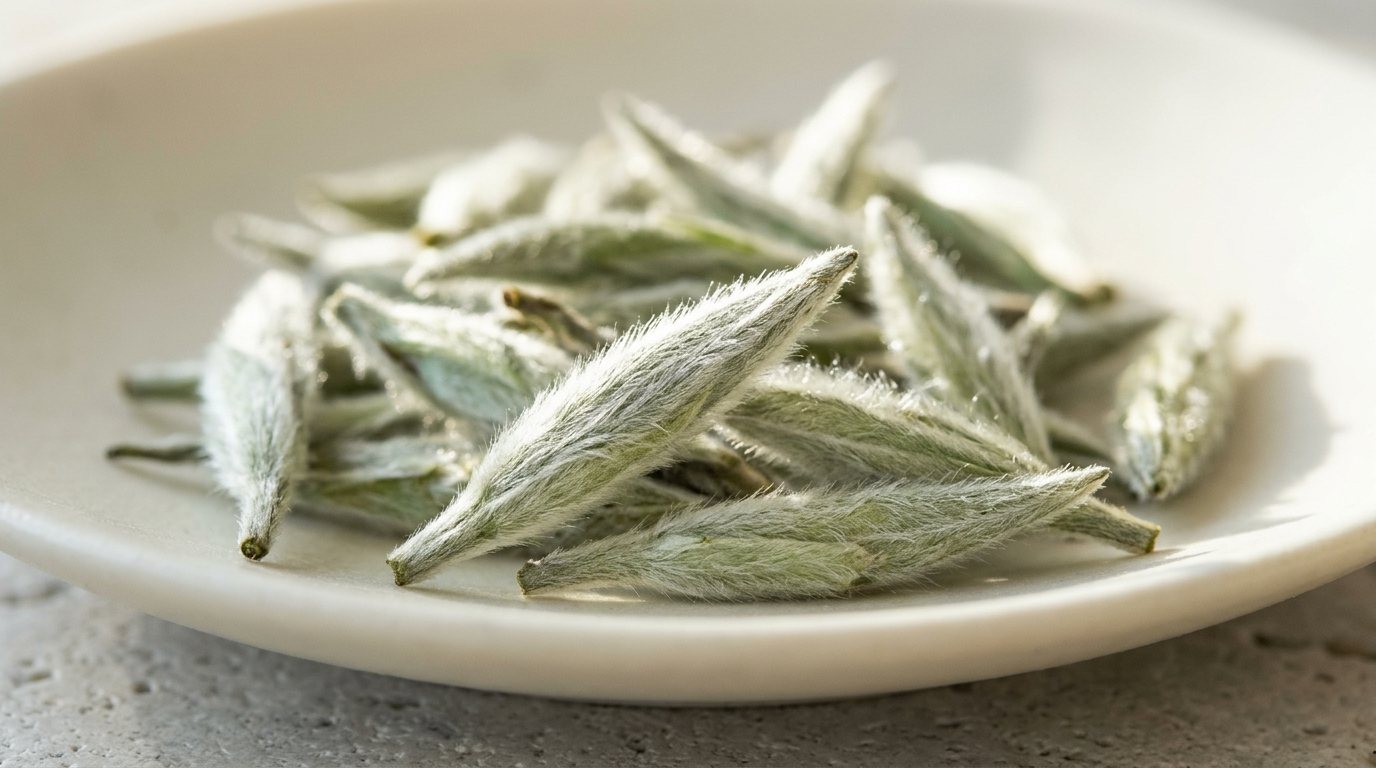
The Art of Non-Intervention: What Silver Needle Teaches Us About Doing Less
White tea undergoes no rolling, no panning, and no shaping. An inquiry into Fuding Baihao Yinzh...
Brewing & Ritual · 8 min read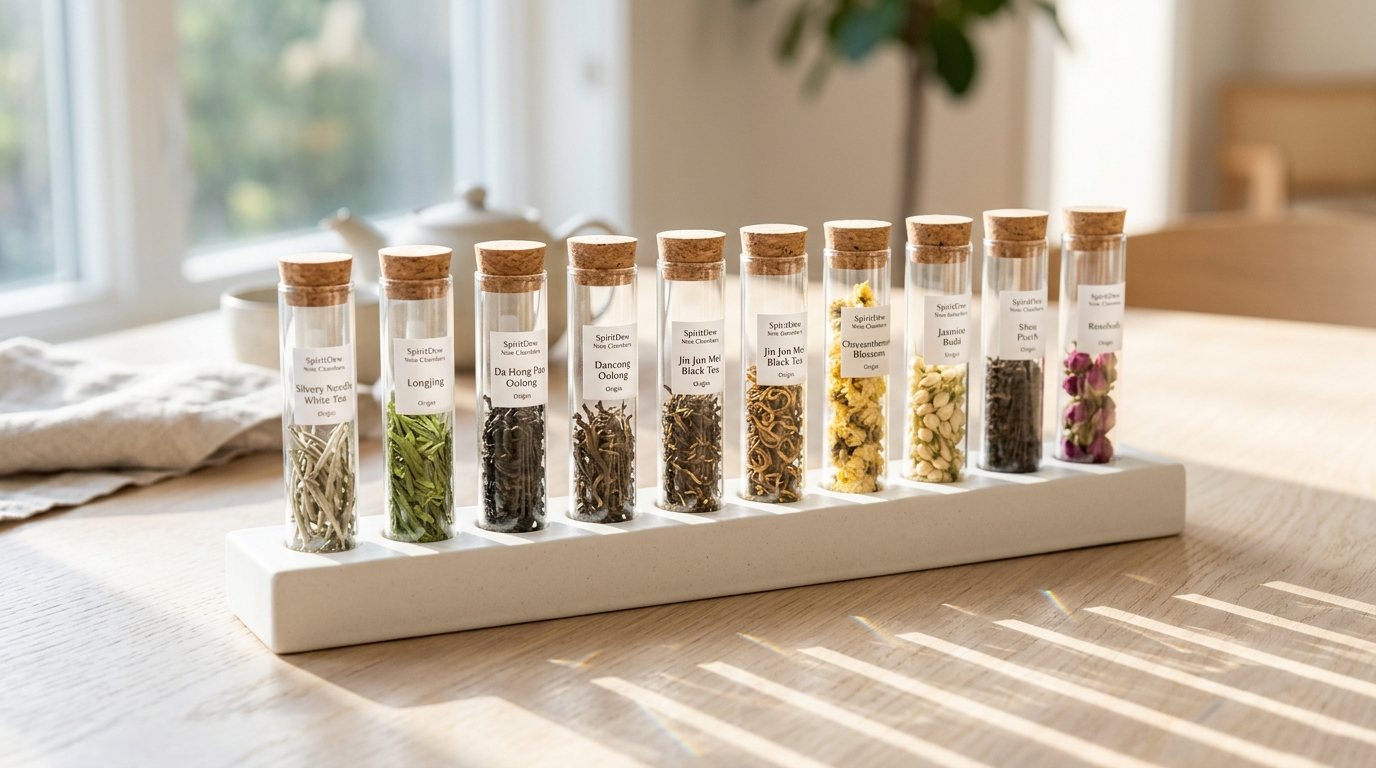
A Beginner's Guide to Gongfu Cha: How Five Grams of Whole Leaf Can Slow Down Time
A demystified, practical guide to Gongfu tea brewing. Why porcelain vessels matter, why boiling...