The Bamboo Spear of Emei: Xianzhi Zhujian and Tang Monastic Steaming
From Sichuan's sacred Buddhist peak: flat spears tapered at both ends, and the monastic vow of attention.
Terroir & Geographical Origin
Wannian Temple Monastic Gardens, Mount Emei · Sichuan Province, China
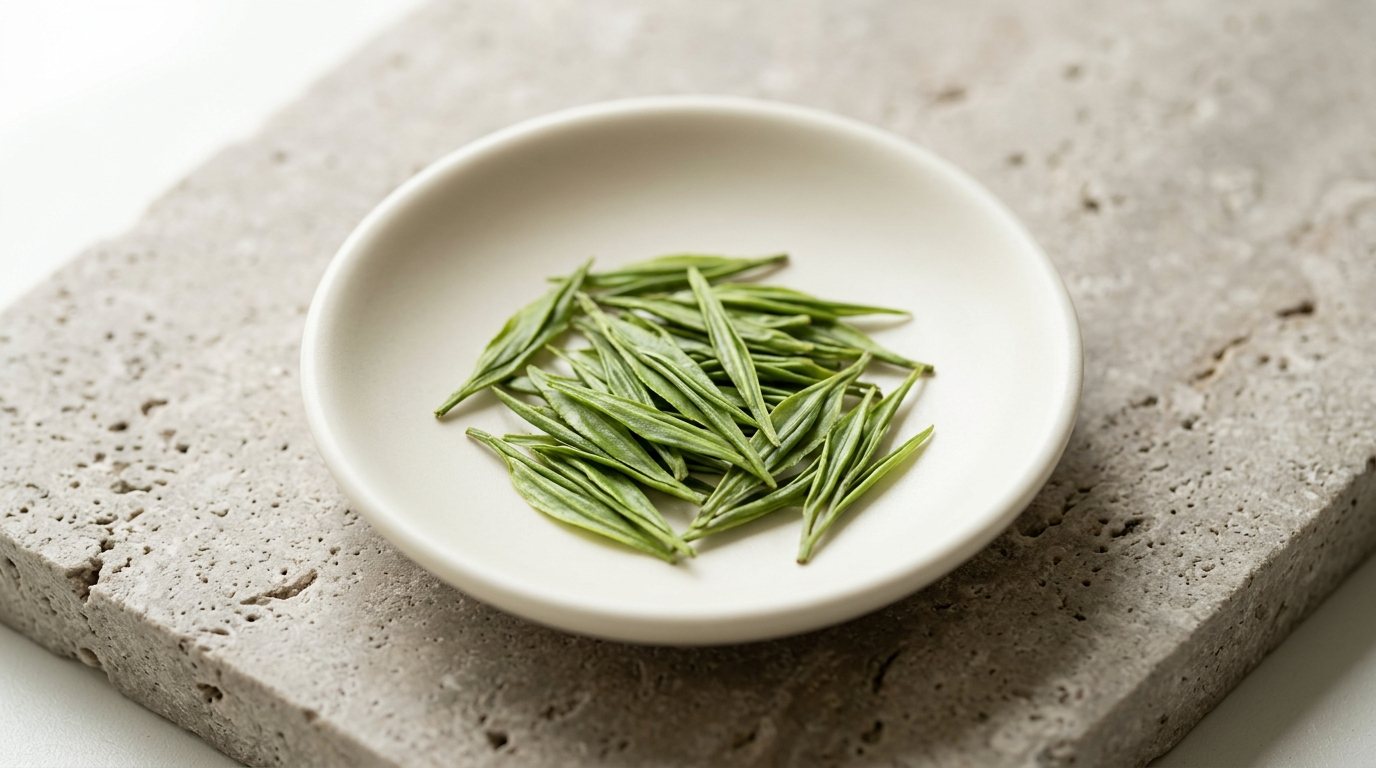
Mount Emei Xianzhi Zhujian is a monastic green tea from Sichuan's sacred Buddhist mountain, harvested as early spring single-bud spears tapered symmetrically at both ends to resemble miniature bamboo leaves. Combining light steam blanching with flat wok shaping, it brews an electric pale emerald liquor with notes of fresh bamboo dew, tender garden peas, and a pure crystalline mineral finish.
The Sacred Mountain of Samantabhadra
Rising dramatically out of the Sichuan Basin to over three thousand meters, Mount Emei is one of China's Four Sacred Buddhist Mountains. It is a world of vertical gorges, colossal waterfalls, and dense cloud cover that lasts for more than two hundred and eighty days each year.
At the thousand-meter contour, surrounding Wannian Temple, Buddhist monks have tended mountain tea gardens since the Tang Dynasty. Here, tea was never a commercial crop; it was an instrument of meditation—a means to dispel drowsiness during predawn chanting and seated zazen.
Plucked during the freezing mists of mid-March, only the most perfect single buds are selected—slender, pointed spears that mirror the wild bamboo groves that cloak the temple walls.
“Tea was never a commercial crop here; it was an instrument of meditation to dispel drowsiness during zazen.”
The Bamboo Spear Geometry
In the workshop, the buds undergo light steam-assisted blanching followed by delicate shaping in shallow iron cauldrons. The artisans press and roll each bud by hand until both the tip and the stem base taper into sharp points, while the belly remains flat.
The resulting dry tea—Xianzhi Zhujian ('Immortal Grass Bamboo Spear')—is a miracle of understated design. Arranged in a white porcelain dish, the celadon-green spears look like tiny jade daggers.
In hot water, they perform a breathtaking vertical ballet: each spear sinks vertically to the bottom of the glass, standing upright like a miniature forest of emerald bamboo shoots.
Chamber IX: Pure Awakening
Xianzhi Zhujian presides over Chamber IX: Unnumbed alongside Enshi Yulu. When modern life feels stale, flat, or suffocatingly routine, this tea acts as an immediate wake-up call to the present moment.
The aroma is crisp and clean—dew on freshly cut bamboo, sweet spring snow, and tender garden peas. It delivers high concentrations of L-theanine that relax the chest while sharpening mental focus.
Sitting with these vertical spears, you are invited to adopt the posture of the monk: spine straight, breath open, mind clear as mountain water. There is nowhere else you need to be.
“Adopt the posture of the monk: spine straight, breath open, mind clear as mountain water.”
Inquiries & Curatorial Clarifications
Why are the leaves of Xianzhi Zhujian shaped like miniature bamboo leaves?
During processing, artisans gently roll and press the tender steamed buds along their longitudinal axis, tapering both the tip and base until they mirror tiny bamboo leaves ('two ends pointed, flat in the center').
What is the relationship between Mount Emei monasteries and green tea?
For over a thousand years, Chan (Zen) monks at Wannian Temple on Mount Emei cultivated high-altitude tea gardens, practicing tea making as a moving meditation ('Tea and Zen of One Flavor') to maintain wakefulness during prolonged seated meditation.
Sensory Spectrum & Extraction Curve
Steamed jade needles: selenium-rich dew, sweet ocean spray, and forest canopy mist.
Tasting Signature: Tender Bamboo Sprout
Crisp, clean sweetness that revitalizes the senses.
Experience Mount Emei Xianzhi Zhujian
This artisanal whole-leaf harvest is preserved in Chamber IX · The High Meadow. Available as a dedicated single harvest or as part of The Nine Chambers Tasting Flight.
Further Inquiries in the 2026 Archive
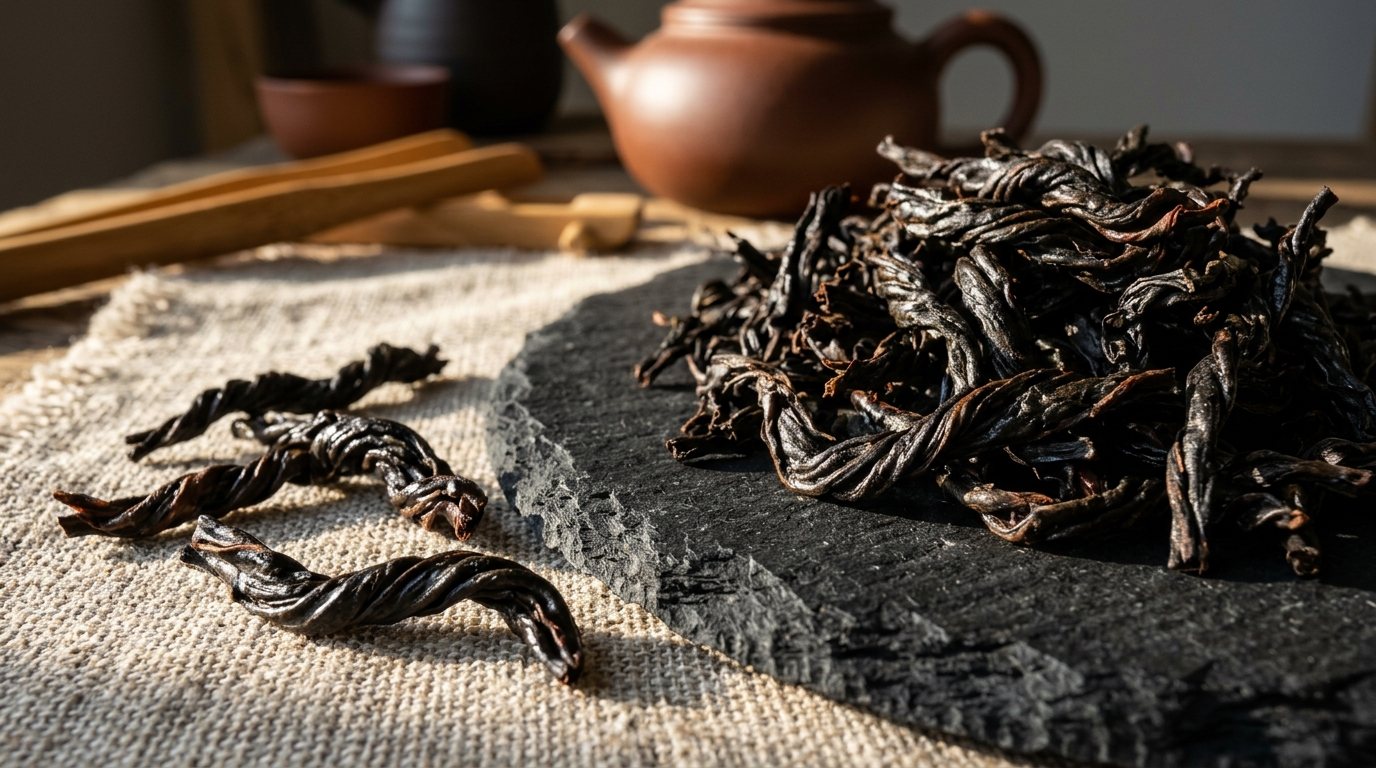
The Architecture of Stillness: Why the Leaf Needs Fire to Rest
A meditation on Wuyi cliff oolong, the ancient discipline of slow fruitwood charcoal roasting, ...
The Craft of Leaf & Mind · 6 min read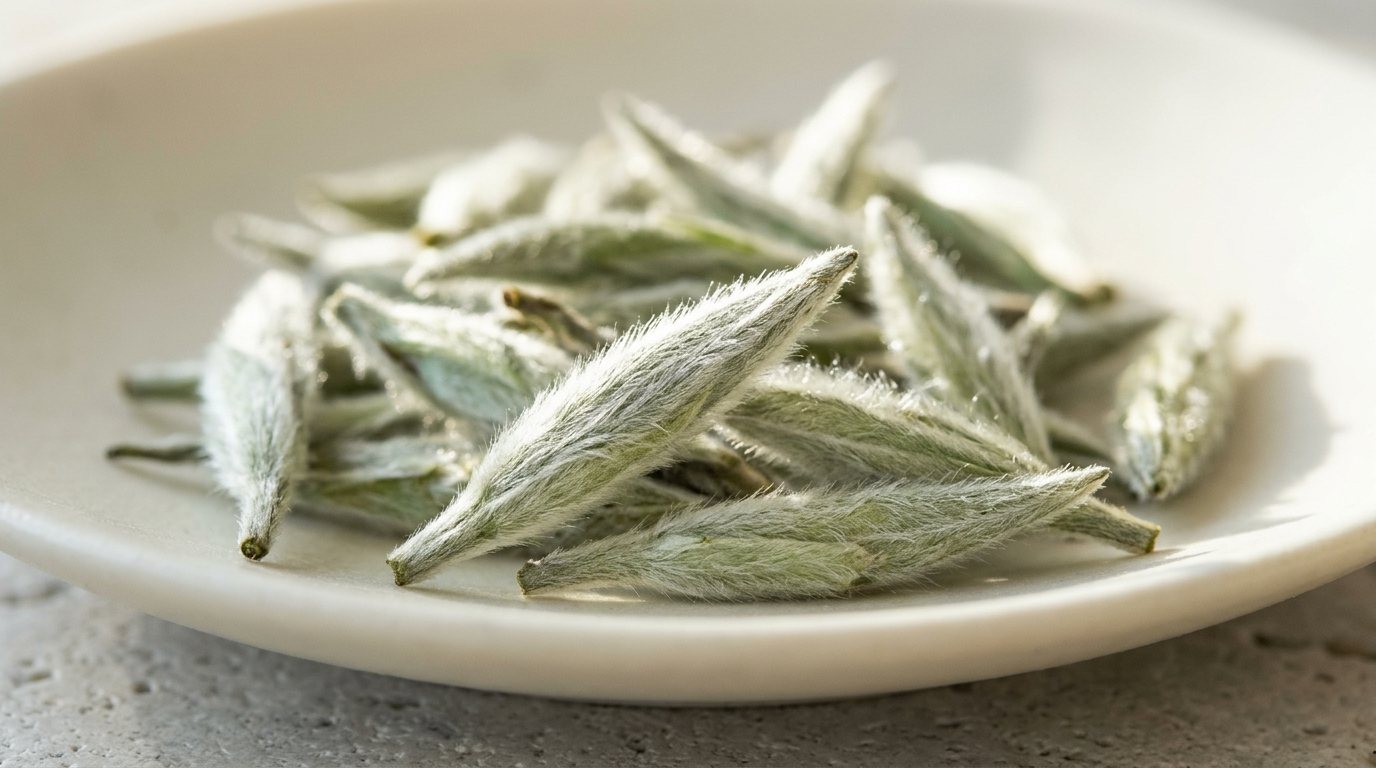
The Art of Non-Intervention: What Silver Needle Teaches Us About Doing Less
White tea undergoes no rolling, no panning, and no shaping. An inquiry into Fuding Baihao Yinzh...
Brewing & Ritual · 8 min read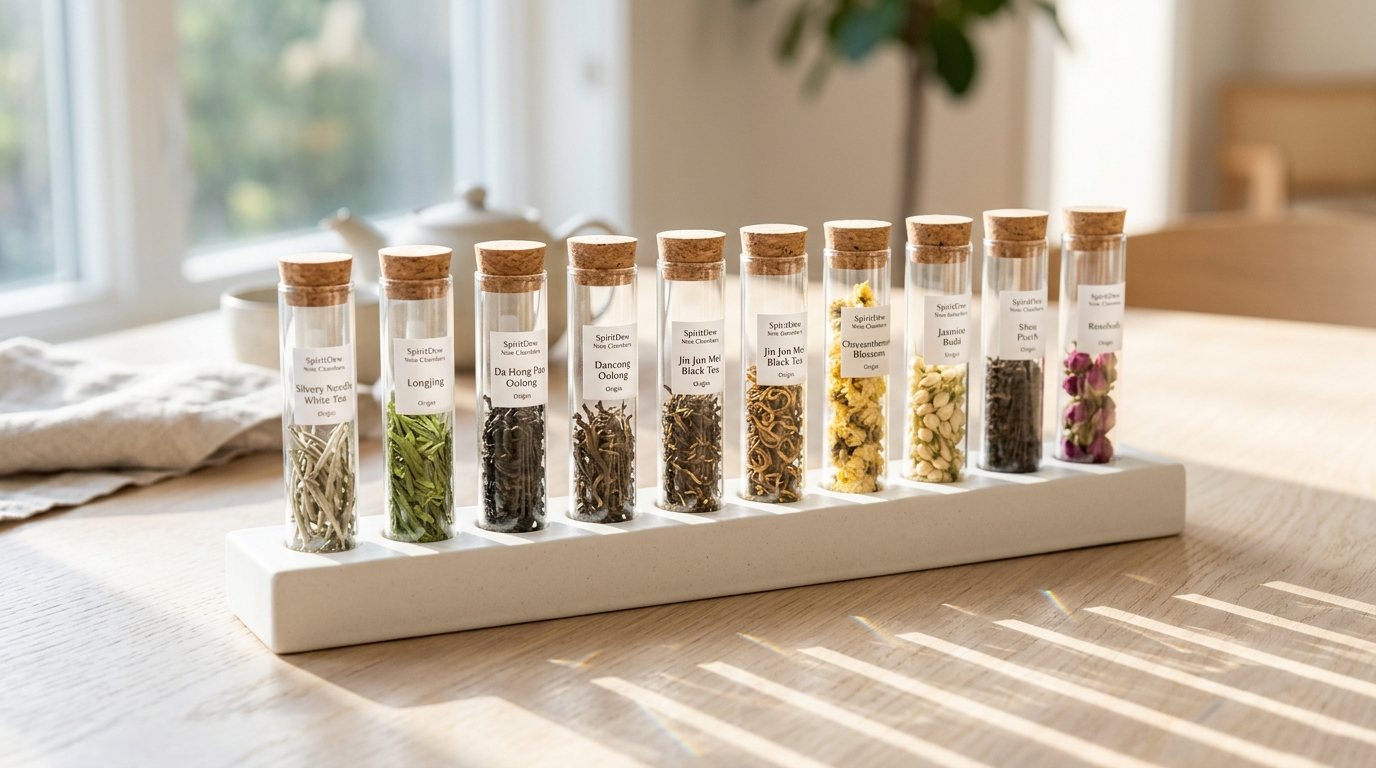
A Beginner's Guide to Gongfu Cha: How Five Grams of Whole Leaf Can Slow Down Time
A demystified, practical guide to Gongfu tea brewing. Why porcelain vessels matter, why boiling...