The Five-Color Leaf and the Cicada's Kiss: The Paradox of Taiwanese Oriental Beauty
When agricultural damage becomes an aromatic masterpiece: how the green leafhopper creates honeyed perfection.
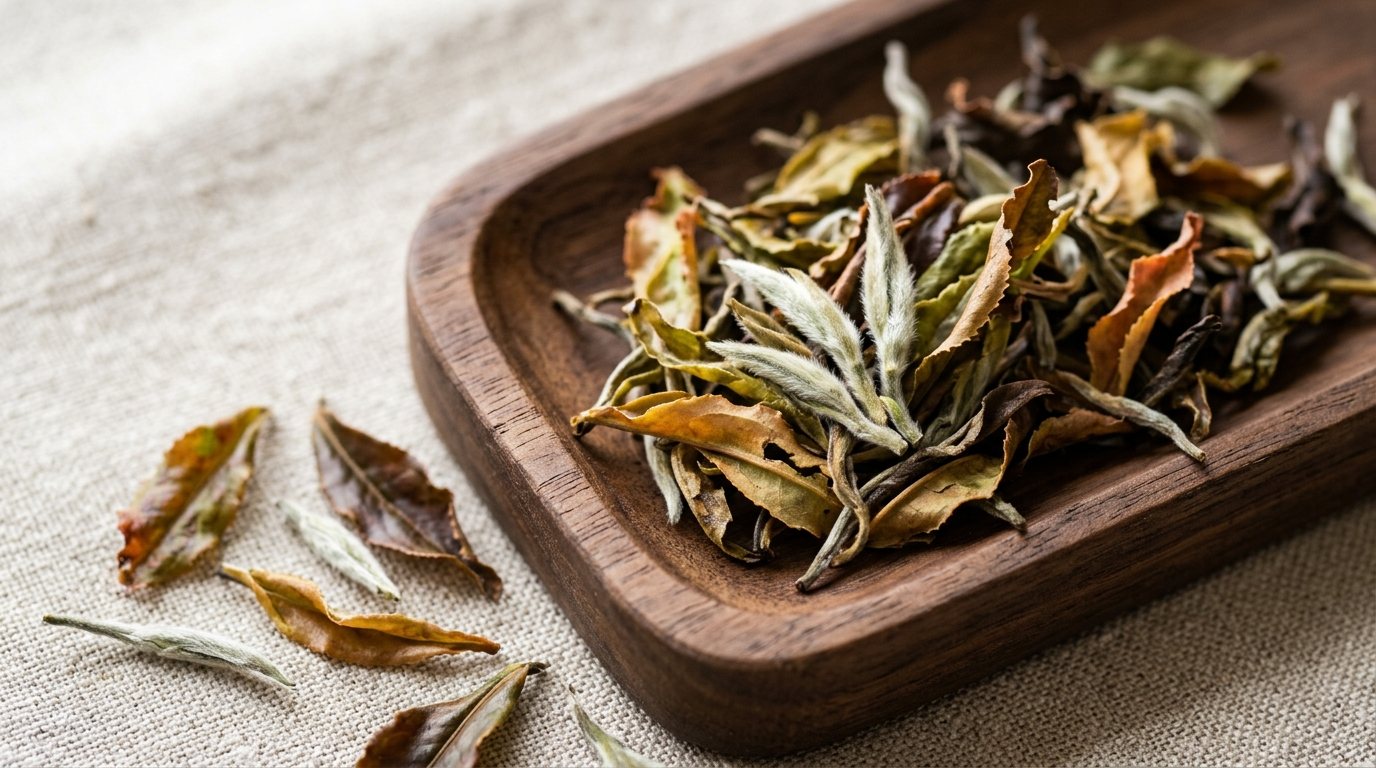
Terroir & Geographical Origin
Beipu and Emei Terraces, Hsinchu County · Taiwan
Taiwanese Oriental Beauty (Dongfang Meiren or Baihao Oolong) is a heavily oxidized (65-75%) unrolled oolong famous for its natural honey and ripe muscatel fruit profile. It can only be produced when tender summer tea buds are bitten by tiny tea green leafhoppers (Jacobiasca formosana), prompting the plant to synthesize defensive monoterpenes and hotrienol.
The Agriculture of Catastrophe
In the hills of Hsinchu County in northwestern Taiwan, early summer arrives with stifling heat and monsoon humidity. For most agriculturalists, this is the season of dread: swarms of tiny green cicadas—Jacobiasca formosana—descend upon the tea fields.
Barely three millimeters long, these tea green leafhoppers pierce the tender stems and youngest buds of the camellia bush to suck plant sap. In conventional farming, this is categorized as devastating crop damage.
Over a century ago, a Hakka farmer whose fields had been ravaged by insects refused to throw away his harvest. He plucked the stunted, yellowish bitten shoots, rolled them gently by hand, and took them to market. To his amazement, the tea merchant offered double the usual price. The farmer's neighbors thought he was boasting—giving rise to the tea's folk name, Peng Feng Cha ('Braggart's Tea').
“In conventional farming, insect feeding is catastrophic damage. In Oriental Beauty, it is the sole prerequisite for genius.”
The Botanical Defense Mechanism
What the Hakka farmer stumbled upon was plant immunology. When the leafhopper pierces the leaf, its saliva introduces enzymes that trigger a systemic distress signal within the camellia bush.
Unable to flee, the plant mobilizes its chemical defenses: it converts regular bitter catechins into volatile aromatic terpenes, notably hotrienol and linalool oxides. These fragrant compounds are designed to attract predatory spiders and birds to attack the leafhoppers.
The consequence for the human drinker is breathtaking: the stressed leaf produces an unmistakable natural fragrance of wildflower honey, muscatel grapes, and ripe summer peaches.
Chamber VII: The Gift of the Wound
In SpiritDew's Cabinet of Nine, Oriental Beauty presides over Chamber VII: Unchased. The seventh passion is that of restless avoidance—the pursuit of unceasing pleasure and novel stimulation out of terror that stillness will reveal pain.
Oriental Beauty teaches an unforgettable lesson: the greatest sweetness in existence was born directly from being wounded. The leaf did not achieve its sublime perfume by residing in a sterile greenhouse; it was pierced by an insect, struggled for life, and in that struggle synthesized something transcendent.
Sitting with this five-color leaf reminds us that the fractures and wounds in our own stories are not errors to be masked; they are often the exact alchemy that makes our presence sweet.
“The greatest sweetness was born directly from being wounded. The leaf did not achieve perfume in a sterile greenhouse.”
Inquiries & Curatorial Clarifications
Can pesticides be used on Oriental Beauty tea farms?
No. Any application of chemical pesticides or synthetic insecticides kills the green leafhopper, completely preventing the stress-induced synthesis of honey and fruit terpenes that define the tea.
Why is Oriental Beauty called 'Five-Color Tea'?
The dry leaves feature five distinct hues: silvery-white down on young buds, tender jade green, golden yellow, amber red, and dark russet brown, reflecting varying degrees of insect feeding and oxidation.
Sensory Spectrum & Extraction Curve
Deep oxidation meets charcoal embers: soaring autumn orchid with metallic rock grip.
Tasting Signature: Caramelized Fruit
Potent salivation reflex and lingering throat return.
Experience Hsinchu Oriental Beauty Oolong
This artisanal whole-leaf harvest is preserved in Chamber VII · The Autumn Meadow. Available as a dedicated single harvest or as part of The Nine Chambers Tasting Flight.
Further Inquiries in the 2026 Archive
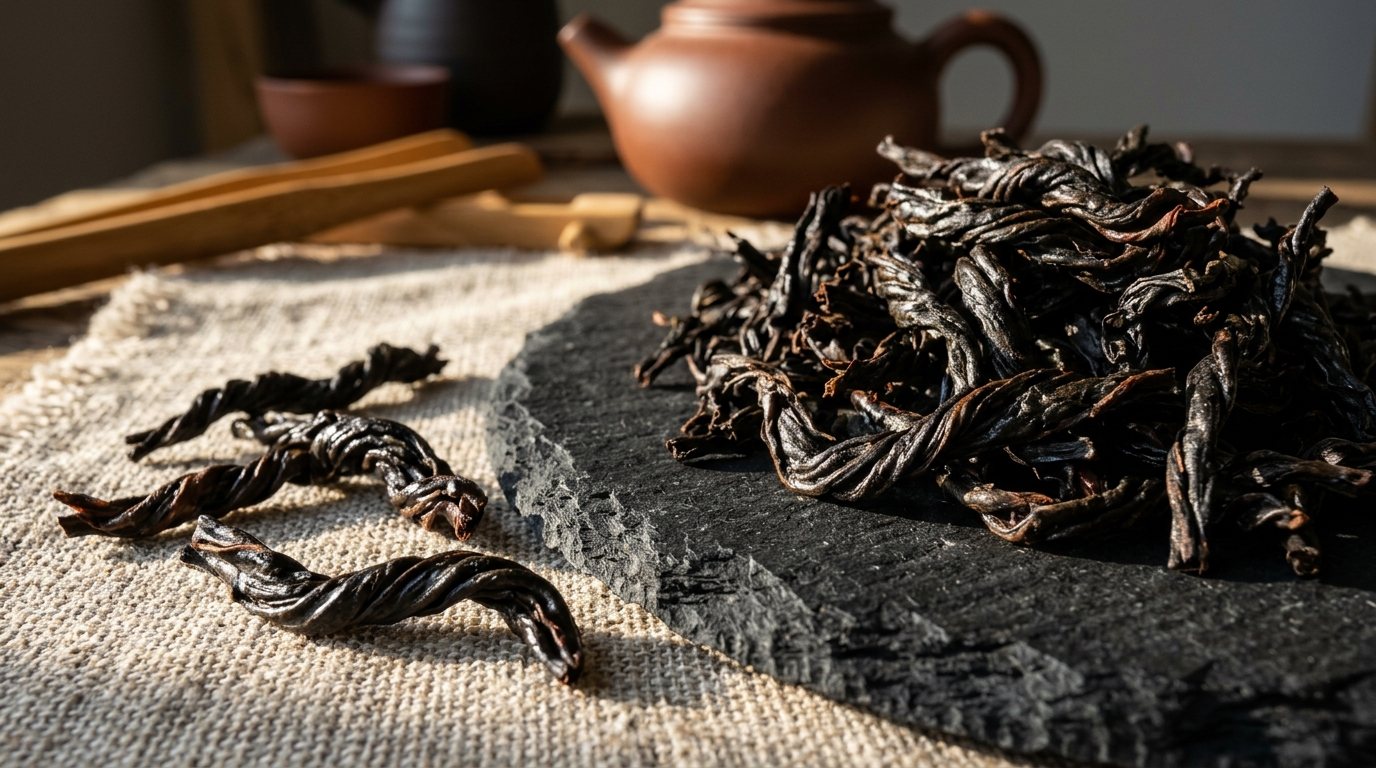
The Architecture of Stillness: Why the Leaf Needs Fire to Rest
A meditation on Wuyi cliff oolong, the ancient discipline of slow fruitwood charcoal roasting, ...
The Craft of Leaf & Mind · 6 min read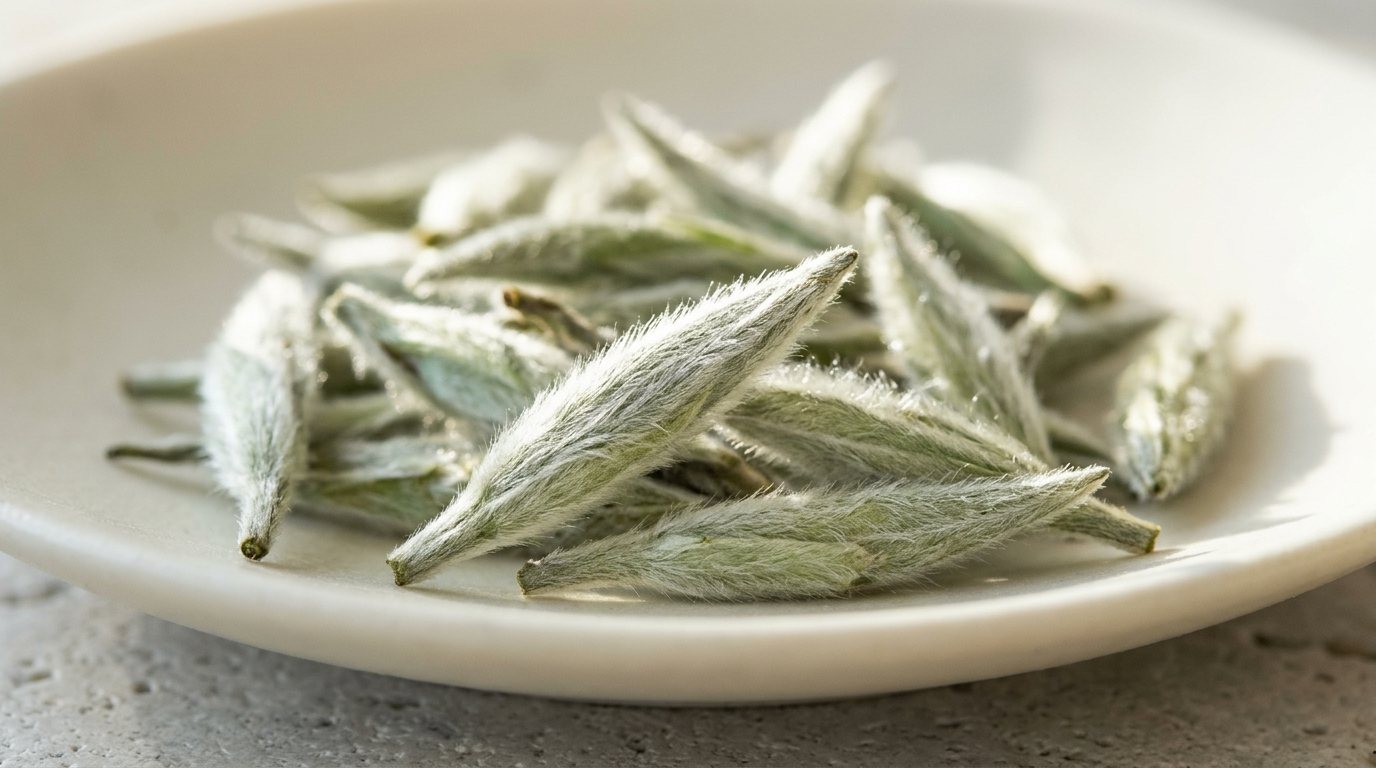
The Art of Non-Intervention: What Silver Needle Teaches Us About Doing Less
White tea undergoes no rolling, no panning, and no shaping. An inquiry into Fuding Baihao Yinzh...
Brewing & Ritual · 8 min read
A Beginner's Guide to Gongfu Cha: How Five Grams of Whole Leaf Can Slow Down Time
A demystified, practical guide to Gongfu tea brewing. Why porcelain vessels matter, why boiling...