The Gold-Inlaid Spear: Imperial Menghuang Yellowing on Mount Junshan
Island lake mist, three vertical ascents, and the secret oxidation of China's rarest yellow tea.
Terroir & Geographical Origin
Junshan Island, Dongting Lake, Yueyang · Hunan Province, China
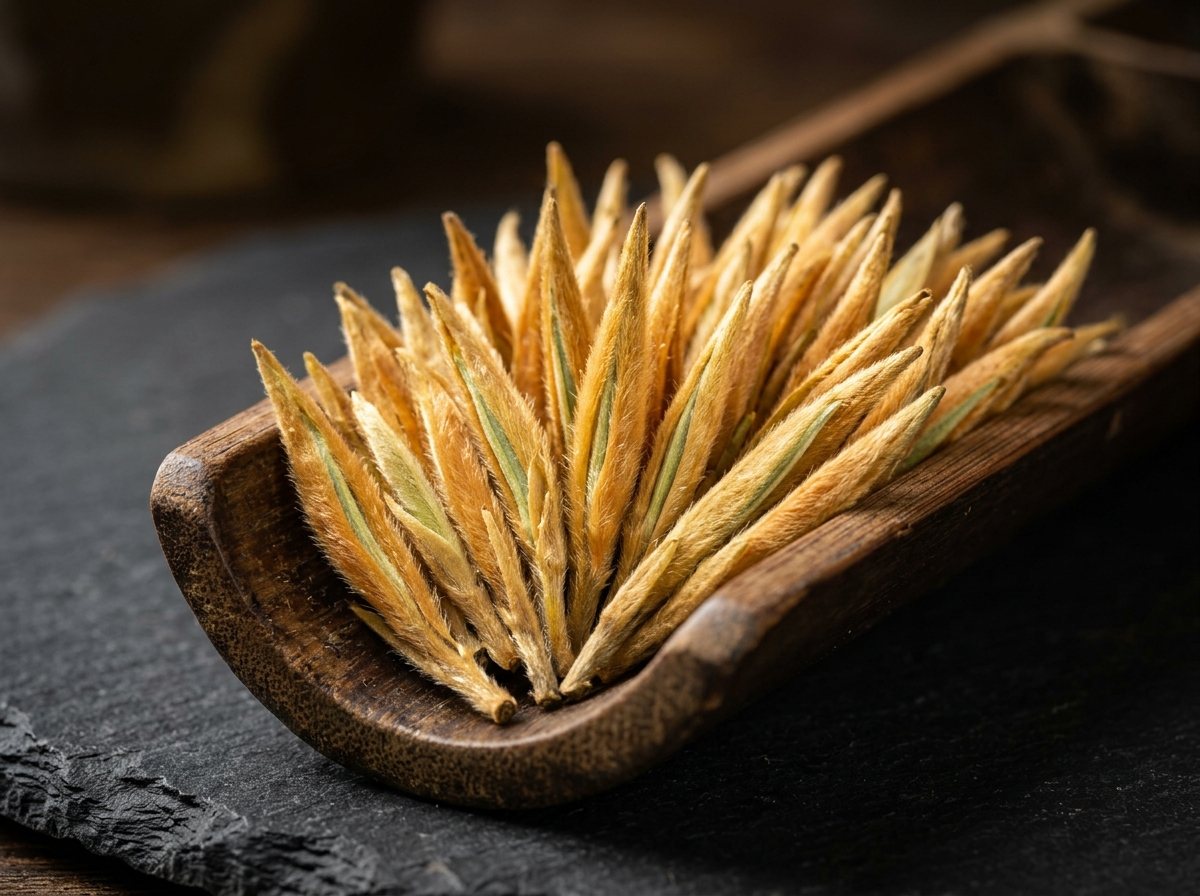
Junshan Yinzhen is an imperial yellow tea crafted solely from plump single buds grown on Junshan Island in Hunan's Dongting Lake. Defined by 'Menhuang' (smothered yellowing in cowhide paper), its buds glow with golden-ochre cores frosted by silver down ('Gold Inlaid in Jade'), brewing a mellow sweet broth with sweet corn, toasted rice, and zero astringency.
The Island in the Great Lake
Dongting Lake in northern Hunan is one of China's ancient freshwater seas. Rising out of its waters like a jade tortoiseshell is Junshan Island—a sanctuary of seventy-two verdant hills cloaked in morning mist.
According to Daoist legend, this was the resting place of Emperor Shun's mourning consorts, whose tears speckled the local bamboo. It is also the exclusive birthplace of Junshan Yinzhen—once the imperial tribute tea of the Qing court, where every single bud was personally inspected for imperial banquets.
Because the island is encircled by expansive freshwater, its relative humidity rarely dips below eighty percent. The tea buds develop unusually fat, heavy cores wrapped in thick silvery trichomes.
“An island encircled by expansive freshwater, where morning fog keeps humidity perpetually high.”
The Mastery of the Smother
What transforms green buds into imperial yellow is 'Menhuang'—the smothered yellowing craft. While green tea makers rush to dry leaves quickly to keep them green, yellow tea artisans perform the unthinkable: they deliberately halt the drying.
While still warm and damp from the wok, the buds are wrapped into small bundles using thick, breathable cowhide parchment paper and placed into wooden drawers. Here, in the gentle warmth of their own moisture, subtle non-enzymatic auto-oxidation takes place.
Over forty-eight to seventy-two hours, bitter catechins break down. The harsh vegetal astringency melts into mellow sweetness, and the interior leaf turns an exquisite glowing golden-ochre, earning the poetic moniker 'Gold Inlaid in Jade' (Jin Xiang Yu).
Chamber IV: The Freedom from Comparison
In SpiritDew's taxonomy, Junshan Yinzhen is the sovereign of Chamber IV: Uncompared. The fourth passion is that of melancholy and envy—the tragic conviction that everyone else possesses ease and belonging, while we remain uniquely flawed or misunderstood.
Brewed in a tall transparent glass, Junshan Yinzhen performs its famous dance: the buds rise to the surface, stand completely upright, sink, and rise again three times before settling serenely at the bottom.
The liquor is amber-gold, devoid of green bite, offering notes of roasted sweet corn, sweet brioche, and wildflower honey. It does not compete with green tea's grassiness or red tea's fruitiness. It exists entirely in its own golden domain, reminding the drinker that your value does not depend on outperforming another.
“It does not compete with green tea or red tea; it exists entirely in its own golden domain.”
Inquiries & Curatorial Clarifications
What is the Menhuang process in yellow tea?
Menhuang is the unique step that separates yellow tea from green tea: warm, damp pan-fired leaves are wrapped in thick parchment paper in small parcels for several hours, triggering mild non-enzymatic auto-oxidation that converts harsh catechins into smooth yellow flavones.
Why do Junshan Yinzhen buds stand vertically in water?
The heavy, dense tissue of the single bud combined with air bubbles trapped in the velvety outer trichomes causes the needles to rise and sink repeatedly ('three ascents and three descents') before settling upright like bamboo shoots.
Sensory Spectrum & Extraction Curve
Mellowed through smothered warmth: golden, nutty, devoid of harsh green spikes.
Tasting Signature: Sweet Corn & Malt
Gentle caramel sweetness shaped by micro-fermentation.
Experience Junshan Island Silver Needle Yellow Tea
This artisanal whole-leaf harvest is preserved in Chamber IV · The Golden Hall. Available as a dedicated single harvest or as part of The Nine Chambers Tasting Flight.
Further Inquiries in the 2026 Archive
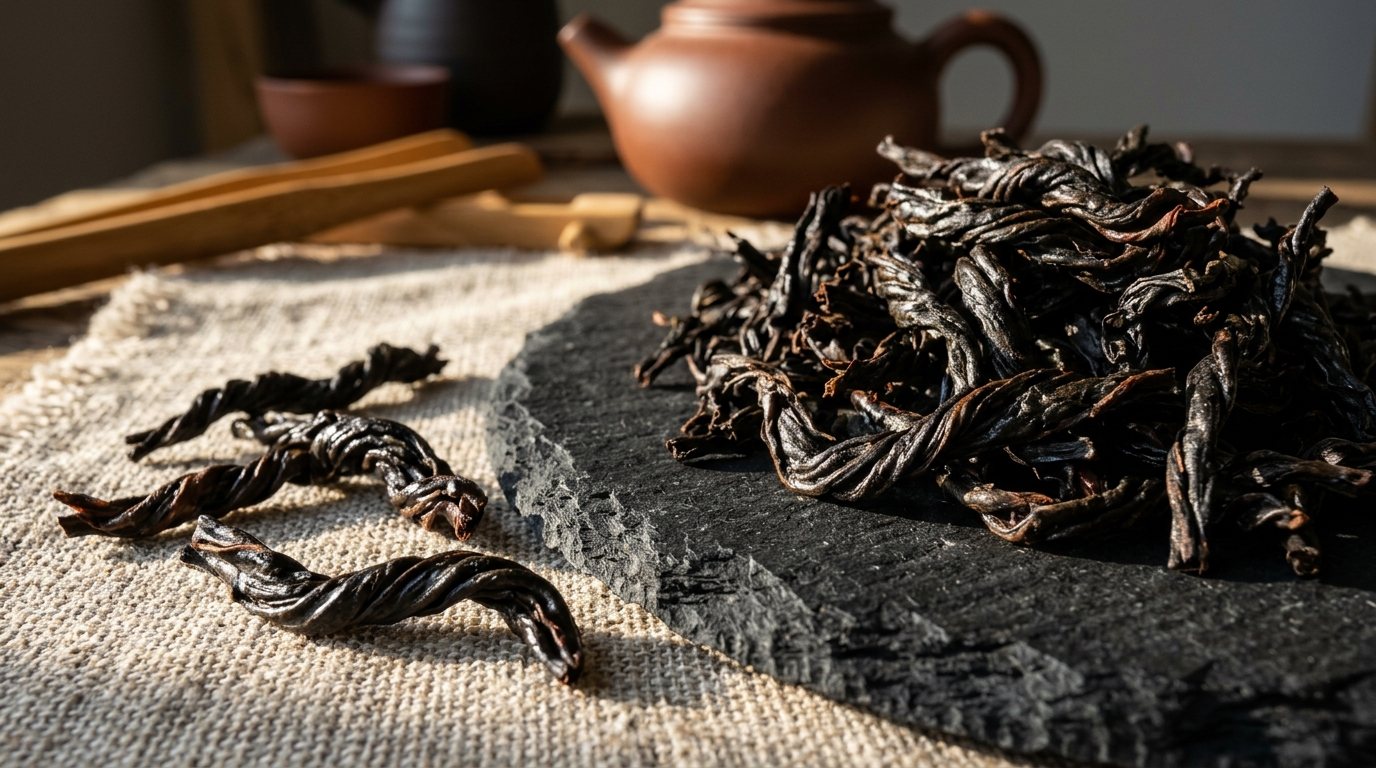
The Architecture of Stillness: Why the Leaf Needs Fire to Rest
A meditation on Wuyi cliff oolong, the ancient discipline of slow fruitwood charcoal roasting, ...
The Craft of Leaf & Mind · 6 min read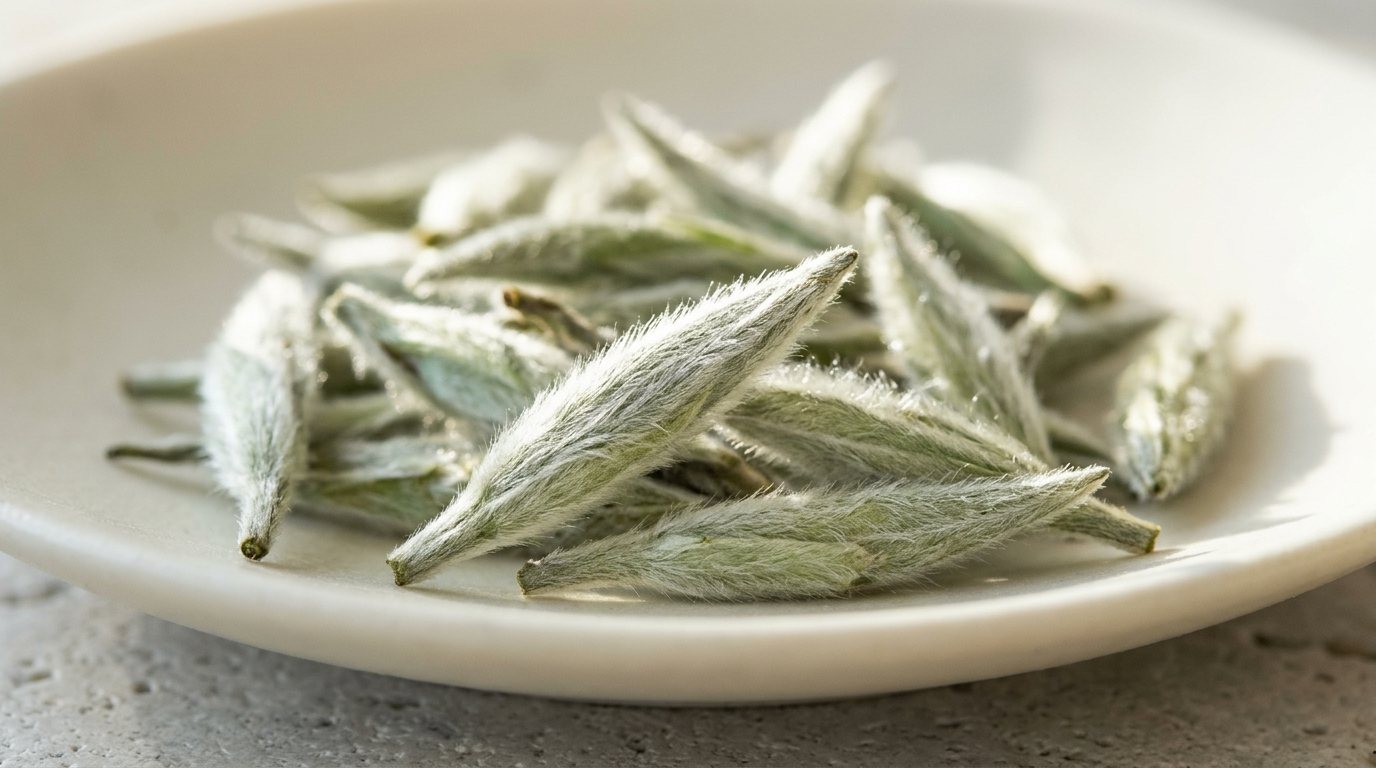
The Art of Non-Intervention: What Silver Needle Teaches Us About Doing Less
White tea undergoes no rolling, no panning, and no shaping. An inquiry into Fuding Baihao Yinzh...
Brewing & Ritual · 8 min read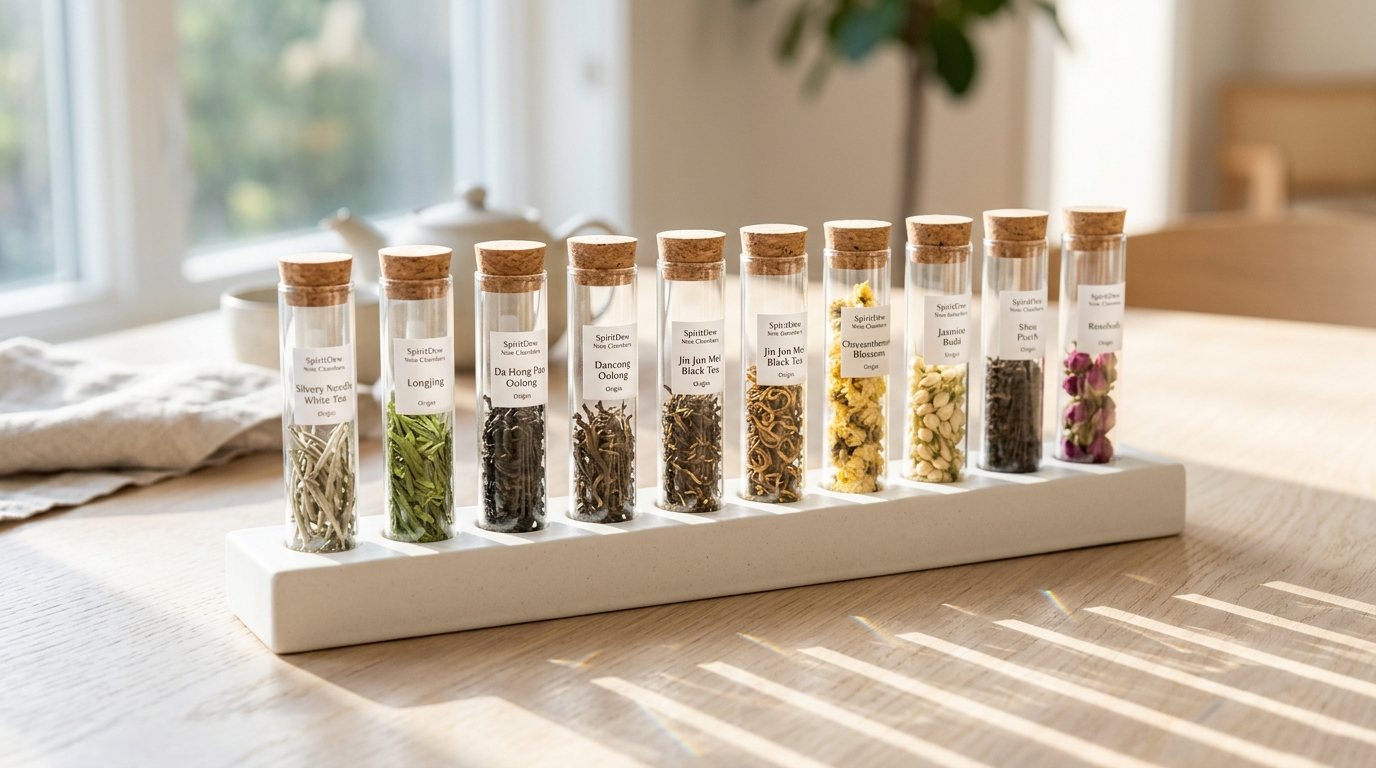
A Beginner's Guide to Gongfu Cha: How Five Grams of Whole Leaf Can Slow Down Time
A demystified, practical guide to Gongfu tea brewing. Why porcelain vessels matter, why boiling...