The Golden Flower of the Dark Steppe: How Eurotium Cristatum Redefined Longevity
Behind the heavy bricks of Hunan Anhua tea: a sacred yellow microbe and five centuries of nomadic health.
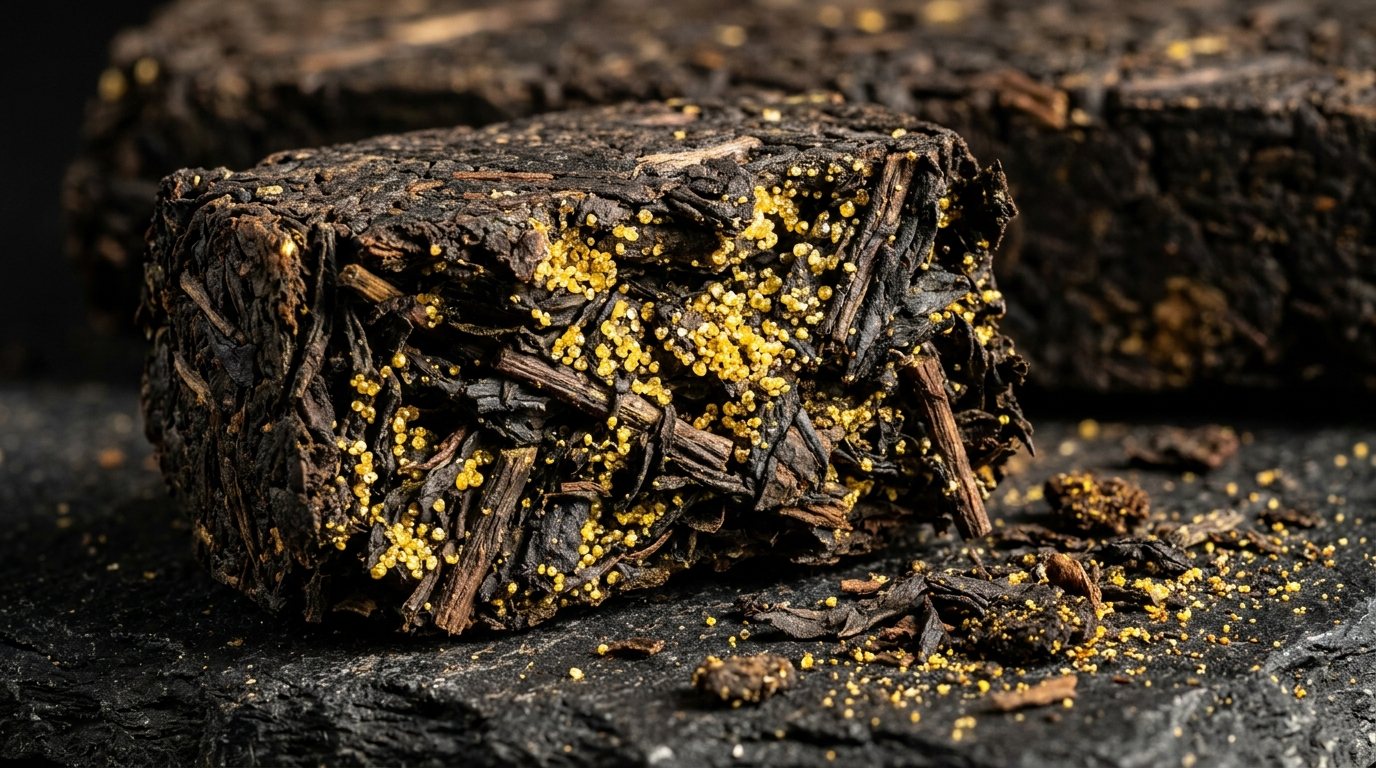
Terroir & Geographical Origin
Gaoma Erxi Cliffside Ridge · Xuefeng Mountain Slate Escarpment (1,100m) · Hunan Province, China
Anhua Golden Flower Fu Brick is a post-fermented dark tea (Hei Cha) from Hunan famous for cultivating Eurotium cristatum, a beneficial golden probiotic fungus known as 'Jin Hua'. Fermented inside dense compressed bricks during humid summer months, it delivers a smooth liquor with notes of dried autumn dates, pine sap, and a naturally sweet, soothing finish with negligible astringency.
The Miracle of the Tea Horse Road
For hundreds of years, heavy caravans laden with coarse tea bricks departed Hunan for the Tibetan plateau and Mongolian grasslands. Nomadic herders whose diets consisted almost entirely of yak meat, dried cheese, and barley flour depended on tea for their very survival: without plant vitamins and polyphenols, life on the steppe was perilous.
According to legend, during one torrential monsoon season, a pack train was caught in rainstorms. The tea bricks absorbed moisture, fell into damp roadside inns, and began to germinate. Broken open, the dark compressed leaves were studded with dense constellations of brilliant golden-yellow pearls.
Expected to be ruined, the tea was sampled. Rather than tasting moldy or sour, the brew was astonishingly smooth, sweet, and soothing to the stomach. The golden flower had arrived.
“Nomadic herders depended on the tea for survival: without plant polyphenols, life on the high steppe was perilous.”
The Alchemy of Eurotium Cristatum
Modern microbiology has verified what the ancient caravan masters discovered through grit. The golden pearls are colonies of Eurotium cristatum—a probiotic fungus capable of flourishing in the high-tannin environment of pressed camellia leaves.
During the proprietary 'Fa Hua' (Flowering) phase in climate-controlled wooden drying lofts, the humidity and temperature are kept at exact equilibrium for three weeks. As the fungus colonizes the interior of the brick, it secretes powerful digestive enzymes—cellulases, pectinases, and polyphenol oxidases.
These enzymes digest coarse cellulose and break down harsh catechins into complex water-soluble tea polysaccharides. Bitterness is completely neutralized, replaced by a deep amber sweetness reminiscent of dried Chinese dates, autumn timber, and wildflower honey.
Chamber V: Sustenance Without Defensiveness
In the SpiritDew chamber schema, Anhua Fu Brick is an anchor of Chamber V: Unwithheld. If delicate green tea is an ethereal thought, Fu Brick is physical bread.
Simmered in a glass kettle or steeped in a sturdy purple clay pot with boiling water, the liquor pours a rich ruby-mahogany. There is no sharp edge to parry, no astringent bite that demands caution. It enters the digestive tract like a soothing balm.
It reminds us that the greatest sustenance often comes not from pristine, untouched purity, but from allowing natural organisms, moisture, and time to collaborate in the dark.
“The greatest sustenance comes not from untouched purity, but from allowing time and microbes to collaborate in the dark.”
Inquiries & Curatorial Clarifications
What are the yellow specks in Anhua Fu Brick tea?
The yellow specks are ascocarps of Eurotium cristatum, a non-toxic probiotic mold prized for secreting amylase, protease, and unique tea polysaccharides that aid lipid metabolism and gut health.
Can I boil Anhua Fu Brick tea on a stove?
Yes. Due to its mature leaf composition and post-fermentation, boiling Fu Brick tea on low heat for 5-10 minutes releases deep wood sugars and soothing medicinal warmth without developing bitterness.
Sensory Spectrum & Extraction Curve
Deep ancient tree roots whispering through cedar smoke, dried date, and petrichor.
Tasting Signature: Dark Jujube Honey
Rich, resonant throat sweetness that persists for hours.
Experience Anhua Golden Flower Fu Brick
This artisanal whole-leaf harvest is preserved in Chamber V · The Present Hour. Available as a dedicated single harvest or as part of The Nine Chambers Tasting Flight.
Further Inquiries in the 2026 Archive
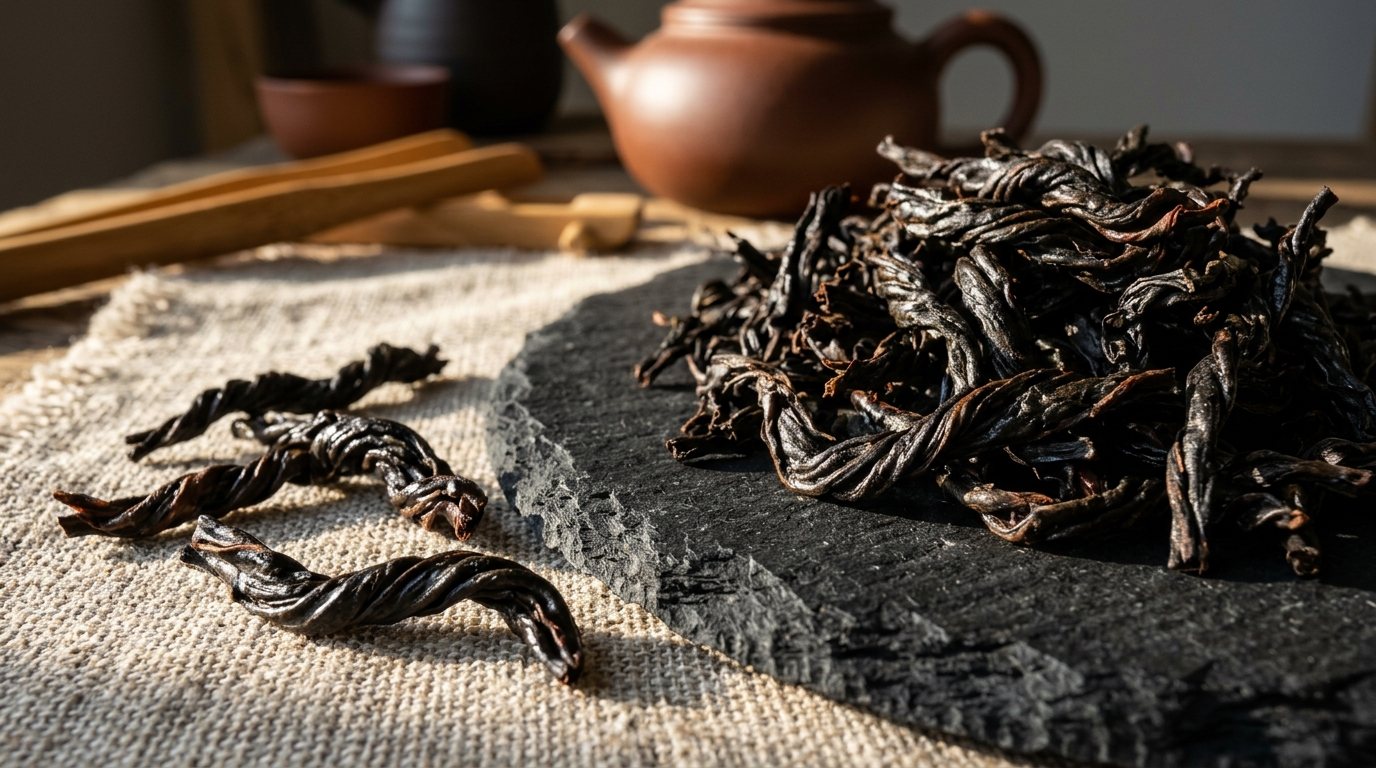
The Architecture of Stillness: Why the Leaf Needs Fire to Rest
A meditation on Wuyi cliff oolong, the ancient discipline of slow fruitwood charcoal roasting, ...
The Craft of Leaf & Mind · 6 min read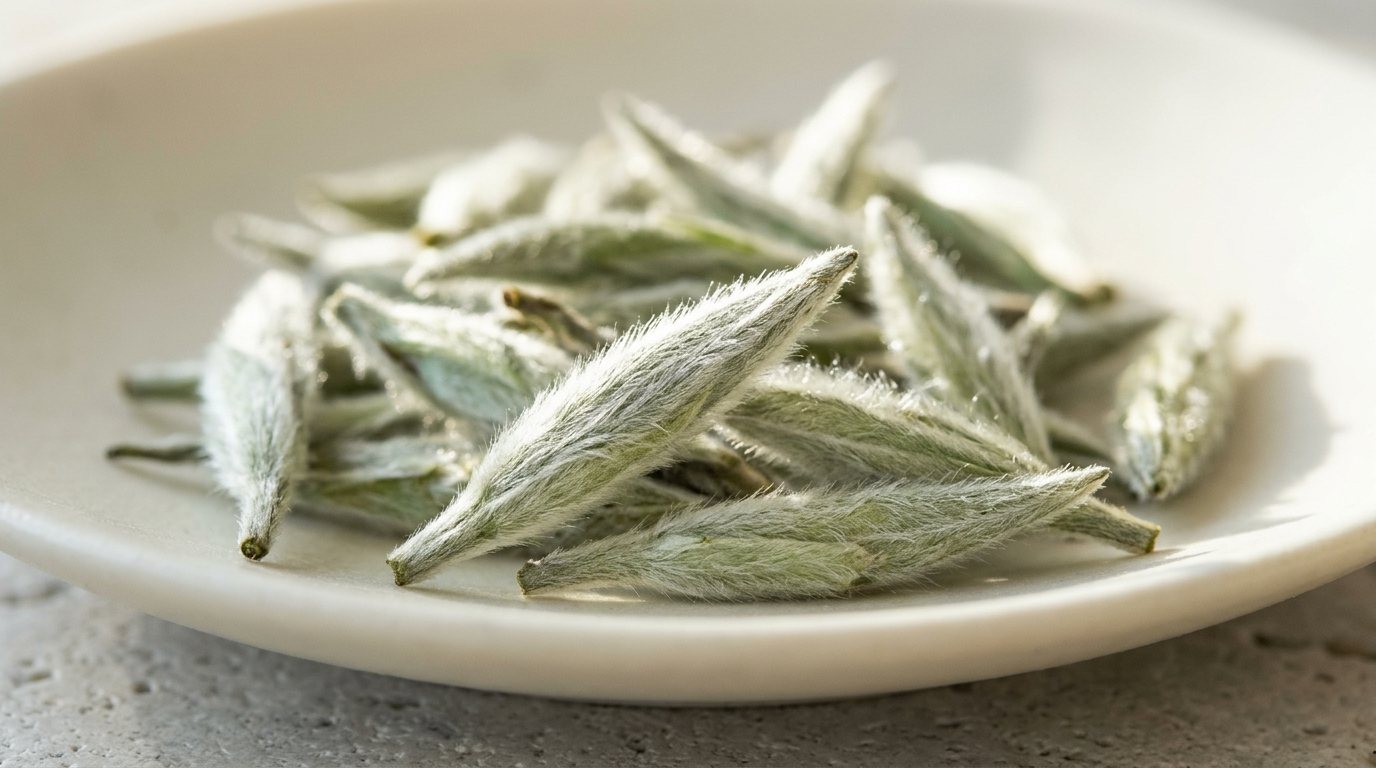
The Art of Non-Intervention: What Silver Needle Teaches Us About Doing Less
White tea undergoes no rolling, no panning, and no shaping. An inquiry into Fuding Baihao Yinzh...
Brewing & Ritual · 8 min read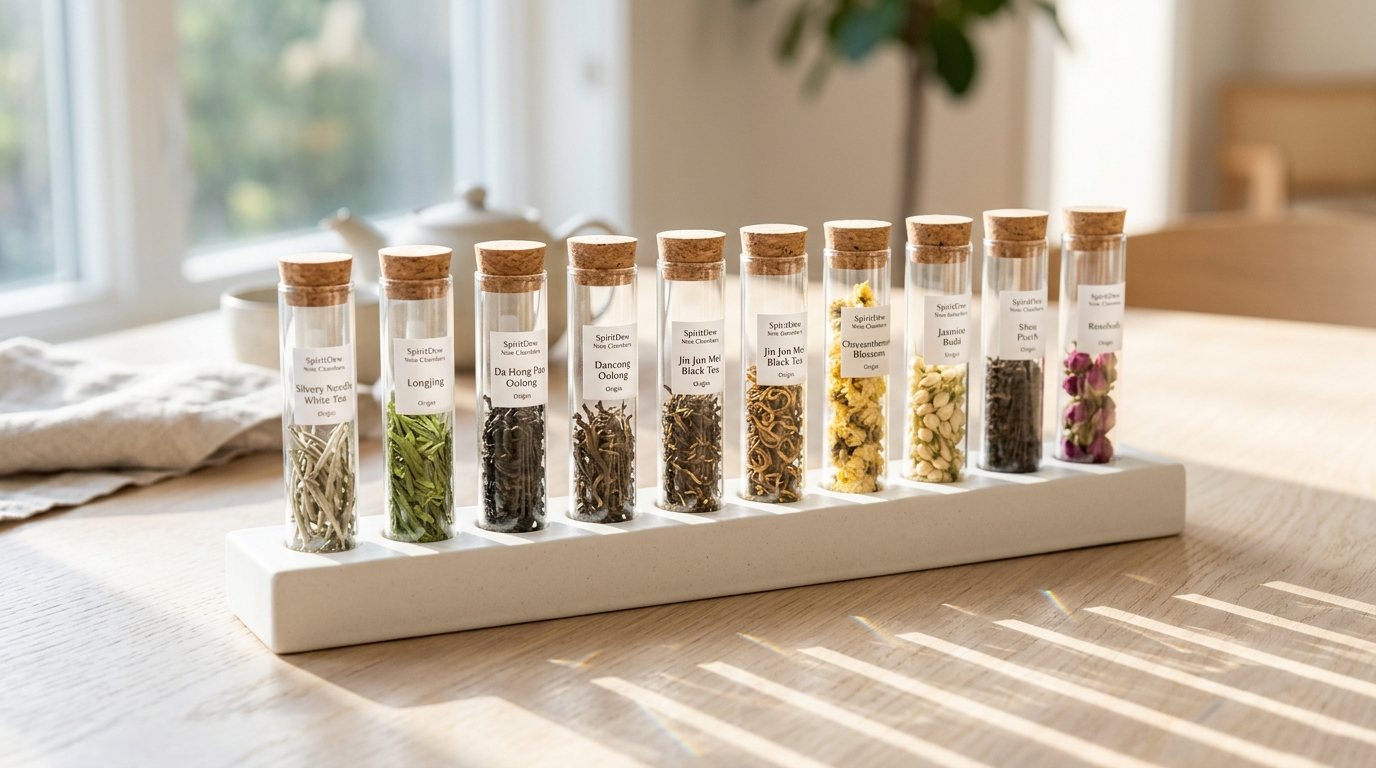
A Beginner's Guide to Gongfu Cha: How Five Grams of Whole Leaf Can Slow Down Time
A demystified, practical guide to Gongfu tea brewing. Why porcelain vessels matter, why boiling...