The Tencha Solitude: Shade-Grown Botanicals Before the Stone Mill
The flat, papery flakes that precede matcha: why the unground leaf carries the deepest silence.
Terroir & Geographical Origin
Jingshan Ancient Buddhist Terraces · Mount Tianmu Northern Ridge · Zhejiang Province, China
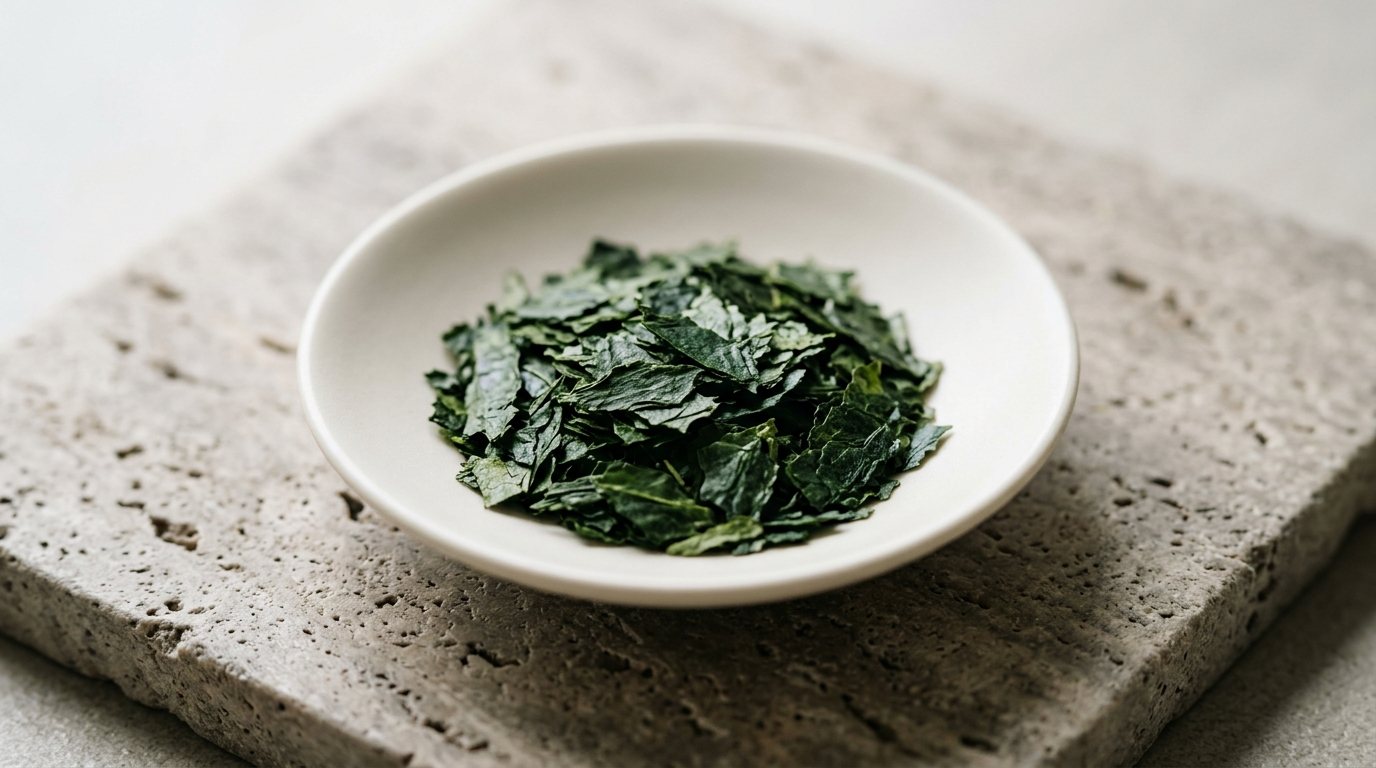
Tencha is the intermediate raw whole-leaf material from which ceremonial matcha is stone-ground. Cultivated under 85-90% woven shade for three to four weeks prior to harvest, the tender steamed leaves bypass traditional rolling entirely; instead, they are dried flat and destemmed into feather-light, deep nori-green flakes that brew an ethereal, savory umami broth.
The Hidden Predecessor
The modern world knows matcha intimately: the bright green lattes, the ceremonial bowls whisked with bamboo, the vibrant powders that dust contemporary pastry. But very few have ever laid eyes on Tencha.
Tencha is matcha before it is ground. It is the raw, unpulverized soul of shade-grown green tea.
Three to four weeks before the spring harvest, heavy woven screens are unrolled over the mountain terraces, cutting out up to ninety percent of natural sunlight. Starved of direct rays, the tea bush compensates by producing extraordinary concentrations of chlorophyll and L-theanine to absorb every stray photon. The leaves turn an astonishing deep forest-emerald.
“Starved of direct rays, the bush produces extraordinary concentrations of chlorophyll and L-theanine.”
The Refusal to Roll
When regular green tea is harvested, it is vigorously kneaded to break the leaf cells so flavor releases easily. Tencha, however, is deliberately shielded from rolling.
After quick steam-fixation, the leaves travel through multi-tiered drying ovens on mesh belts, carried aloft by gentle warm updrafts. Once dry, specialized destemming machines strip away the tough ribs, petioles, and veins, leaving only the delicate leaf lamina.
What remains are papery, weightless flakes resembling broken bits of dark roasted nori. Because the cell walls were never broken, the aromatics remain locked inside until the granite stones crush them into sub-micron dust.
Chamber III: The Beauty of the Unfinished
Tencha is preserved in Chamber III: Unperformed. In our obsession with the final product—the finished performance, the viral photo, the successful launch—we constantly overlook the quiet beauty of the intermediate state.
Steeped in warm water at 75°C, Tencha flakes float upon the surface like miniature water lilies. The liquor is pale celadon, releasing a delicate broth of sweet peas, nori, and bamboo rain. It makes no loud claims.
It reminds us that there is profound dignity in being unground. You do not have to be pulverized into someone else's idea of perfection to be worthy of admiration.
“There is profound dignity in being unground. You do not have to be pulverized to be worthy of admiration.”
Inquiries & Curatorial Clarifications
Can you brew Tencha leaves directly without grinding?
Yes. Brewing whole Tencha flakes yields an exceptionally translucent, pale emerald liquor with pristine amino brothiness and none of the thick suspended solids of whisked matcha.
Why is Tencha never rolled during processing?
Rolling breaks leaf cell walls and releases intracellular juices. By leaving the leaf completely unrolled and flat, cell structures remain intact, allowing the subsequent granite stone mill to pulverize the dry leaf without clumping or oxidation.
Sensory Spectrum & Extraction Curve
Deep emerald meditation: intense shade-grown umami crowned with vibrant jade crema.
Tasting Signature: Melted Cream
Noble bitterness dissolving into rich, lingering sweetness.
Experience Song Heritage Tencha Leaf
This artisanal whole-leaf harvest is preserved in Chamber III · The Inner Chamber. Available as a dedicated single harvest or as part of The Nine Chambers Tasting Flight.
Further Inquiries in the 2026 Archive
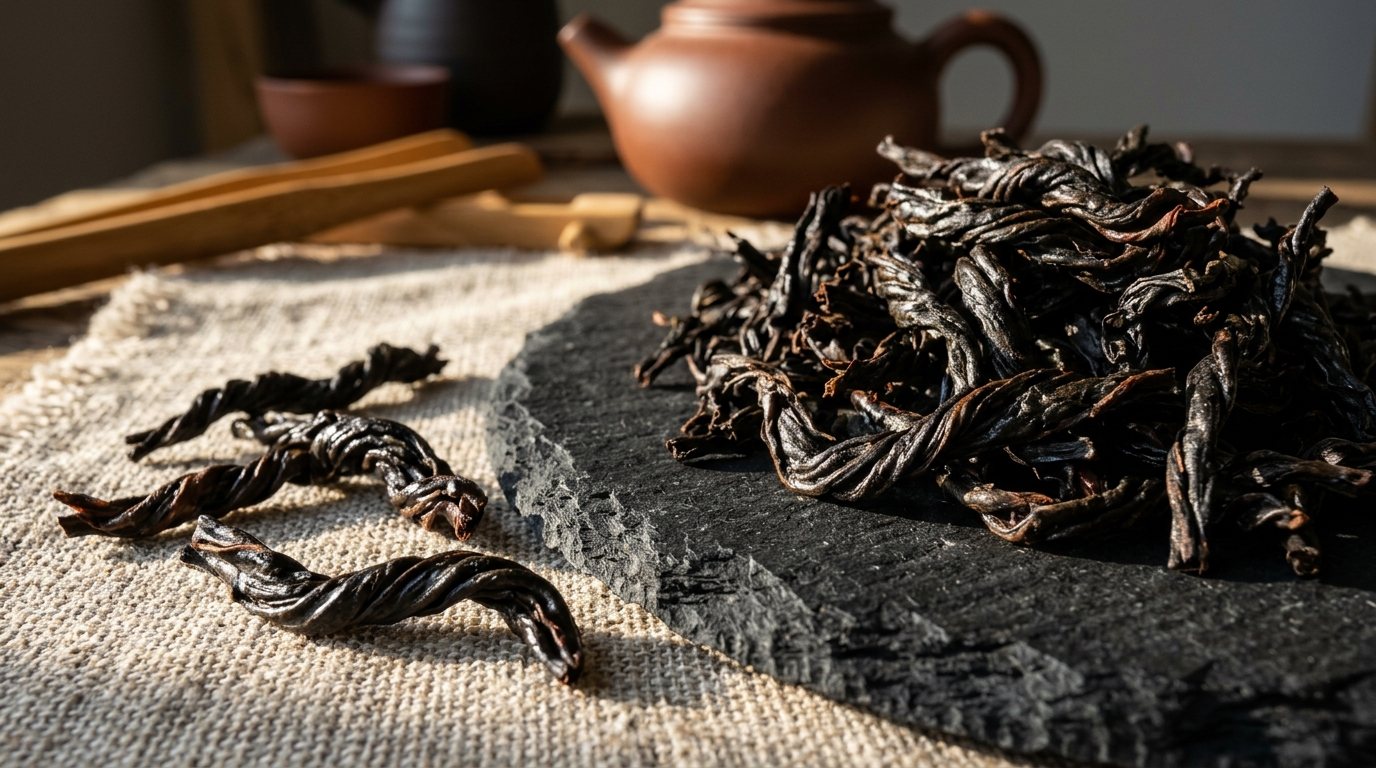
The Architecture of Stillness: Why the Leaf Needs Fire to Rest
A meditation on Wuyi cliff oolong, the ancient discipline of slow fruitwood charcoal roasting, ...
The Craft of Leaf & Mind · 6 min read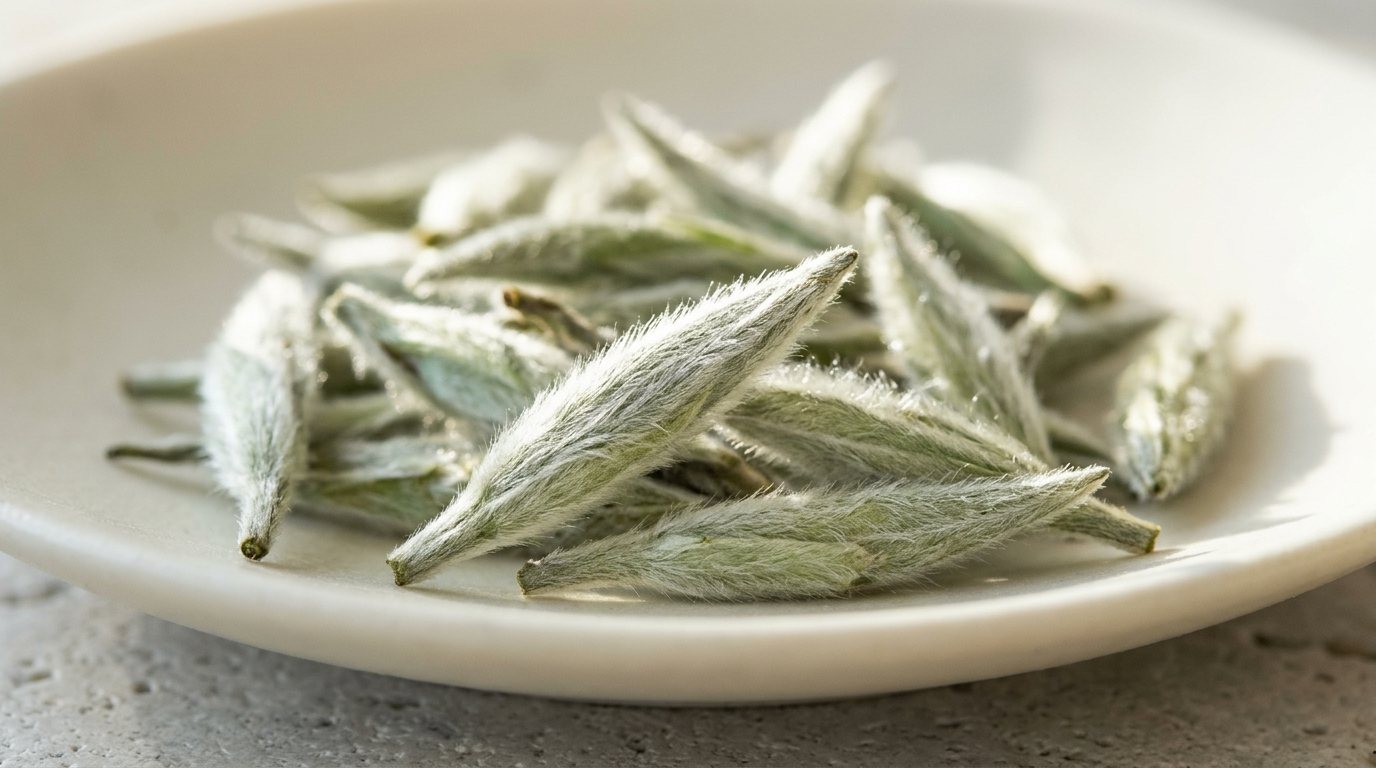
The Art of Non-Intervention: What Silver Needle Teaches Us About Doing Less
White tea undergoes no rolling, no panning, and no shaping. An inquiry into Fuding Baihao Yinzh...
Brewing & Ritual · 8 min read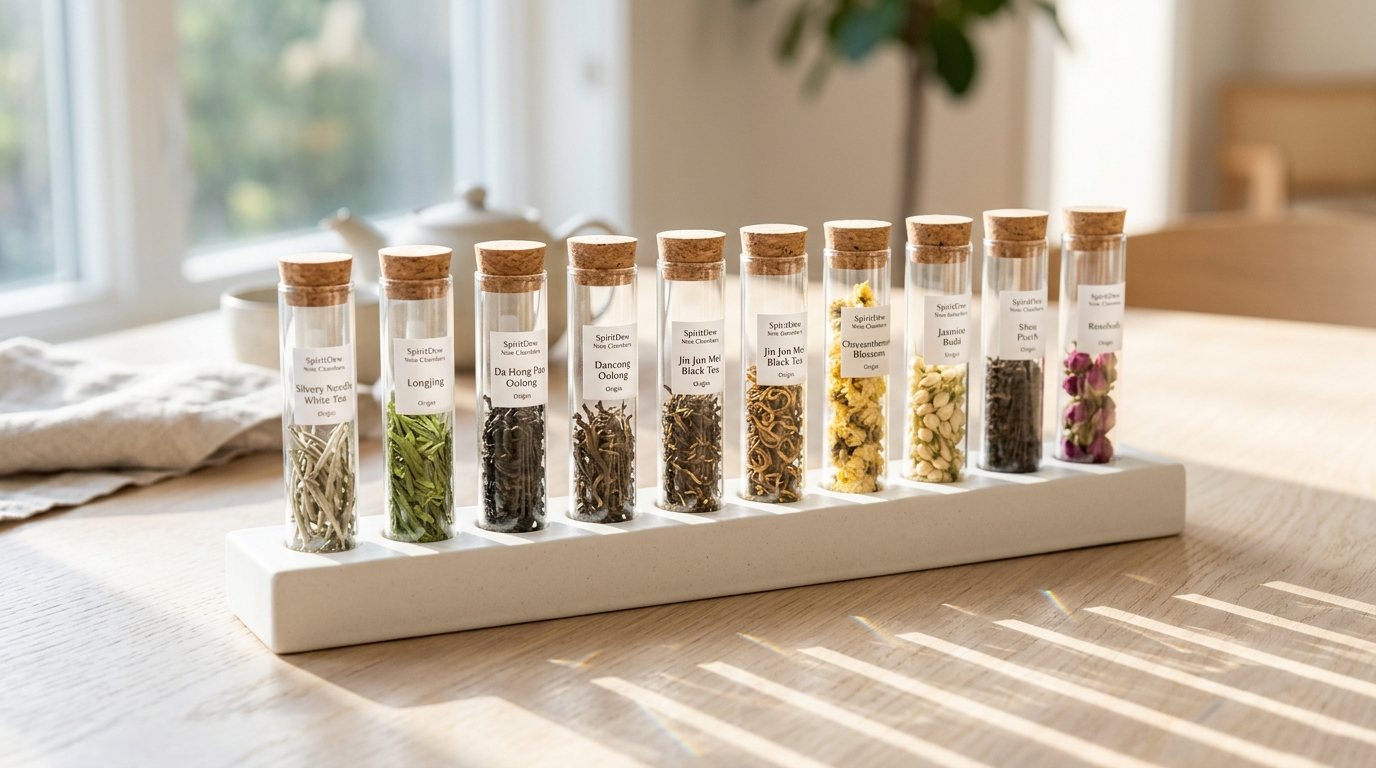
A Beginner's Guide to Gongfu Cha: How Five Grams of Whole Leaf Can Slow Down Time
A demystified, practical guide to Gongfu tea brewing. Why porcelain vessels matter, why boiling...