The Three-Tone Seahorse: Wild Alpine Plucking of Tongmu Reserve Jin Jun Mei
Sixty thousand single alpine buds for one pound of black tea: the radical rebirth of Wuyi black tea.
Terroir & Geographical Origin
Tongmu Village Core Nature Reserve, Wuyi Mountains · Fujian Province, China
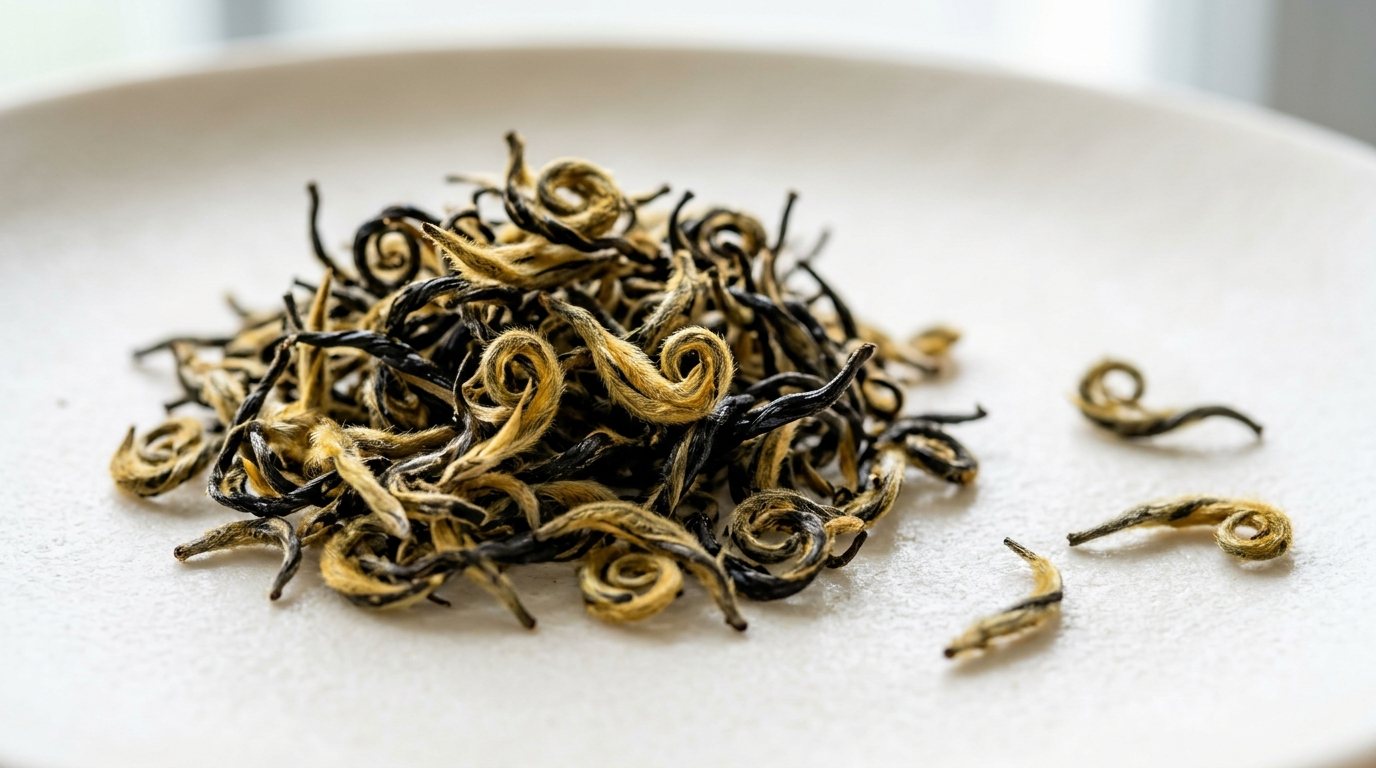
Tongmu Reserve Jin Jun Mei is China's most prestigious high-altitude black tea, created in 2005 from wild alpine tea bushes inside the Tongmu Nature Reserve. Plucked strictly as delicate single terminal buds, it features an iconic three-tone color spectrum (gold, bronze, black) resembling tiny curled seahorses, brewing a golden amber liquor filled with sweet potato, baked longan, and wild mountain floral nectar.
The Guardian of the Pass
High in the northern ridge of the Wuyi Mountains lies Tongmu Guan—a mountain pass cloaked in perpetual cloud, accessible only by a single checkpoint road. Here, within the national nature reserve, no foreign vehicles are permitted, no pesticides have ever been introduced, and wild monkeys leap through bamboo thickets.
For four hundred years, Tongmu was celebrated for Lapsang Souchong—the rustic, pine-smoked black tea shipped across European trading routes. But in the spring of 2005, a daring experiment occurred.
Tea masters challenged pluckers to ascend above 1,200 meters and harvest exclusively the unopened, single terminal buds of wild heirloom bushes. When fired without pine smoke, the resulting tea was an absolute revelation.
“Ascending above 1,200 meters to harvest exclusively the unopened terminal buds of wild heirloom bushes.”
The Morphology of the Seahorse
Commercial imitators assume that more gold equals higher quality, creating gaudy, all-yellow teas. Authentic Tongmu Jin Jun Mei laughs at this vanity.
Inspected in a clean white porcelain tasting dish, true Jin Jun Mei buds are tiny, slender, and gently curved like miniature seahorses. Their surface displays an exquisite three-tone interplay: warm golden velvet trichomes at the base, reddish-bronze in the midsection, and deep glossy black along the spine.
When water is poured, the liquor is not dark brown or red, but a glowing liquid amber. The aroma fills the chamber with sweet longan soup, baked yellow sweet potatoes, and wild alpine honey, without an ounce of smoky coarseness.
Chamber VI: The Ceasefire of the Sentinel
In SpiritDew's Nine Chambers, Jin Jun Mei belongs to Chamber VI: Unassured. The sixth passion is anxiety—the vigilant mind that constantly scans the horizon for danger, building fortresses against future catastrophes.
When an anxious nervous system drinks Jin Jun Mei, something extraordinary happens. The intense sweetness is not sugary; it is deeply comforting and grounding. The rich theaflavins and polysaccharides coat the stomach lining like warm silk.
Sitting with this cup, the sentinel is finally given permission to step down from the watchtower. The world is vast, the mountain mist is quiet, and right now, there is nothing you need to defend against.
“The sentinel is finally given permission to step down from the watchtower. There is nothing you need to defend against.”
Inquiries & Curatorial Clarifications
Why is authentic Jin Jun Mei not all gold in color?
Counterfeit Jin Jun Mei is often dyed or made from large-leaf cultivars with heavy yellow fuzz. Authentic wild Tongmu Jin Jun Mei always displays a balanced three-color mix: 30% golden fuzz, 30% bronze, and 40% deep glossy black.
How many buds does it take to produce 500g of Jin Jun Mei?
It requires approximately 60,000 to 80,000 individually hand-plucked alpine buds to craft a single 500g (one Chinese jin) of authentic Jin Jun Mei.
Sensory Spectrum & Extraction Curve
The legendary Keemun aroma: dried rose petals, baked plum, and dark cacao silk.
Tasting Signature: Longan & Candied Plum
Deep rich fruit nectar with crystalline clean finish.
Experience Tongmu Reserve Jin Jun Mei
This artisanal whole-leaf harvest is preserved in Chamber VI · The Watchtower Hearth. Available as a dedicated single harvest or as part of The Nine Chambers Tasting Flight.
Further Inquiries in the 2026 Archive
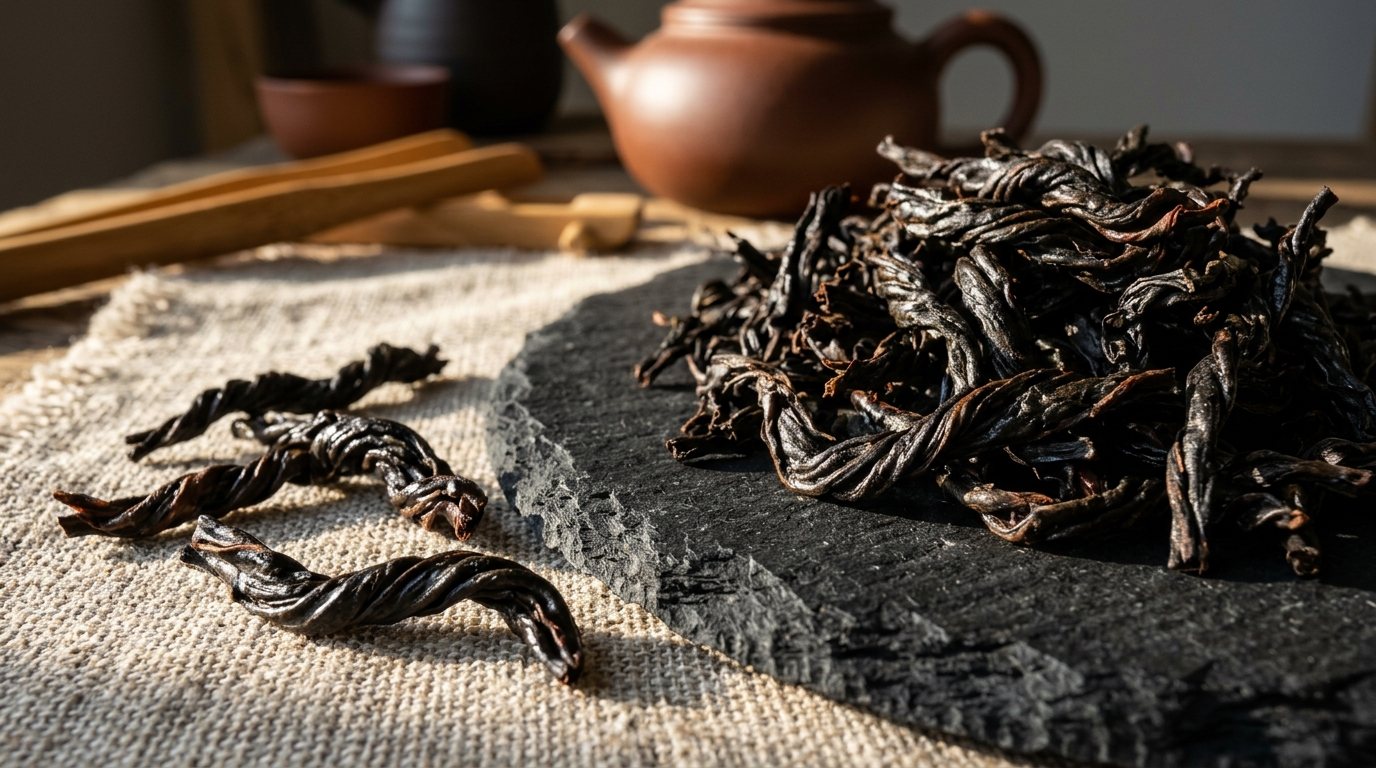
The Architecture of Stillness: Why the Leaf Needs Fire to Rest
A meditation on Wuyi cliff oolong, the ancient discipline of slow fruitwood charcoal roasting, ...
The Craft of Leaf & Mind · 6 min read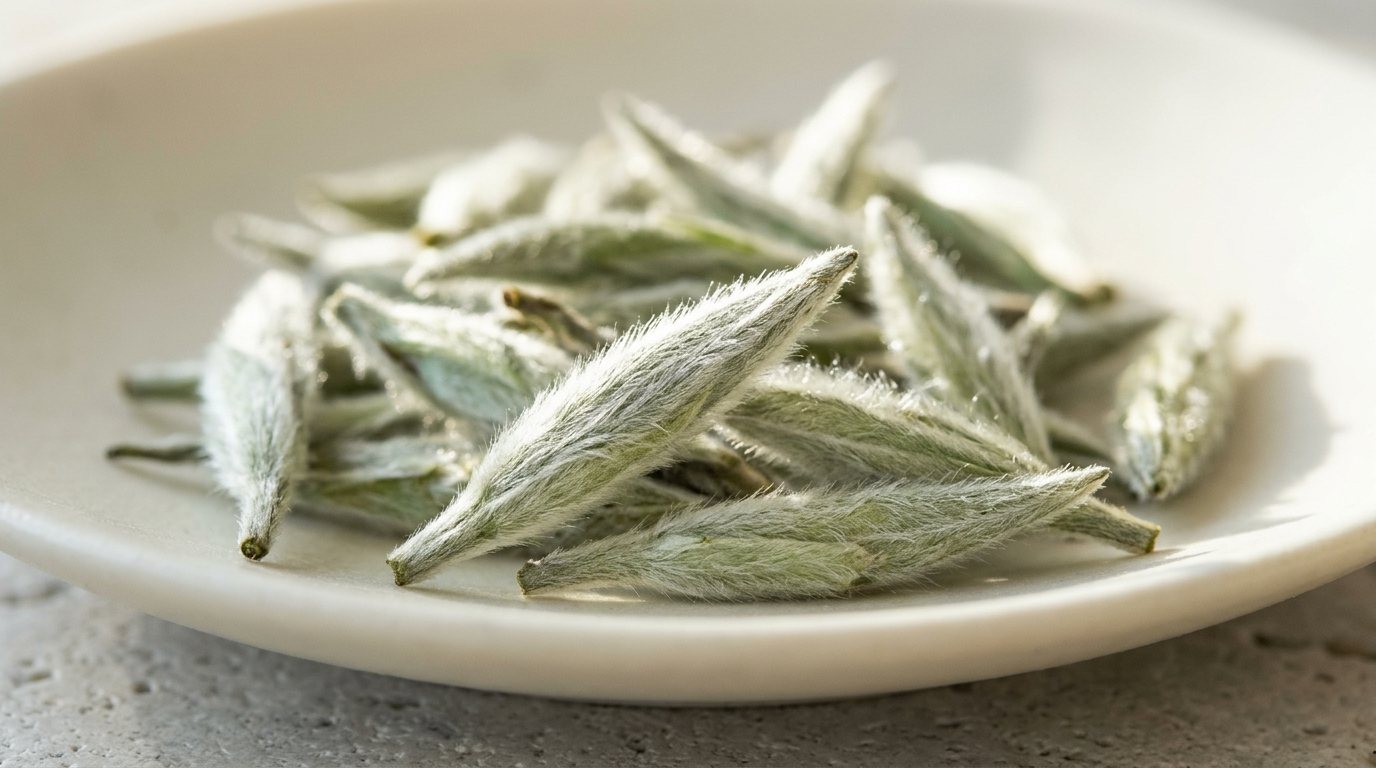
The Art of Non-Intervention: What Silver Needle Teaches Us About Doing Less
White tea undergoes no rolling, no panning, and no shaping. An inquiry into Fuding Baihao Yinzh...
Brewing & Ritual · 8 min read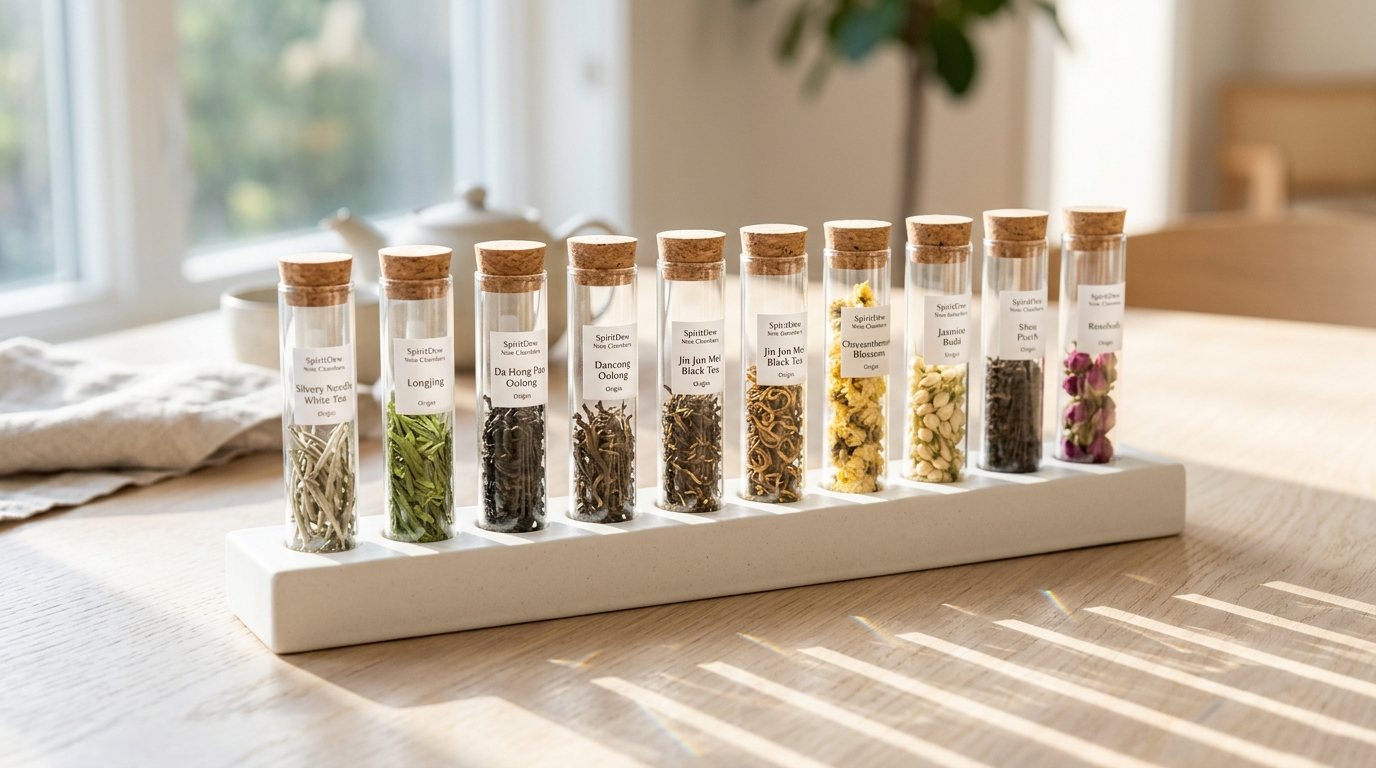
A Beginner's Guide to Gongfu Cha: How Five Grams of Whole Leaf Can Slow Down Time
A demystified, practical guide to Gongfu tea brewing. Why porcelain vessels matter, why boiling...