White Peony and the Shadow of Taimu Mountain: Bai Mudan and Solar Withering
One bud, two leaves: why the balance between tenderness and maturity creates white tea's greatest nectar.
Terroir & Geographical Origin
Panxi Primeval Cloud Foothills · Mount Taimu Alpine Ridge · Fujian Province, China
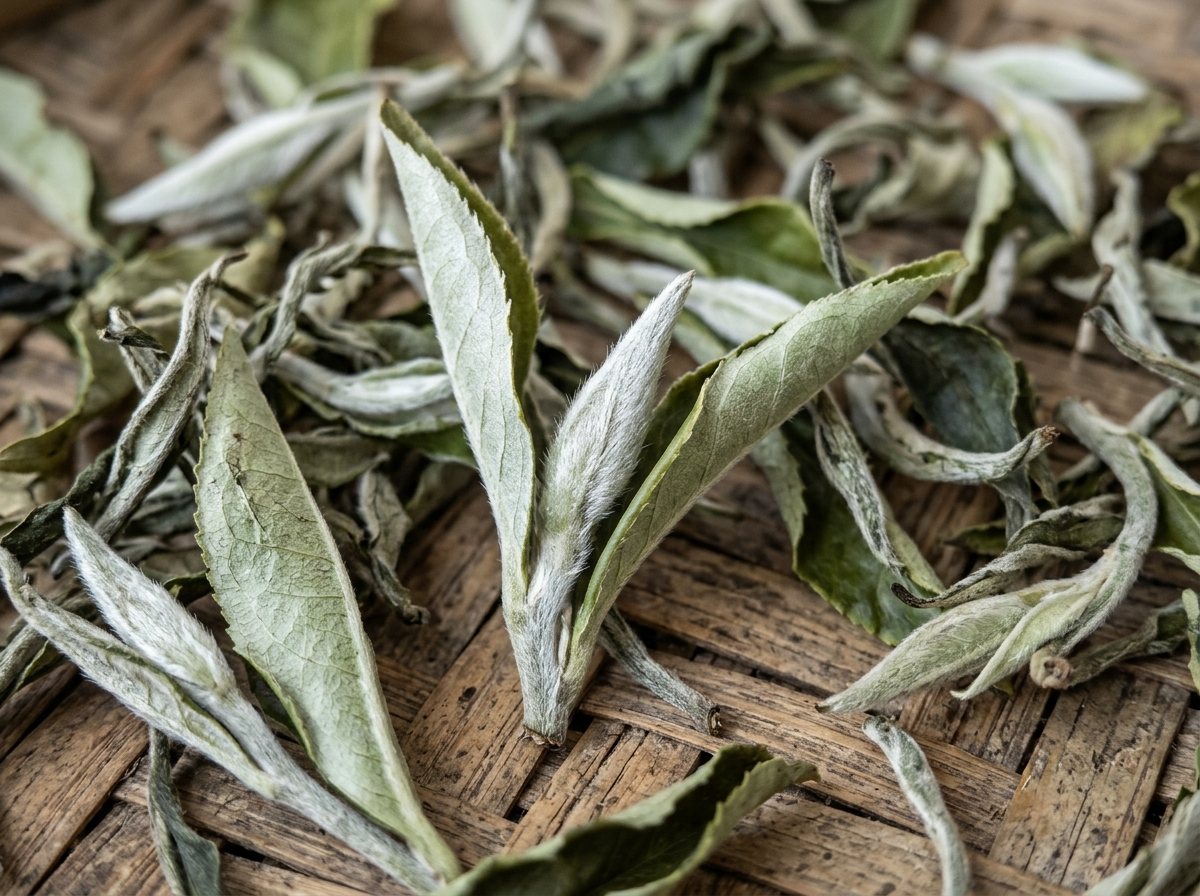
Fuding Bai Mudan (White Peony) is a sun-withered white tea harvested in mid-spring, composed of one silvery downy bud embraced by two tender open leaves ('green leaves cradling a silver flower'). Combining the amino sweetness of the bud with the full-bodied flavonoids of the mature leaf, it brews a warm golden-amber cup filled with fresh peony blossoms, melon nectar, and dried wildflower honey.
Green Leaves Cradling a Silver Flower
If Baihao Yinzhen is an ascetic hermit standing solitary on a cliff, Bai Mudan—White Peony—is the flower in full bloom. Harvested two weeks after the first silver buds, it consists of one plump center bud embraced by two open leaves.
In Chinese tea poetry, this arrangement is revered as 'Qing Tian Bai Yu'—green heaven supporting white jade. The silver bud provides silky amino sweetness, while the two open leaves contribute polyphenols, sun-cured chlorophyll, and complex floral aromas that the bud alone cannot produce.
“The silver bud provides silky amino sweetness, while the open leaves contribute floral complexity.”
The Dance of the Sieve
Like all authentic white teas, Bai Mudan is never tumbled in hot cauldrons or rolled into balls. It is spread across shallow round wicker sieves (Zhu She) elevated on wooden racks beneath the mild spring sun of Mount Taimu.
The tea master must constantly read the sky. When the sun is too bright, the sieves are moved into shaded, breezy lofts; when the sea fog rolls in, they are brought under cover. Over three days, the moisture slowly departs, allowing subtle, natural enzymatic transformation to sweeten the leaf tissues.
Chamber II: Embracing the Whole
In SpiritDew's Nine Chambers, Bai Mudan resides in Chamber II: Unoffered alongside Silver Needle. It reminds the perfectionist that wholeness requires both vulnerability and maturity.
The bud alone is tender but fragile; the mature leaves alone are bold but coarse. Together in the gaiwan, they create an infusion of staggering harmony: wild peony petals, warm sunshine, and sweet wildflower honey.
It invites us to bring our entire self to the table—not just our polished, immaculate moments, but also the broader, weathered leaves of our life experience.
“Wholeness requires both vulnerability and maturity: bringing your entire self to the table.”
Inquiries & Curatorial Clarifications
How is Bai Mudan different from Baihao Yinzhen?
Baihao Yinzhen uses strictly unopened spring buds, producing a delicate, ethereal broth. Bai Mudan incorporates the two leaves beneath the bud, providing richer body, higher aromatics, and broader floral honey complexity.
How does aging affect Bai Mudan?
While fresh Bai Mudan is bright with floral and melon notes, aging for 3 to 7 years converts its polyphenols into deep dried jujube fruit, Chinese angelica wood, and aged medicinal sweetness.
Sensory Spectrum & Extraction Curve
A sunlit meadow distilled into weightless nectar; unforced, calm, and enduring.
Tasting Signature: Wildflower Nectar
Subtle rock sugar sweetness that grows sweeter over time.
Experience Artisanal Fuding Bai Mudan
This artisanal whole-leaf harvest is preserved in Chamber II · Silent Grace. Available as a dedicated single harvest or as part of The Nine Chambers Tasting Flight.
Further Inquiries in the 2026 Archive
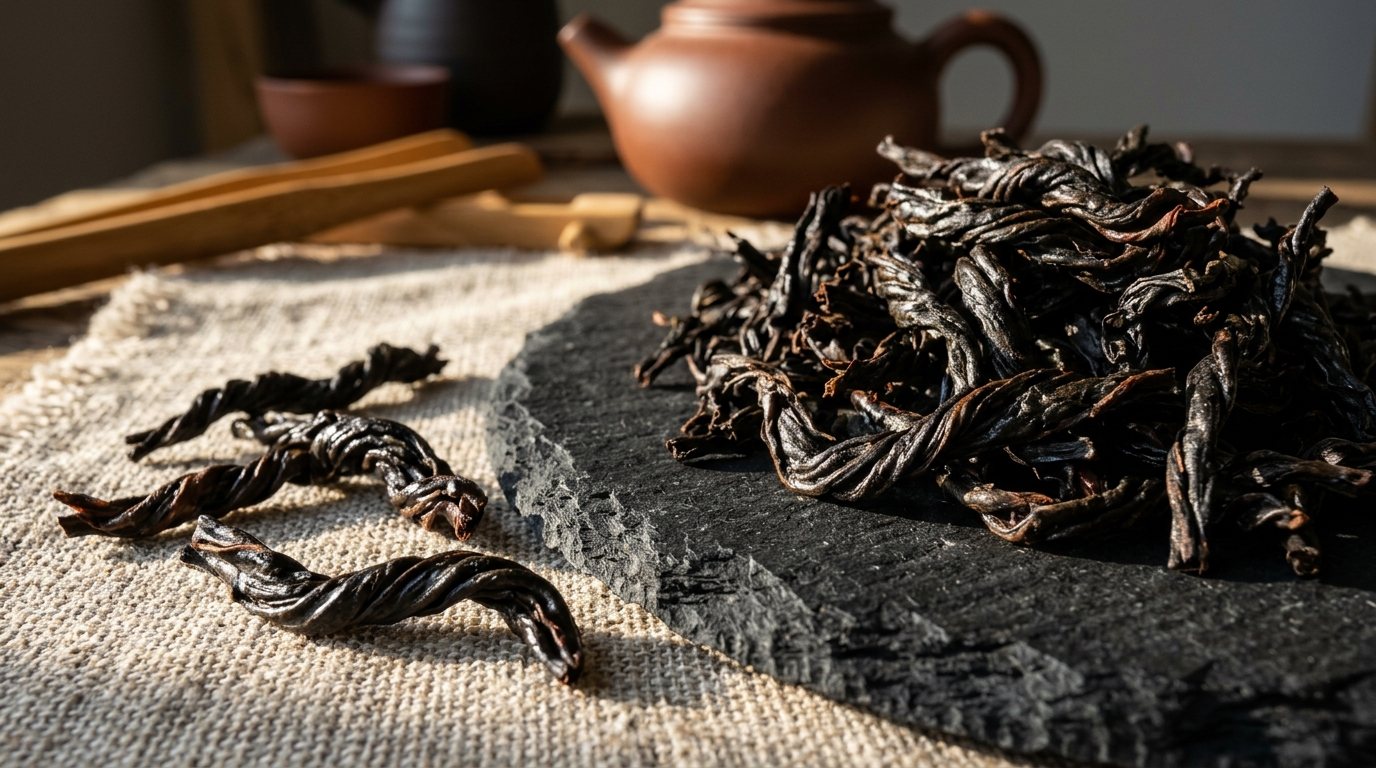
The Architecture of Stillness: Why the Leaf Needs Fire to Rest
A meditation on Wuyi cliff oolong, the ancient discipline of slow fruitwood charcoal roasting, ...
The Craft of Leaf & Mind · 6 min read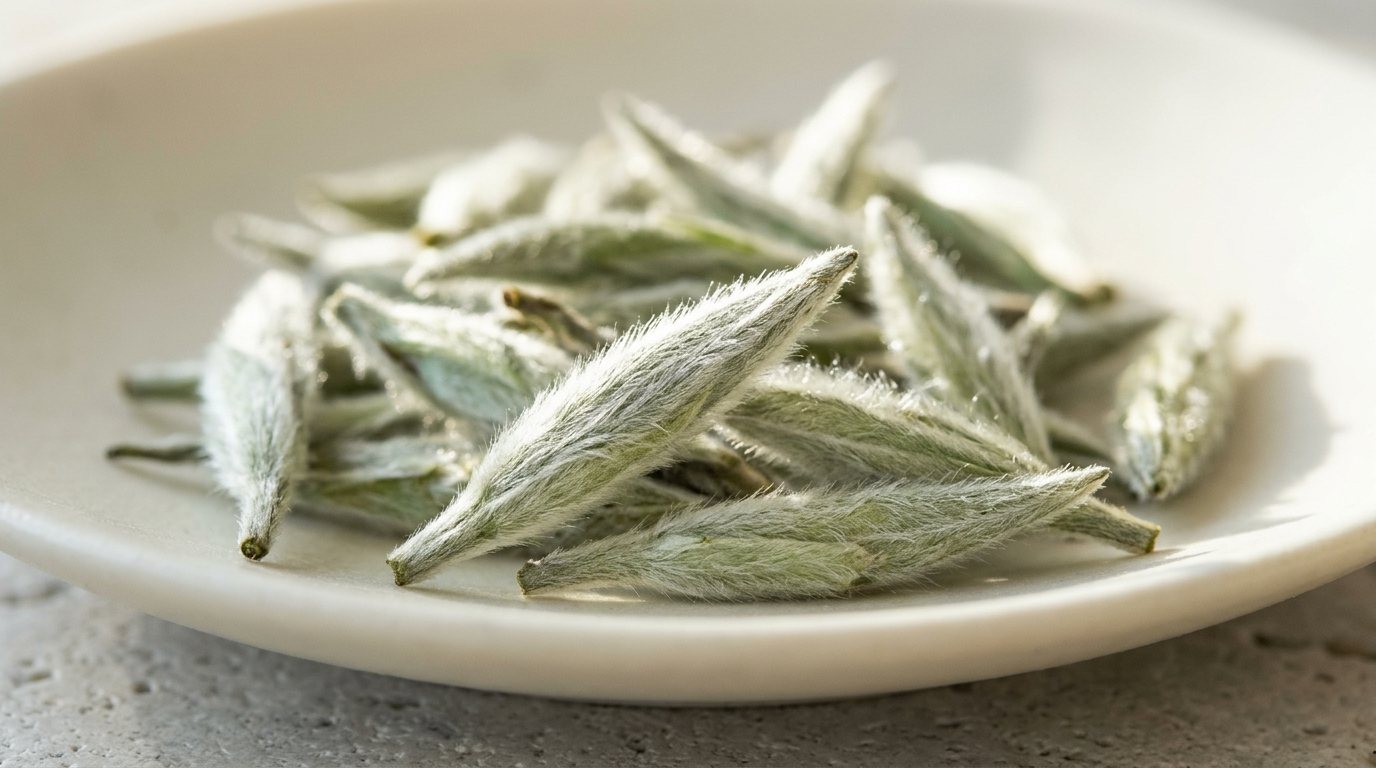
The Art of Non-Intervention: What Silver Needle Teaches Us About Doing Less
White tea undergoes no rolling, no panning, and no shaping. An inquiry into Fuding Baihao Yinzh...
Brewing & Ritual · 8 min read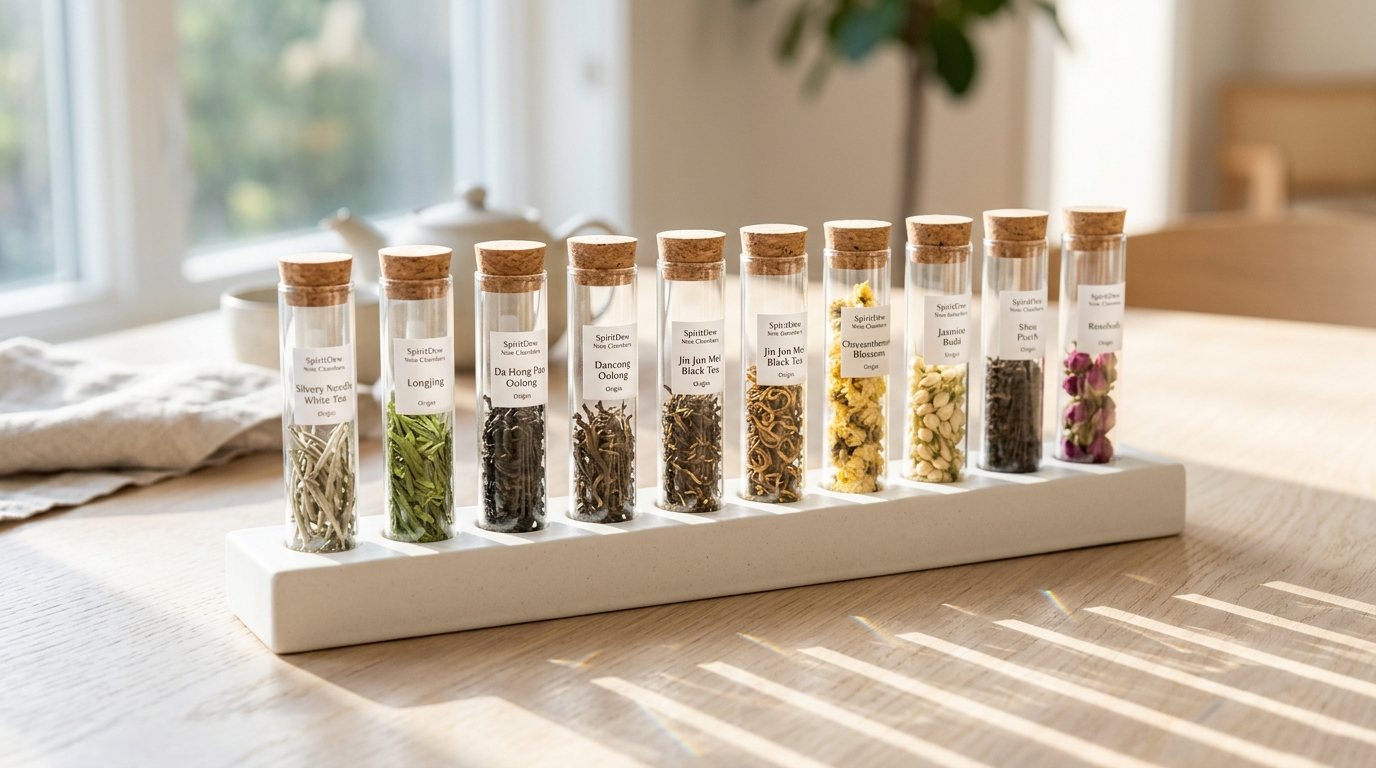
A Beginner's Guide to Gongfu Cha: How Five Grams of Whole Leaf Can Slow Down Time
A demystified, practical guide to Gongfu tea brewing. Why porcelain vessels matter, why boiling...